-
by sayum
31 July 2026 8:03 AM







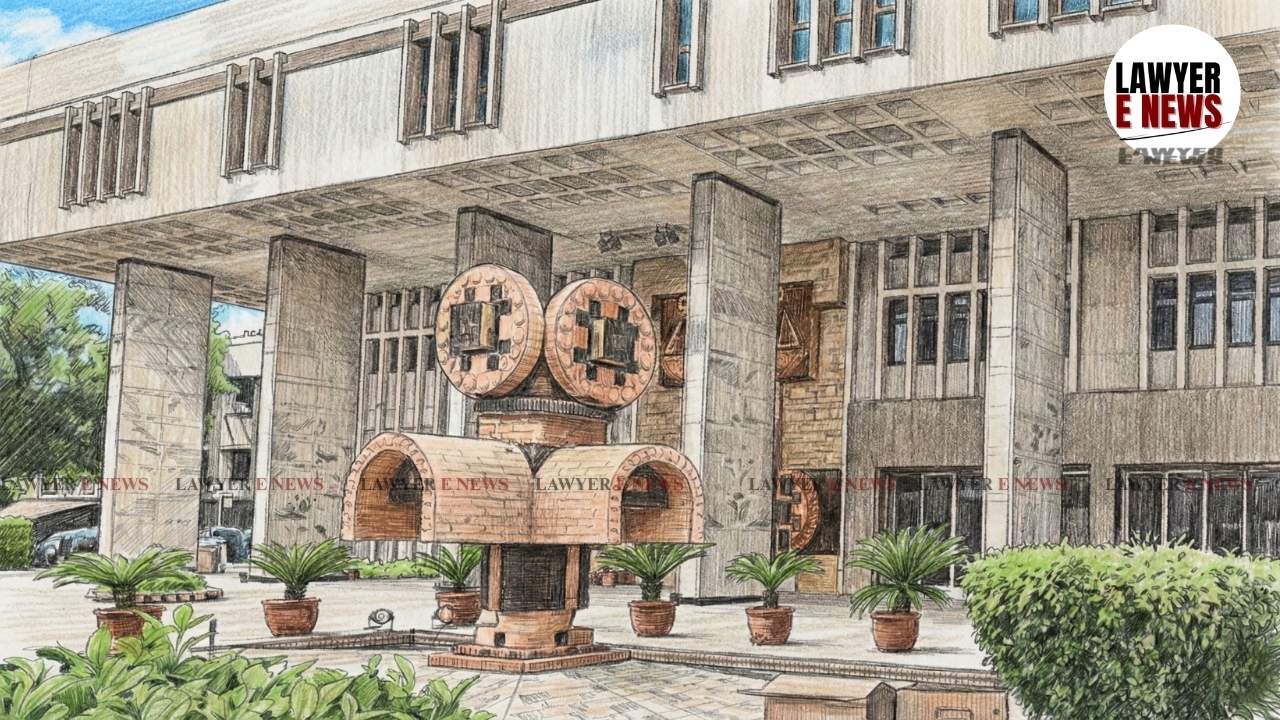
"The challenge by the Defendants essentially was to the ownership of the Plaintiff, which is not a factor to be considered in a Suit under Section 6 of Specific Relief Act, 1963. Therefore, contentions in regard to the genuineness of the GPA, Agreement to Sell etc., was irrelevant." Delhi High Court, in a significant ruling dated July 27, 2026, held that a suit for restoration of possession under Section 6 of the Specific Relief Act, 1963 cannot be derailed by questioning the plaintiff's title or ownership documents.
A single-judge bench of Justice Neena Bansal Krishna observed that such suits are summary in nature, though the plaint must be strictly rejected under Order VII Rule 11 of the Code of Civil Procedure if it is instituted beyond the statutory limitation period of six months from the date of dispossession.
The plaintiff claimed to have purchased a plot in village Haiderpur, Delhi, in October 1979 through a General Power of Attorney, Agreement to Sell, and receipt. She alleged that she remained in continuous possession until September 20, 2019, when the defendants illegally trespassed and demolished her boundary walls. Consequently, she filed a suit on September 1, 2020, under Section 6 of the Specific Relief Act, seeking restoration of possession. The defendants filed an application under Order VII Rule 11 of the CPC seeking rejection of the plaint, arguing that she was never in possession, her title documents were forged, and the suit was barred by limitation. The Additional District Judge allowed the application and rejected the plaint, prompting the plaintiff to approach the High Court.
The primary question before the court was whether the trial court rightly rejected the plaint under Order VII Rule 11 of the CPC by relying on the defendants' contentions regarding title and possession. The court was also called upon to determine if the suit was barred by the six-month limitation period prescribed under Section 6 of the Specific Relief Act, 1963.
Appeal Treated As Revision To Prevent Injustice
At the outset, the High Court noted a procedural irregularity regarding the maintainability of the appeal. The bench highlighted that Section 6(3) of the Specific Relief Act specifically bars any appeal against any order or decree passed in a suit instituted under this section. The court noted that the plaintiff had initially filed a civil revision petition, which was wrongly objected to by the court registry, forcing the plaintiff to withdraw it and file a regular first appeal.
To prevent injustice arising from a technicality, the court decided to adjudicate the matter on merits. The bench observed that the plaintiff was not at fault and that she had been denied the right to pursue her revision petition. Consequently, the High Court treated the appeal as a revision petition, noting that dismissing it on technical grounds would be improper.
Object And Scope Of Section 6 Specific Relief Act
Delving into the jurisprudence of the statute, the High Court comprehensively explained the legislative intent behind Section 6. The court emphasized that the provision was incorporated to provide a summary, cheap, and useful remedy to a person dispossessed of immovable property without due course of law. The primary object is to discourage people from taking the law into their own hands, no matter how good their legal title to the property might be.
The court laid down that for Section 6 to apply, three factual conditions must be satisfied. The plaintiff must establish exclusive possession of the immovable property, dispossession otherwise than in due course of law, and the suit must be restricted solely to the relief of recovery of possession. The bench clarified that only these limited questions of fact are required to be considered during the adjudication of such suits.
Trial Court Erred In Assessing Title Under Order VII Rule 11
The High Court found serious flaws in the trial court's approach to the Order VII Rule 11 application. Relying on the Supreme Court's mandate in Sopan Sukhdeo Sable vs. Charity Commissioner, the bench reiterated that while considering the rejection of a plaint, only the averments in the plaint and its accompanying documents can be examined. The pleas taken by the defendant in the written statement or their application are entirely irrelevant at this threshold stage.
The bench held that the trial court fell into error by considering the defendants' challenges to the plaintiff's ownership and relying on a police closure report that labeled her title documents as forged. The court categorically stated that title and ownership are not factors to be considered in a Section 6 suit. The bench also held that the trial court's reliance on the Supreme Court judgment in Suraj Lamp & Industries Pvt. Ltd. vs. State of Haryana to assess the validity of the GPA and Agreement to Sell was entirely misplaced.
Absence Of Utility Connections Does Not Negate Possession
The High Court further criticized the trial court for drawing an adverse inference against the plaintiff merely because the property lacked electricity and water connections since 1979. The bench observed that the property was enclosed by boundary walls and remained under the plaintiff's lock and key. The court ruled that the mere absence of utility connections cannot be treated as determinative of a lack of possession, terming the trial court's finding on this aspect as perverse and contrary to law.
Suit Filed Beyond Six Months Is Barred By Limitation
Despite correcting the trial court's erroneous legal reasoning regarding title, the High Court ultimately upheld the rejection of the plaint on the ground of limitation. The bench scrutinized a critical document on record—a police complaint dated October 14, 2019, filed by the plaintiff's own son. In this complaint, he explicitly stated that unknown people had broken the walls and gate on that very day, asking for police protection.
The High Court noted that this police complaint made it abundantly clear that the actual dispossession took place on October 14, 2019, contradicting the plaintiff's core averment that she was dispossessed on September 20, 2019. Calculating the timeline, the court observed that the suit was instituted on September 1, 2020. Since Section 6(2)(a) of the Specific Relief Act strictly prohibits bringing a suit after the expiry of six months from the date of dispossession, the court found the suit to be hopelessly barred by limitation.
The High Court concluded that while the trial court asked the wrong questions regarding title and ownership, its ultimate decision to reject the plaint under Order VII Rule 11 CPC was correct due to the absolute limitation bar. Finding no merit in the appeal, the court dismissed the proceedings and upheld the rejection of the plaintiff's suit.
Date of Decision: July 27, 2026