-
by sayum
31 July 2026 8:03 AM







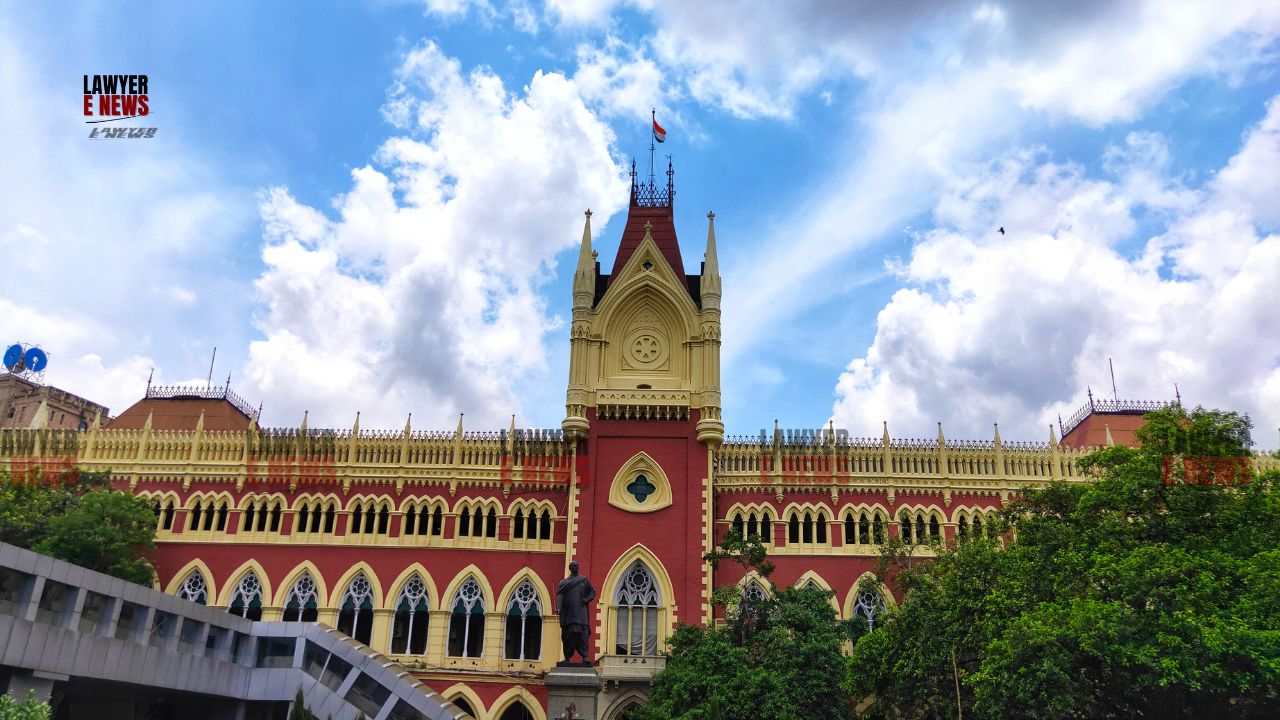
"Although grant of pension or death benefits cannot deprive the dependents from claiming compensation nor the death benefits received can be adjusted from compensation computed but the said factors may be taken into consideration along with the compensation computed by arithmetical calculation to decide what should be just and reasonable compensation." Calcutta High Court, in a judgment, has held that while the receipt of widow pension or death benefits by the family of a deceased government employee cannot be directly deducted from motor accident compensation, such benefits can be "taken into consideration" to determine the final "just and reasonable" quantum.
A single-judge bench of Justice Biswaroop Chowdhury observed that the expression 'just' must be given a logical meaning and should not result in a "bonanza" for the claimants.
The appeal was filed by Future General India Insurance Co. Ltd. against a 2024 judgment of the Additional District Judge, Paschim Medinipur, which awarded Rs. 55,06,268 to the family of Joydev Mahata. Mahata, a police personnel, died in a 2019 road accident involving a truck, and the insurer challenged the award on grounds of delayed FIR, the driver's alleged lack of a valid license for a heavy vehicle, and the excessiveness of the compensation given that the widow was receiving a pension.
The primary questions before the court were whether a nine-day delay in lodging the FIR rendered the claim doubtful and whether a vehicle with an unladen weight of 3116 kg qualifies as a 'Heavy Goods Vehicle' under the Motor Vehicles Act, 1988. Furthermore, the court was called upon to determine if pensionary benefits received by the claimants should influence the calculation of "just compensation" under Section 168 of the Act.
Mere Delay In Lodging FIR Not Fatal In Accident Claims
Addressing the insurer's contention that the FIR was lodged after a nine-day delay, the Court noted that in Indian families, the immediate priority after an accident is rushing the victim to the hospital rather than the police station. The bench observed that when there is bereavement in a family, it is not unusual for there to be a delay in lodging an FIR.
"In the Indian Families members rush to hospital after accident and not to Police Station. Moreover when there is bereavement in the family it is not unusual that there will be delay in lodging F.I.R."
Definition Of Heavy Goods Vehicle Under Section 2(16) MV Act
The appellant insurer argued that the driver was not authorized to ply heavy vehicles and that the license was invalid at the time of the accident. However, the Court referred to Section 2(16) of the Motor Vehicles Act, 1988, which defines a 'Heavy Goods Vehicle' as one where the gross vehicle weight or unladen weight exceeds 12,000 kilograms.
"In the instant case the unladen weight of the said vehicle is 3116 Kg thus it cannot be said to be a heavy vehicle."
Pension Benefits Cannot Be Directly Adjusted But Inform 'Just' Quantum
The most significant portion of the judgment dealt with the impact of the widow's pension on the compensation amount. The Court relied on the Supreme Court's decisions in National Insurance Co. Ltd vs Indira Srivastava and T.N. State Transportation Ltd. vs Rajapriya, noting that while arithmetic is a "good servant," it is a "bad master" in compensation cases involving many imponderables.
The Court clarified that while death benefits and pensions under Section 166 of the Motor Vehicles Act, 1988, are not grounds to deprive dependents of compensation, they must be weighed to ensure the award is equitable. The bench noted that the claimant was receiving a widow pension of Rs. 21,000 per month.
"Receipt of pension and death benefits is not a ground to deprive compensation under Section 166 of the Motor Vehicles Act 1988 nor can the death benefits received be adjusted from the compensation but the same can be taken into consideration along with the compensation computed to decide just compensation."
Modification Of Compensation Award
The Court observed that the "overall picture" matters in assessing the loss suffered. Considering the pension received by the widow, the bench found the original award of over Rs. 55 lakhs to be slightly excessive. Consequently, the Court modified the award to a consolidated sum of Rs. 50,00,000, deeming it to be just and reasonable under the circumstances.
The High Court disposed of the appeal by modifying the trial court’s order, directing the insurance company to deposit the modified amount of Rs. 50 lakh with 5% interest per annum. The Court held that this adjustment strikes a balance between providing for the family and ensuring the compensation does not become a source of profit.
Date of Decision: July 08, 2026