-
by sayum
31 July 2026 8:03 AM







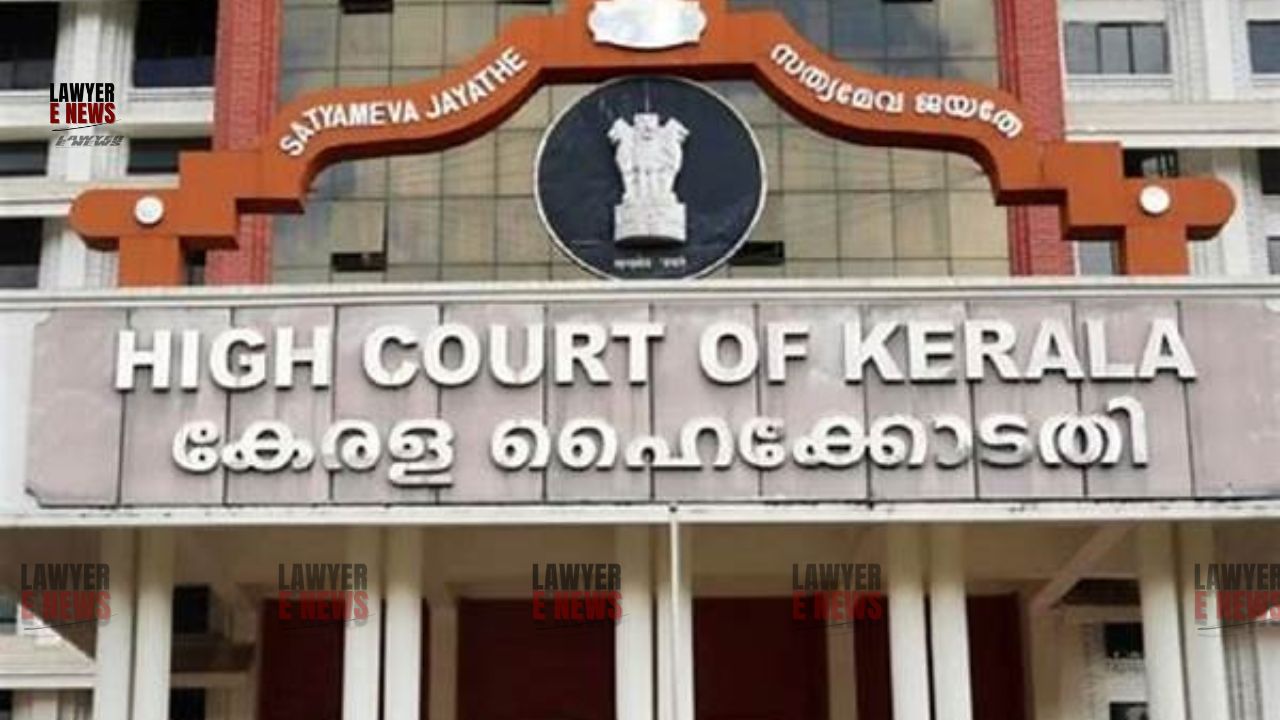
"These procedural irregularities are sufficient indications and inferences which would give raise to a presumption as to the complicity of the first accused." Kerala High Court, in a significant ruling, held that severe procedural irregularities committed by public servants can serve as crucial circumstantial evidence to infer criminal conspiracy in corruption cases.
A bench of Justice A. Badharudeen observed that direct evidence of conspiracy is rarely available, and anomalous procedural deviations—such as disbursing large government subsidies in cash instead of prescribed banking channels—suffice to frame charges under the Prevention of Corruption Act.
The prosecution alleged that the Assistant Director of Agriculture, an Agricultural Officer, and an agriculturist hatched a criminal conspiracy to misappropriate ₹3,38,750 meant for a drip irrigation subsidy scheme. The accused allegedly created forged documents in the names of non-existent firms to falsely claim the subsidy without executing any actual work. The Assistant Director (Accused No. 1) and the agriculturist (Accused No. 3) approached the High Court challenging the Special Judge's refusal to discharge them from the case.
The primary question before the court was whether procedural lapses by a public servant in sanctioning funds could constitute sufficient circumstantial evidence to frame charges for criminal conspiracy. The court was also called upon to determine whether the agriculturist could be discharged by merely claiming ignorance about the forged supporting documents submitted along with his subsidy application.
Direct Evidence Of Conspiracy Is Rare
The court emphasised that criminal conspiracy is typically hatched in secrecy, making direct proof nearly impossible to secure. The bench agreed with the Special Judge's reasoning that complicity must be inferred from surrounding circumstances and documentary evidence. The court noted that at the stage of framing charges, strong suspicion regarding the involvement of the accused is sufficient to proceed with the trial.
Procedural Deviations Indicate Complicity
Highlighting the conduct of the Assistant Director of Agriculture (Accused No. 1), the court examined the evidence showing that the subsidy amount was withdrawn from the treasury and allegedly disbursed directly in cash. The bench observed that government norms explicitly required any subsidy payment exceeding ₹1,000 to be made strictly through a cheque or demand draft. Furthermore, the receipts lacked the names or details of the persons who actually received the cash.
"But the details of the person who received the money is not shown in any of the records. It may be true that all these are procedural irregularities. But these procedural irregularities must have a direct bearing with regard to the allegations leveled against the first accused," the court observed.
Irregularities Give Rise To Presumption
The High Court firmly rejected the argument that the Assistant Director was merely discharging his duty of relying on his subordinate's certification. The deliberate bypassing of mandatory payment procedures in favour of untraceable cash disbursements was viewed as a strong indicator of unholy nexus. The court clarified that such gross deviations from established protocol at the hands of a public servant cannot be brushed aside as mere administrative lapses.
"In other words these procedural irregularities shown a grave suspicious regarding his involvement in the alleged misappropriation."
Claim Of Ignorance Unsustainable At Pre-Trial Stage
Addressing the agriculturist's (Accused No. 3) plea for discharge, the court found that the subsidy applications were admittedly signed by him. The bench noted that the signatures on multiple receipts belonged to his wife, further cementing his prima facie involvement. The court pointed out that vigilance inspections revealed no drip irrigation work had been carried out on the properties in question, despite the submission of bills from purported marketing agencies.
The court held that the agriculturist's defense of being entirely unaware of the forged documents accompanying his application could not be countenanced at the discharge stage. The bench concluded that since the concerned marketing firm emphatically denied executing any work or receiving any amount, the receipts were prima facie forged, establishing a strong suspicion of conspiracy among all the accused.
The High Court ultimately dismissed the criminal revision petitions, finding the challenge against the Special Court's common order unsustainable. Given that the matter had been pending for ten years, the court directed the Special Judge to expedite the trial and preferably dispose of it within a period of four months.
Date of Decision: 17 July 2026