-
by sayum
19 August 2026 1:58 PM







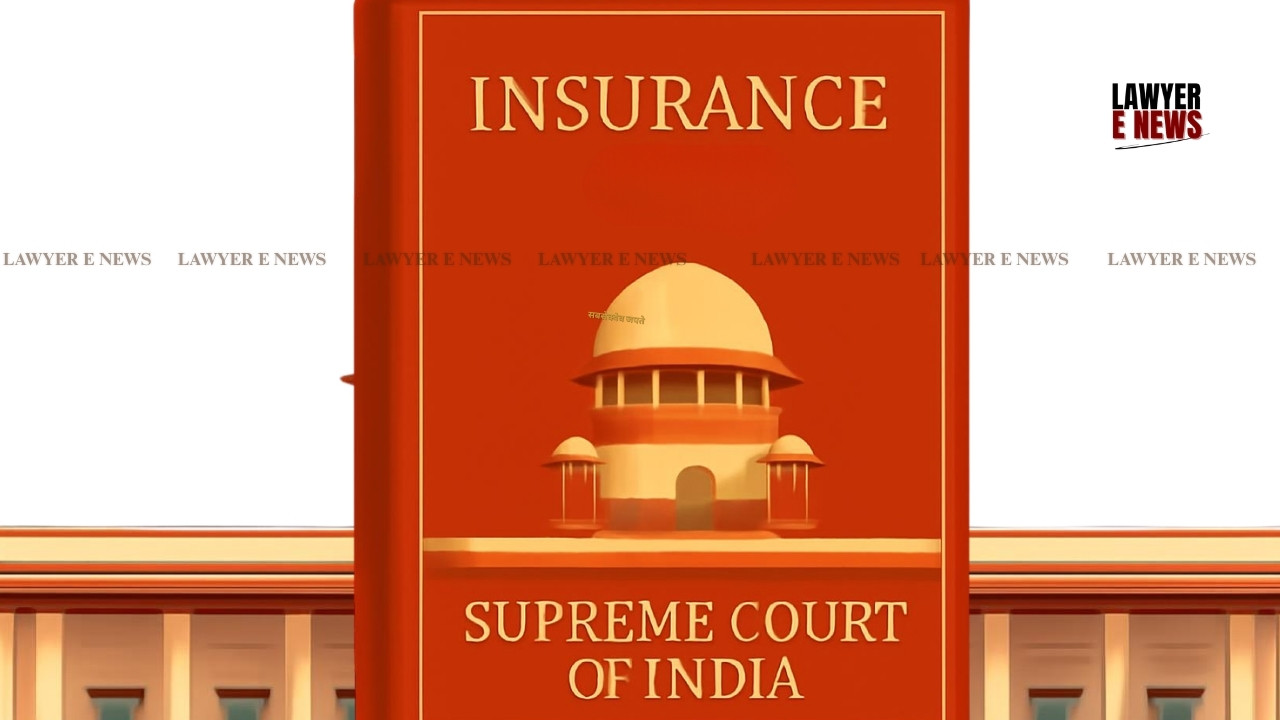
"The criteria prescribed, therefore, is very much in tune with the criteria that would have otherwise been prescribed had the post been advertised for regular recruitment.", Supreme Court of India, in a significant ruling dated April 16, 2026, held that regularisation policies extending the benefit of an earlier "one-time measure" to qualified ad hoc employees on sanctioned posts are valid and do not violate constitutional mandates. A bench comprising Justice Pamidighantam Sri Narasimha and Justice Atul S. Chandurkar observed that such regularisation is lawful provided there is "no relaxation whatsoever in respect of possessing requisite qualifications and initial engagement being on a sanctioned post."
The dispute arose when the Haryana Government issued a series of notifications in June and July 2014 to regularise the services of Group 'B', 'C', and 'D' contractual and ad hoc employees. Original petitioners challenged these policies before the Punjab and Haryana High Court, arguing they violated the landmark Umadevi judgment by perpetuating back-door entries. The High Court agreed and quashed all the notifications, prompting the State of Haryana and the affected employees to approach the Supreme Court.
The primary question before the court was whether the State's 2014 regularisation notifications violated the strict parameters of the "one-time measure" laid down in the Secretary, State of Karnataka v. Umadevi judgment. The court was also called upon to determine whether fixing a futuristic cut-off date for regularising employees appointed without public advertisement was legally sustainable under Articles 14 and 16 of the Constitution of India.
June 2014 Notifications Valid As A Continuation Of Previous Policy
The Supreme Court first examined the notifications dated June 16 and June 18, 2014, which sought to revive an earlier 1996 regularisation policy for left-out Group 'B', 'C', and 'D' employees. The bench noted that these policies strictly required candidates to possess the prescribed qualifications and to have been initially engaged against a sanctioned vacant post. The court observed that the criteria matched what would have been required for regular recruitment, thereby preserving the integrity of the selection standards.
'One-Time Measure' Covers All Left-Out Eligible Employees
Relying heavily on the precedent set in State of Karnataka v. M.L. Kesari, the court clarified the scope of the "one-time measure" mandated by the Umadevi judgment. The bench emphasized that the one-time exercise concludes only when all eligible employees have been duly considered. Since the June 2014 notifications merely extended the benefit to eligible employees who were previously left out of the 1996 policy, the court ruled that the executive exercise could not be questioned on grounds of arbitrariness or mala fides.
"Given the object behind issuing the Notifications... which was primarily to grant the benefit of regularisation to those remaining Group 'B', 'C' and 'D' ad hoc... we do not find any reason whatsoever to hold that the Notifications... were liable to be quashed."
July 2014 Policies Struck Down Over Futuristic Cut-Off Dates
Turning its attention to the notifications dated July 7, 2014, the Supreme Court found fundamental constitutional flaws in the State's approach. These specific notifications sought to regularise ad hoc employees who had not faced any public advertisement or interview process, setting a futuristic cut-off date of December 31, 2018. The court held that accommodating employees engaged without transparent procedures effectively blocked posts that should have been filled through regular, competitive recruitment.
Unjustifiable Protection For Unadvertised Engagements
The bench sharply criticized the lack of justification for protecting back-door entries spanning years into the future. The court noted that the claim of being engaged without an advertisement inherently gives rise to severe doubts regarding the manner of appointment. Concluding that these specific policies were designed to bypass constitutional recruitment mandates, the court struck them down as highly arbitrary and illegal.
"The intent was to accommodate such ad hoc employees, who came to be engaged, albeit temporarily, in the absence of any public advertisement or interview."
Article 142 Invoked To Protect Employment Of Affected Staff
Despite striking down the July 2014 notifications as illegal, the Supreme Court took a compassionate and pragmatic view of the employees who had been working under these policies for nearly twelve years. The State had confirmed on record that retaining these specific employees would not affect any currently advertised regular posts. Therefore, invoking its extraordinary jurisdiction under Article 142 of the Constitution of India, the court directed that these employees should not be disturbed from their current employment.
Pay Scale Restricted To Minimum Admissible For The Post
While protecting their ongoing employment, the court placed a strict caveat on the financial entitlements of these unadvertised ad hoc workers. Relying on the precedent established in State of Punjab v. Jagjit Singh, the bench directed that these employees must be placed at the lowest pay scale admissible to the post they hold. This ensured a delicate balance between granting equitable relief for long-serving employees and maintaining adherence to strict constitutional principles regarding public compensation.
Ultimately, the Supreme Court partly modified the Punjab and Haryana High Court's judgment by upholding the June 2014 notifications while affirming the quashing of the July 2014 notifications. The ruling serves as a crucial clarification on the limits of regularisation policies, reaffirming that while states can lawfully rectify past omissions for qualified staff on sanctioned posts, they cannot utilize futuristic cut-off dates to validate unadvertised backdoor entries.
Date of Decision: 16 April 2026