-
by sayum
17 August 2026 3:17 PM







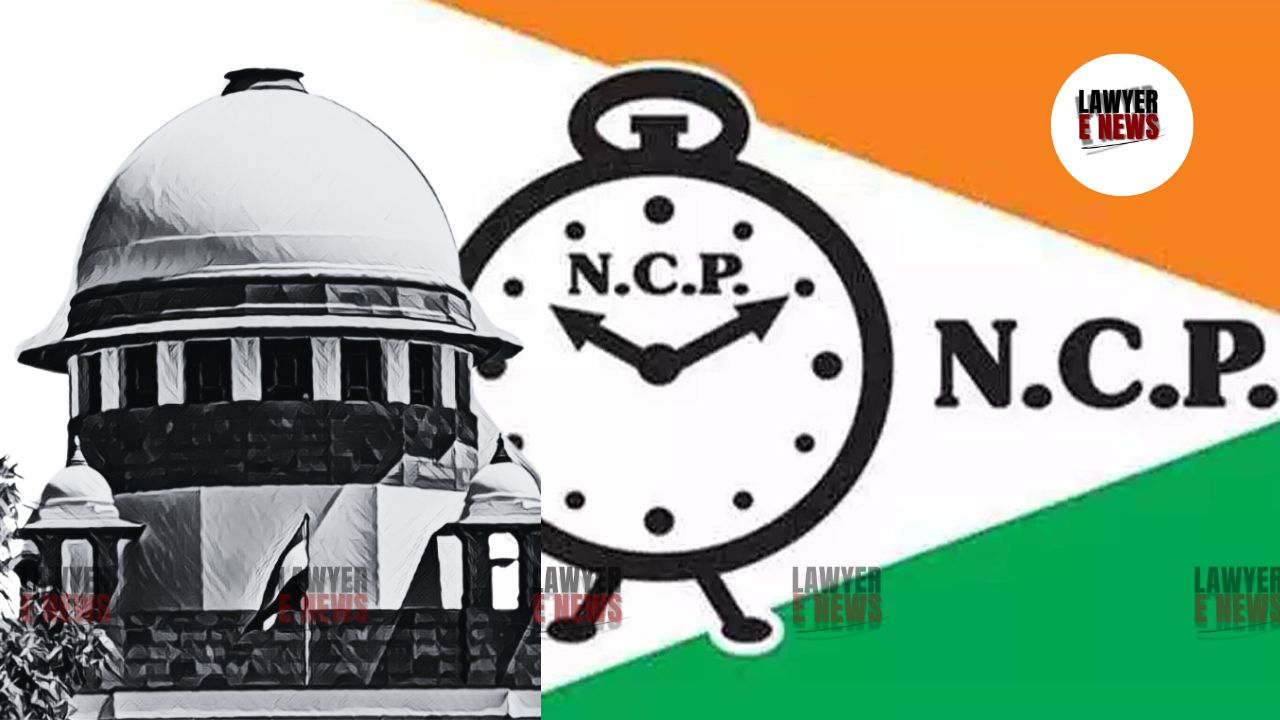
We Can Initiate Suo Motu Contempt if Orders Are Violated: Supreme Court Emphasizes Compliance on Use of 'Clock' Symbol Amid NCP Dispute. On October 24, 2024, the Supreme Court instructed Ajit Pawar's faction of the Nationalist Congress Party (NCP) to continue using the 'clock' symbol for the upcoming Maharashtra Assembly elections, but with a mandatory disclaimer stating that the symbol's usage is sub judice and subject to the final outcome of a legal dispute filed by Sharad Pawar. The Court directed Ajit Pawar to submit an undertaking that its previous orders, which imposed similar conditions ahead of the 2024 Lok Sabha elections, would be followed during the state elections as well.
A bench comprising Justices Surya Kant, Dipankar Datta, and Ujjal Bhuyan issued the order after hearing a plea by Sharad Pawar’s faction, which accused Ajit Pawar's group of violating the Court's earlier directions by not including the required disclaimers in their campaign materials. The Court warned that it could initiate suo motu contempt proceedings if the directions were not strictly followed. The case is scheduled for the next hearing on November 6, 2024.
"We Expect Compliance From Both Sides": Supreme Court Reiterates Importance of Disclaimer
The bench instructed Ajit Pawar's faction to adhere to the March and April 2024 orders, which mandated that all campaign materials must clearly state that the use of the 'clock' symbol is sub judice. The Court emphasized that both factions must follow its orders to avoid any potential contempt proceedings.
"Once we have issued a direction, it has to be complied with. You file a response and a fresh undertaking that in the past also you have not violated, and in the future, you won't violate. We expect both sides to comply with our directions. Don’t create an embarrassing situation for yourselves," Justice Kant remarked.
Sharad Pawar's Allegations: NCP (Ajit Pawar) Faction Violated Court Orders
Senior Advocate Dr. A.M. Singhvi, representing Sharad Pawar, argued that the Ajit Pawar faction had failed to comply with the Court's previous orders. He presented screenshots of social media posts allegedly published by Ajit Pawar’s faction on platforms like X (formerly Twitter) and Facebook, which he claimed did not include the required disclaimers. Singhvi urged the Court to either restrain the faction from using the 'clock' symbol entirely or enforce stricter compliance.
"Nobody should enjoy the goodwill of a symbol which is sub judice," Singhvi contended, emphasizing that the symbol's usage without proper disclaimers undermines the Court's authority.
Ajit Pawar's Defense: We Have Complied With Court Orders
Senior Advocate Balbir Singh, representing Ajit Pawar, denied any violation and asserted that all campaign materials, including pamphlets and posters, featured the required disclaimers. He requested time to provide the Court with evidence demonstrating compliance.
"We have complied with the Court's directions and will produce all materials," Singh submitted.
Singh also raised objections to Singhvi submitting documents to the Court without prior notice, arguing that proper procedure was not followed. Justice Datta intervened, asking whether the materials presented could be treated as legal evidence.
Dispute Over NCP Symbol and Faction Recognition
The conflict between Sharad Pawar and Ajit Pawar erupted after a split in the Nationalist Congress Party (NCP), leading the Election Commission of India (ECI) to recognize Ajit Pawar's faction as the official NCP based on its legislative majority. The ECI also awarded the party's original 'clock' symbol to Ajit Pawar's group, a decision Sharad Pawar’s faction is contesting in the Supreme Court.
On March 19, 2024, the Supreme Court allowed Ajit Pawar's group to use the 'clock' symbol for the Lok Sabha elections, provided they issued a public disclaimer that the symbol's usage was sub judice. The Court also barred Ajit Pawar’s faction from using Sharad Pawar’s name and image in their campaign materials.
Following this, Sharad Pawar’s faction made an urgent plea in April, accusing Ajit Pawar’s group of not complying with the Court’s directive. The Court reiterated its March order and directed both sides to follow its conditions. On April 4, 2024, the Court allowed Sharad Pawar’s faction to use the name "NCP (Sharad Pawar)" and the symbol "man blowing turha (trumpet)", while prohibiting the use of the 'clock' symbol by Sharad Pawar’s group.
During the hearing, the Supreme Court directed Ajit Pawar’s faction to submit a fresh undertaking affirming that it would follow the Court's previous orders for the Maharashtra Assembly elections. The Court also permitted Sharad Pawar’s faction to file a similar undertaking confirming compliance with the earlier directives. Both sides are expected to file their responses before the next hearing on November 6, 2024.
Supreme Court Warns of Contempt Proceedings for Non-Compliance
The Supreme Court’s ruling underscores the importance of adhering to judicial orders in ongoing political and legal disputes. The bench made it clear that any deliberate violation of its orders regarding the use of the 'clock' symbol could lead to contempt proceedings. Both factions of the NCP are expected to strictly comply with the Court's directions as the case progresses.
Sharad Pawar v. Ajit Anantrao Pawar & Anr. | Special Leave Petition (Civil) No. 4248 of 2024