-
by sayum
19 August 2026 8:35 AM







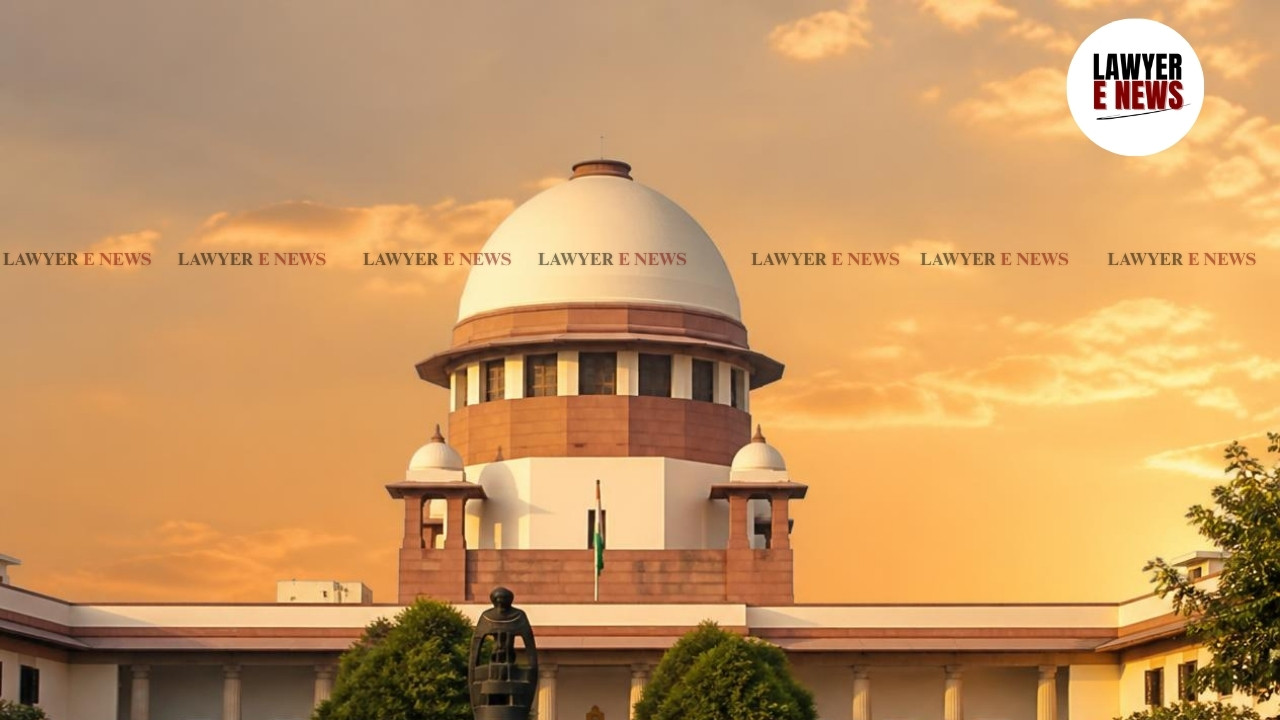
"By and Large, as the Burn Injuries Were Superficial, Though to Great Extent, She Was Conscious Most of the Time and Was in a Fit State of Mind to Get Her Dying Declaration Recorded", In a ruling that carries significant evidentiary weight for courts adjudicating dying declaration cases involving burn victims, the Supreme Court on March 17, 2026 drew a crucial medical-legal distinction — that the extent of burn injuries on the body surface cannot, by itself, be equated with the victim's incapacity to speak or make a statement. Upholding the conviction of Subramani for the murder of his wife Chennamma under Section 302 IPC.
Bench of Justice Pankaj Mithal and Justice S.V.N. Bhatti held that a dying declaration recorded at 2:00-2:30 a.m. with a treating doctor's endorsement certifying the deceased's fitness was fully reliable, notwithstanding 80-90% burn injuries, the absence of a nurse during recording, and an OPD slip entry suggesting self-inflicted burns. The Court reinforced that the oral testimony of witnesses contradicting the dying declaration cannot override the direct certification of the attending physician who personally examined the patient before permitting the statement to be recorded.
"The Fact That PW-15 Admitted That There Was No Nurse Present at the Hospital When He Recorded the Statement Is Not Enough to Belie the Dying Declaration"
Background of the Case
On the night of 20.07.2000, Chennamma was set ablaze by her husband Subramani after he poured kerosene on her and lit a candle. She was rushed to Victoria Hospital, Bangalore by neighbours and admitted around midnight with severe burn injuries. She survived for three days before succumbing to septicaemia on 24.07.2000. A Head Constable from SR Nagar Police Station was deputed to the hospital in the early hours of 21.07.2000, where the attending doctor, after personally assessing the patient, certified her fitness to make a statement. The resulting dying declaration — Exhibit P-12 — named Subramani as the assailant and narrated a history of cruelty and money demands. The Trial Court had acquitted Subramani holding the dying declaration unreliable given the extent of injuries. The Karnataka High Court reversed this acquittal. The Supreme Court was called upon in the present appeal to examine, among other issues, whether the dying declaration was legally and medically sustainable.
The Medical-Legal Question at the Heart of the Case
The defence pressed a seemingly straightforward argument: a woman with 80-90% burn injuries cannot possibly be in a conscious and coherent state to make a statement. The Trial Court had accepted this reasoning, observing that the extent of injuries made the dying declaration inherently unreliable.
The Supreme Court dismantled this argument by making a distinction that courts dealing with burn injury cases must carefully note — the difference between the extent of burns and their depth. PW-4, Dr. S. Rudramurthy, who conducted the post-mortem, reported that while the burn injuries covered 85-90% of the body surface, they were superficial in nature. PW-11, Dr. HC Ramanna, the duty doctor at Victoria Hospital who admitted and examined Chennamma, similarly certified the injuries as covering 80% of the body surface while being superficial burns.
This distinction was decisive. The Court explained: "The deceased may have been momentarily in an unconscious state due to the effect of sedatives, however, by and large, as the burn injuries were superficial, though to great extent, she was conscious most of the time and was in a fit state of mind to get her dying declaration recorded." The implication is clear — superficial burns, however extensive in coverage, do not destroy neurological function or the capacity for coherent speech in the manner that deep or full-thickness burns might. The sheer percentage of body surface area affected cannot be the sole test of a victim's capacity to make a dying declaration.
The Role of the Attending Doctor's Certification
The Court laid particular emphasis on the procedure followed in recording Exhibit P-12. PW-11 deposed that when Head Constable PW-15 arrived at the hospital at 2:00 a.m., the doctor spent approximately two minutes in direct conversation with Chennamma before certifying her fitness to make a statement. Permission was granted to the police only after this personal assessment. PW-11 then endorsed Exhibit P-12 under his own signature, certifying the patient's condition.
The Court found this procedure to be entirely in conformity with the law on dying declarations. The attending physician who personally examined the patient and who was present through the process of recording carried far greater evidentiary weight than any other witness's opinion about the deceased's condition. "We see no reason to disbelieve the evidence of PW-4, PW-10 and PW-11," the bench held, treating the convergence of medical testimony from three separate doctors as conclusive on the question of the deceased's fitness.
On the OPD Slip Showing Self-Inflicted Burns
One of the more potent challenges raised by the defence was the OPD slip or case sheet of the hospital, which contained an entry recording a history of self-inflicted burns — suggesting that Chennamma herself had set fire to her person. Had this entry been authenticated, it would have directly contradicted both the dying declaration and the eyewitness account.
The Court examined PW-11's cross-examination on this point with care. The doctor admitted that the OPD slip bore the entry about self-inflicted burns but crucially stated that he did not know who had made that entry and could not identify its author. The Court found that an unattributed entry in a case sheet, whose author remains unidentified, cannot be elevated to the status of a reliable document capable of rebutting a formally recorded, medically certified dying declaration bearing the doctor's own endorsement. The unverified OPD entry dissolved against the weight of Exhibit P-12.
On the Absence of a Nurse
The defence pointed to the admission by PW-15 that no nurse was present when he recorded Exhibit P-12, arguing that this procedural deficiency invalidated the dying declaration. The Supreme Court rejected this contention with directness: "The fact that the aforesaid PW-15 admitted that there was no nurse present at the hospital when he recorded the statement, is not enough to belie the above dying declaration." The Court's reasoning was that the presence of a nurse is not a legal prerequisite for the validity of a dying declaration. What matters is the certification of fitness by the attending doctor — and that certification was present, signed, and proved before the Court.
On Contradictory Oral Testimony
Two witnesses — PW-7, who had carried the deceased to hospital, and PW-16, the investigating police inspector — had deposed that the deceased was not in a conscious state and was incapable of speaking. The Trial Court had relied significantly on this oral testimony to cast doubt on the dying declaration. The Supreme Court reversed this reasoning entirely.
PW-7, the Court noted, was the person who transported the deceased to the hospital and had not even deposed about her condition once inside the hospital — making his evidence on her capacity to speak at 2:00 a.m. the following morning of little evidentiary relevance. As for PW-16, the Court observed that the deposition of an investigating officer about the deceased's alleged incapacity "would not override the statement of the doctors who treated the deceased, especially the one who was on duty and had permitted the police to record the statement of the deceased on being satisfied that she was in a fit condition to make a statement." The principle is significant — where a treating doctor's first-hand medical assessment certifies fitness, the secondhand impressions of non-medical witnesses carry minimal weight.
Decision
The Supreme Court's ruling in Subramani v. State of Karnataka establishes an important evidentiary principle for dying declaration jurisprudence in burn injury cases: the percentage of body surface affected by burns is not conclusive of the victim's mental fitness to make a statement. The nature and depth of burns — specifically whether they are superficial or deep — is the medically relevant inquiry. A doctor's personal assessment and signed certification of fitness, made contemporaneously and recorded on the dying declaration itself, is the gold standard against which contradictory oral evidence will be measured and, where necessary, rejected. The Court affirmed the conviction and directed the appellant to surrender forthwith.
Date of Decision: March 17, 2026