-
by sayum
04 August 2026 1:39 PM







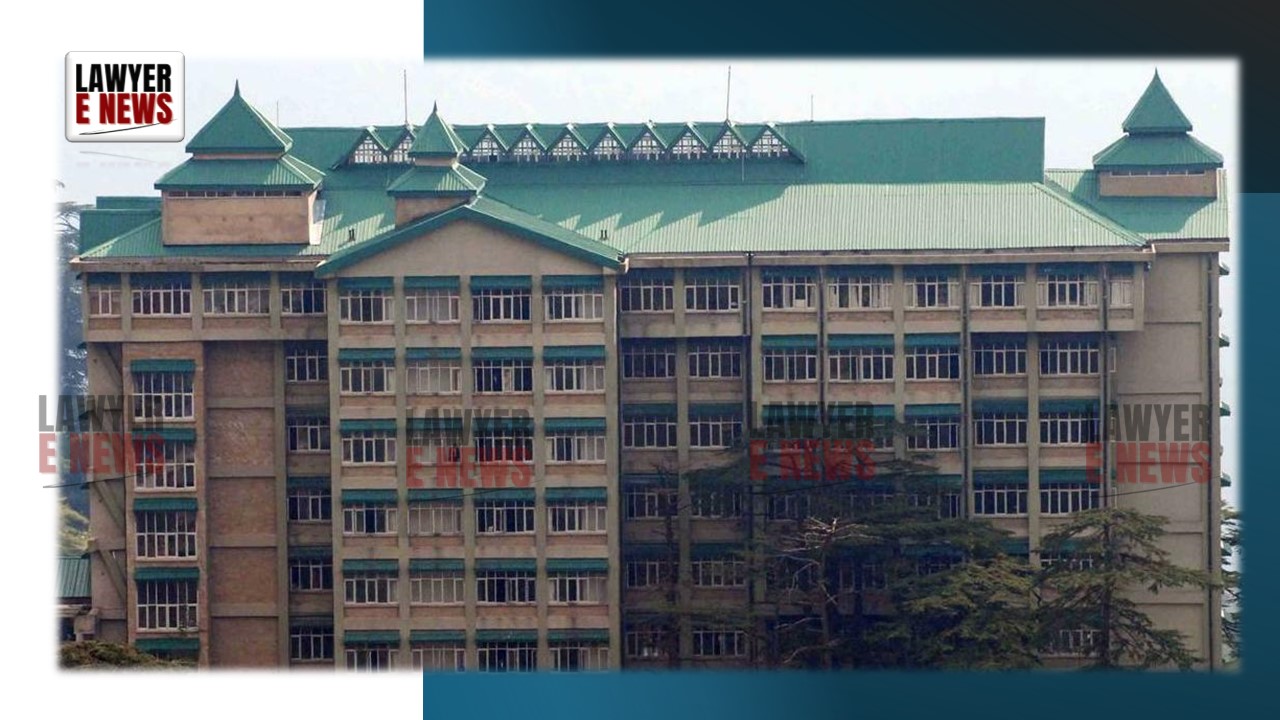
“Technical Error Can’t Cost a Litigant Their Day in Court” — In a significant reaffirmation of procedural fairness, the Himachal Pradesh High Court set aside a trial court order that had dismissed a civil suit as withdrawn—despite the fact that the plaintiff had explicitly sought to pursue the matter in a court of proper territorial jurisdiction. In Bharat Dogra v. D.C. Bilaspur & Others, CMPMO No. 64 of 2025, Justice Satyen Vaidya observed that the trial court erred by treating the plaintiff’s plea for return of plaint as one for withdrawal of suit, thereby risking prejudice on limitation grounds. The Court invoked the inherent powers of the civil court and directed that the plaint be returned under Order 7 Rule 10 and 10A CPC for presentation before the appropriate forum.
The petitioner, Bharat Dogra, had originally instituted a civil suit for recovery before the Civil Judge (Senior Division), Mandi. During the proceedings, it was realized that the Mandi court lacked territorial jurisdiction, and a formal objection had also been raised in the written statement by the defendants.
Instead of having the plaint returned under Order 7 Rule 10 CPC, the petitioner moved an application seeking withdrawal of the suit with liberty to file afresh. On 9 October 2023, the trial court allowed this withdrawal, thereby closing the file and consigning it to records.
Realizing the procedural misstep, the plaintiff soon filed another application under Order 7 Rule 10 and Rule 10A CPC, seeking to recall the withdrawal order and instead obtain return of the plaint. The plea was that the earlier withdrawal was only intended to correct jurisdiction—not to abandon the claim—and that an order returning the plaint would protect his rights, particularly with respect to limitation.
The trial court rejected this request on 6 November 2024, citing that the file had been consigned to records and that it could no longer entertain the application.
Justice Satyen Vaidya termed this reasoning a clear failure to exercise jurisdiction. The High Court observed:
“There was no occasion for the learned trial Court to exercise jurisdiction under Order 23 Rule 1 of the Code, as the plaint could have been simply returned… in terms of Order 7 Rule 10 of the Code.” [Para 7]
The Court noted that the plaintiff had not abandoned his cause but merely sought to pursue it in the correct forum. It emphasized that:
“The learned trial Court is vested with inherent jurisdiction to do justice between the parties and noticeably, in absence thereof, the plaintiff is facing serious prejudice.” [Para 8]
Further, the Court appreciated the respondents’ fairness, recording that the counsel for the defendants had no objection to allowing the petition and returning the plaint to be filed before the court at Bilaspur.
Allowing the petition, the High Court set aside the order dated 6.11.2024 and recalled the earlier order dated 9.10.2023, which had permitted withdrawal. It remitted the matter back to the trial court with clear directions:
“The matter is remitted back… with a direction to take further action in terms of Order 7 Rule 10 or Order 7 Rule 10A of the Code… in accordance with law.” [Para 9]
The parties were directed to appear before the Mandi trial court on 6 June 2025 to proceed accordingly.
This judgment underscores the principle that substantive rights must not be sacrificed at the altar of procedural rigidity. The Himachal Pradesh High Court’s intervention prevented a litigant from facing limitation hurdles due to an avoidable technical lapse and reinforced the duty of trial courts to exercise procedural discretion judiciously and fairly. As Justice Vaidya rightly noted, justice is the ultimate object of procedural rules, and any application of the Code must reflect that higher goal.
Date of Decision: 26 May 2025