
-
by sayum
26 August 2026 1:49 PM







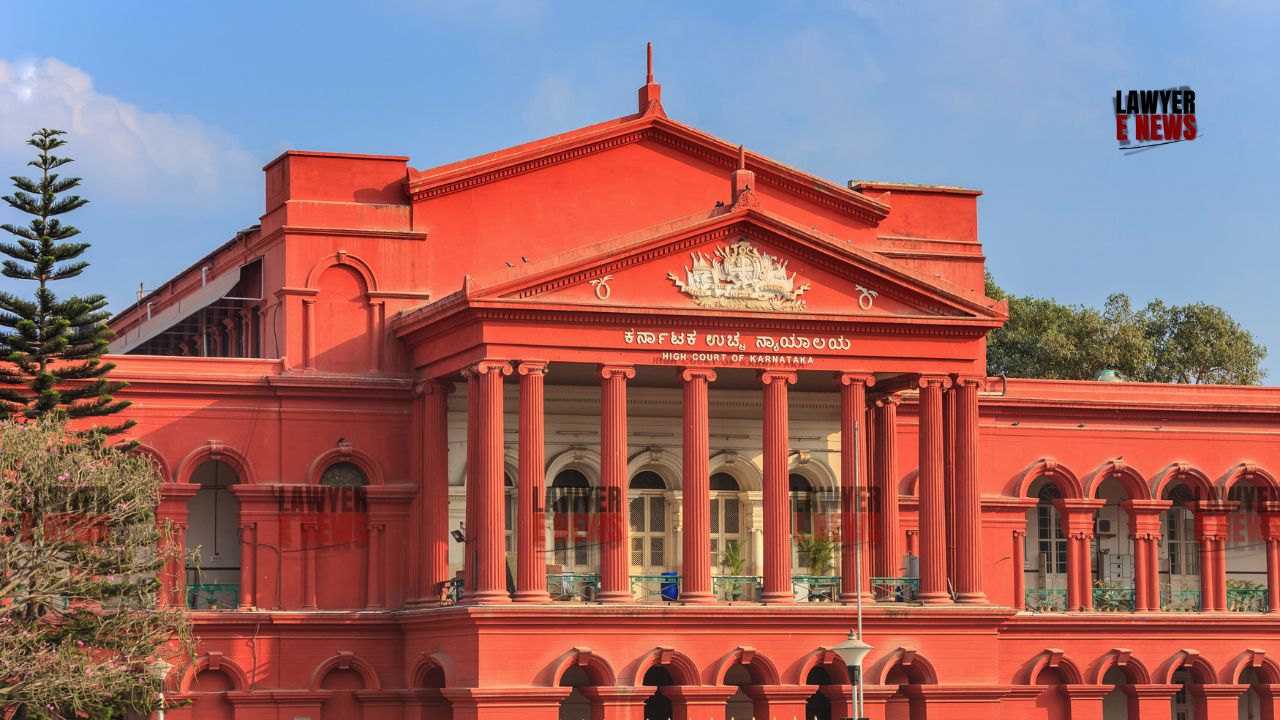
"Injunction Without Justification Cannot Stall Rs. 188 Crore Business Using Registered Trademark" - Karnataka High Court modifying a commercial court’s ex parte injunction that had barred the use of the defendant’s registered trademark ‘GOBOULT’. The Court emphasized that ex parte restraint orders must be reasoned, not perfunctory, especially when the consequences affect an ongoing business with over ₹188 crore in turnover and 650 employees.
The Division Bench comprising Justice B.M. Shyam Prasad and Justice K.V. Aravind, allowed cross-appeals filed by both parties, holding that the commercial court's actions on both pre-institution mediation and the interim injunction were legally unsustainable.
The plaintiff Exotic Mile Pvt. Ltd., owner of trademarks ‘GOBOLD’, ‘GOJOLT’, and ‘GOVO’, had filed a suit for infringement against the defendant DPAC Ventures LLP, who was using the mark ‘GOBOULT’, also registered in its name. The Commercial Court had granted an ad-interim injunction without notice, preventing the defendant from using its registered trademark, and simultaneously rejected the plaintiff’s request to dispense with pre-institution mediation under Section 12-A of the Commercial Courts Act, 2015, referring both parties to the District Legal Services Authority (DLSA).
The High Court held both these aspects of the order to be incorrect in law and procedure.
"The Commercial Court Could Not Have Said Delay Would Defeat the Purpose Without Showing How—A Mere Statement Is Not Judicial Reasoning"
Examining the trial court’s reasoning, the High Court found that the ex parte injunction was granted without a proper application of mind to the urgency or hardship involved. It remarked:
"The commercial Court… observed that the delay in granting interim relief would defeat the purpose of granting injunction, but this finding is not backed by reasons which justify the conclusion. A statement in itself will not by itself supply reasons."
The Court stressed that injunctions which halt large-scale business operations cannot be granted casually. The defendant had argued that it had a valid registration for ‘GOBOULT’ under Sections 9 and 35, had been using it since May 2025, had already earned ₹188.94 crores in sales, invested ₹80.91 crores in marketing, and that any sudden disruption would affect its 650-member workforce.
Acknowledging this, the High Court stated: “These are material circumstances which must receive due consideration at this stage… the requirement to reason that the delay in granting relief would defeat the very purpose assumes significance as it can impact businesses.”
The Commercial Court’s failure to assess these economic and employment factors, while issuing a blanket injunction without hearing the defendant, was held to be legally flawed.
"Registered Trademark Owners Cannot Be Injuncted Without Hearing When No Urgency Is Shown—‘GOBOULT’ Use Permitted With Monitoring"
While not adjudicating the trademark dispute on merits, the High Court held that the balance of convenience at this interim stage favoured allowing the defendant to continue business under the ‘GOBOULT’ mark. The Court noted:
“This Court cannot at this stage enter into the merits… all questions… must be open for due consideration by the commercial Court.”
To ensure transparency and protection of both parties’ interests, the Court modified the injunction to allow the defendant to continue use of the mark, subject to weekly filing of business accounts, and the pending injunction application being decided by November 10, 2025.
It was also noted that the defendant’s use of ‘GOBOULT’ was not restrained in earlier proceedings before the Delhi High Court, and the plaintiff’s trademarks, though prior in time, do not automatically justify a gag on a validly registered mark.
"Section 12-A Cannot Be Used to Delay Urgent Suits—Dispensation from Pre-Institution Mediation Restored"
Another legal issue addressed was the trial court’s decision to dismiss the plaintiff’s application under Section 12-A of the Commercial Courts Act and refer the parties to DLSA mediation, despite the plaintiff seeking urgent interim relief.
Both parties agreed that the commercial court’s direction was legally impermissible after the Supreme Court’s clarification in Dhanbad Fuels Pvt. Ltd. v. Union of India, which held that mandatory pre-institution mediation under Section 12-A is not required where urgent interim relief is sought.
The High Court agreed and held:
“The plaintiff must succeed… the commercial Court, in rejecting the application and referring the parties to mediation, has evolved a hybrid solution which will not be permissible when the suit is filed after 20.08.2022.”
Thus, the direction to approach the DLSA was quashed, and the plaintiff's application for dispensation from mediation was allowed.
"Caveats Must Be Respected, Jurisdiction Must Be Clear—Litigants in Commercial Suits Must Exercise Caution"
The defendant had also raised procedural concerns about the plaintiff allegedly failing to disclose the defendant’s caveats, and about the choice of jurisdiction given that the defendant’s registered office was now within Bengaluru Urban, not Bengaluru Rural.
While not conclusively ruling on these issues, the Court observed that such aspects should be appropriately raised and examined during the full hearing of the interim injunction application, but warned that plaintiffs seeking equitable relief must act with procedural fairness.
A Balanced Course—Trademark Use Allowed Pending Final Interim Decision
The High Court’s order strikes a balance between protection of IP rights and economic realities, cautioning lower courts against passing unreasoned ex parte orders that halt commercial activity. While acknowledging the plaintiff’s grievance over potential infringement, the Court concluded that due process and evidentiary balance must prevail.
It directed the Commercial Court to decide the pending injunction application by 10.11.2025, while allowing the defendant to operate under ‘GOBOULT’ with strict reporting obligations.
This judgment underscores the critical judicial principle that urgency must not be assumed—it must be explained, especially where interim injunctions affect businesses, jobs, and registered statutory rights.
Date of Decision: 03 October 2025





