-
by sayum
28 July 2026 10:19 AM







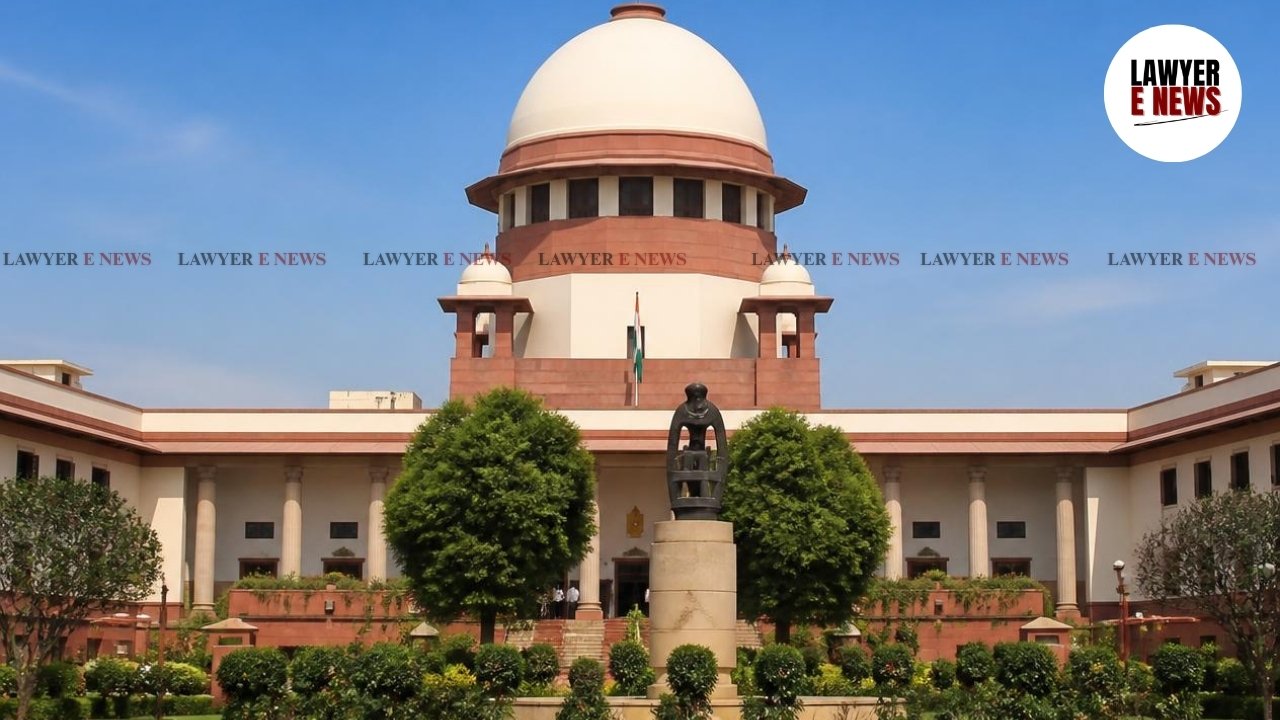
"Ability to understand and be understood in one’s own language is not a matter of convenience, but a matter of existential rights, for comprehension must necessarily precede meaningful participation in the society and day to day life activities," Supreme Court, in a significant ruling dated May 12, 2026, held that the right to receive education in one's mother tongue is an intrinsic facet of the fundamental right to freedom of speech and expression.
A bench of Justice Vikram Nath and Justice Sandeep Mehta directed the Rajasthan government to take time-bound steps to introduce the Rajasthani language as a subject in all schools, observing that language is the "very essence of an individual" and serves as the medium through which identity finds recognition.
The appellants had filed a Public Interest Litigation (PIL) before the Rajasthan High Court seeking the inclusion of the Rajasthani language in the Rajasthan Eligibility Examination for Teachers (REET) syllabus and a direction to the State to impart education in the local language. The High Court dismissed the petition on the premise that no enforceable legal right was established by the petitioners. Aggrieved by this dismissal, the appellants approached the Supreme Court under Article 136 of the Constitution of India.
The primary question before the court was whether the State is constitutionally obligated to provide facilities for instruction in the mother tongue at the primary stage of education. The court also considered whether the non-recognition of Rajasthani in the school curriculum, despite its widespread use, amounted to a violation of the fundamental rights guaranteed under Articles 14, 19, and 21A of the Constitution.
Language as an Existential Right and Constitutional Significance
The Court began by reflecting on the fundamental role of language in human life, noting that the ability to communicate in one’s own tongue is not a mere convenience but an existential right. The bench observed that in a society governed by law, the accessibility of language assumes immense constitutional significance as it allows for meaningful participation in social and civic life.
The bench noted that the framers of the Constitution were deeply conscious of this role, dedicating Part XVII (Articles 343 to 351) to the subject. The Court highlighted that while the Eighth Schedule has expanded to twenty-two languages, the constitutional vision remains rooted in preserving and promoting India’s rich linguistic diversity.
Legislative Mandate Under the RTE Act and Article 350A
Mother Tongue Instruction Is A Statutory Mandate
The Court placed heavy reliance on Article 350A of the Constitution, which was incorporated via the Seventh Amendment to ensure that States provide adequate facilities for instruction in the mother tongue at the primary stage. The bench observed that this constitutional recognition was further reinforced by the Right of Children to Free and Compulsory Education Act, 2009 (RTE Act).
Specifically, the Court pointed to Section 29(2)(f) of the RTE Act, which mandates that the medium of instruction shall, as far as practicable, be in the child’s mother tongue. The bench noted that this provision intends to obviate situations where students are unable to grasp foundational concepts due to language barriers, which risks engendering a sense of alienation in the child.
"Education imparted in a language unfamiliar to the learner not only impedes effective understanding but also risks impairing foundational development and engendering a sense of alienation or apprehension in the child."
National Education Policy 2020 and Pedagogical Primacy
NEP 2020 Reinforces Constitutional Vision
The Court observed that the National Education Policy, 2020 (NEP 2020) accords primacy to the use of home or regional languages as the medium of instruction. The bench noted that this policy reflects a considered legislative stance acknowledging that education in a familiar language enhances conceptual clarity and long-term learning outcomes.
The judges remarked that the NEP 2020 serves to reinforce the constitutional vision underlying Articles 19(1)(a), 21, 21A, 41, 45, and 350A. It was further noted that this framework is intended to be uniformly adhered to by both public and private educational institutions to embed linguistic inclusivity at the core of the instructional paradigm.
Fundamental Right under Article 19(1)(a)
Right To Education In Mother Tongue Is A Fundamental Right
At a fundamental level, the Court held that the right to receive education in one’s mother language finds its normative basis in Article 19(1)(a) of the Constitution. The bench reasoned that the guarantee of freedom of speech and expression necessarily encompasses the right to receive information in a form that is both meaningful and comprehensible to the individual.
The Court referred to its earlier precedent in State of Karnataka v. Associated Management of English Medium Primary & Secondary Schools, affirming that the right to freedom of speech includes the freedom of a child to be educated at the primary stage in a language of their choice. The bench rejected the State's technical argument that only languages in the Eighth Schedule could be taught.
"A right that exists only on paper, without corresponding administrative will or implementation, is in effect no right at all."
Addressing State Inaction and Directives
State Cannot Justify Inertia Using Technical Grounds
The Court expressed concern over the "substantial deficit" in the actual implementation of these commitments by the State of Rajasthan. It characterized the State’s stance—that only Eighth Schedule languages are taught—as "pedantic" and "myopic." The bench noted that Rajasthani is already taught at the University level, which belies any suggestion that the language lacks institutional or pedagogical acceptance.
The bench emphasized its solemn constitutional duty to ensure that guarantees enshrined in Part III are not rendered illusory by executive inaction. Consequently, the Court directed the State of Rajasthan to formulate a comprehensive policy for the effective implementation of mother tongue-based education in the backdrop of NEP 2020.
The Supreme Court set aside the High Court's order and allowed the appeal. It directed the State to take affirmative and time-bound steps to introduce Rajasthani as a subject in all schools, both government and private, in a phased manner. The State was further directed to file a compliance affidavit by September 25, 2026, and the matter was listed for September 30, 2026, to review the progress.
The ruling reinforces that education is a transformative tool for empowerment and must be intelligible to the learner to be effective. By elevating the choice of medium of instruction to a fundamental right under Article 19(1)(a), the Court has ensured that linguistic diversity is protected and that the State cannot bypass its constitutional obligations through administrative inertia.
Date of Decision: May 12, 2026