-
by sayum
28 July 2026 10:19 AM







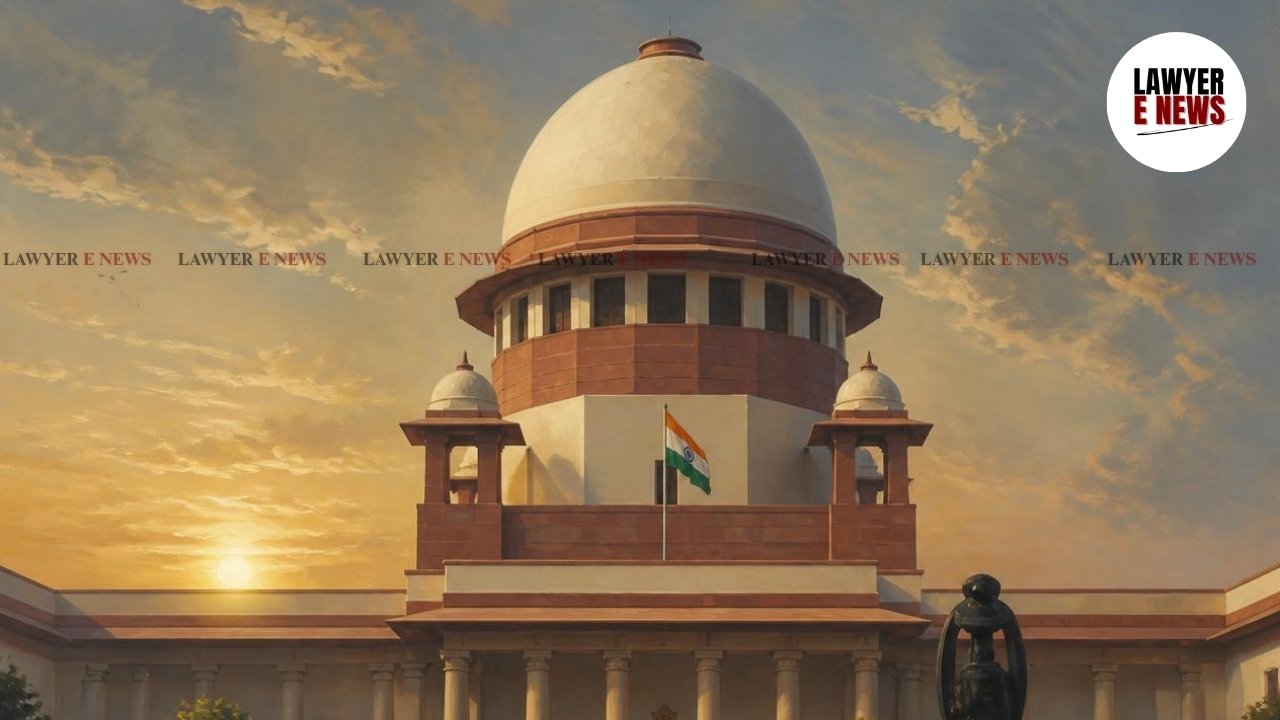
"Signed order is what embodies the final unalterable opinion of the Court, it is the only version of the Court’s order which is reached after multiple rounds of correction after dictation in Court," Supreme Court, in a significant ruling dated May 12, 2026, held that a dictation given to a Court-master in open court is merely a rough draft and does not carry the force of law until it is formally signed and uploaded.
A bench of Justice J.K. Maheshwari and Justice Atul S. Chandurkar observed that judges have a 'locus paenitentiae' or the right to change their minds and refine orders in chambers to ensure legal accuracy before finalization.
The matter arose from a miscellaneous application filed by certain respondents in a disposed of civil appeal involving Adani Ports and Special Economic Zones Ltd. The applicants sought a clarification that the oral dictation given by the bench on January 27, 2026, which they had transcribed from a YouTube video of the proceedings, should be treated as the final binding order instead of the formally signed version uploaded on February 12, 2026.
The original dispute involved a challenge to an interim order passed by the Gujarat High Court regarding the resumption of 'gauchar' (grazing) land by the State. The Supreme Court had previously disposed of the civil appeal by setting aside the High Court's order and directing the State to pass a fresh resolution after hearing all parties. The applicants moved the present application claiming that the final signed order materially varied from the court's oral observations regarding "status quo" and the disposal of the underlying writ petition.
The primary question before the court was whether a miscellaneous application seeking to declare an oral dictation as binding over a signed order is maintainable in law. The court also examined whether the variations between an open court dictation and a final signed order constitute a "material change" that necessitates a re-hearing of the matter.
Miscellaneous Applications In Disposed Matters Not For Review
Court Deprecates Practice Of Filing Post-Disposal MAs
The Court observed at the outset that the application was not maintainable, describing it as a "misconceived attempt" to rewrite the order in the garb of a clarification. Relying on Supertech Ltd. v. Emerald Court Owner Resident Welfare Assn. and Ajay Kumar Jain v. State of Uttar Pradesh, the bench noted that miscellaneous applications in disposed matters are permissible only for correcting clerical or arithmetical errors.
Averment On Oath Mandatory For Post-Disposal Applications
The bench emphasized that pursuant to judicial circulars, any party filing an MA in a disposed matter must specifically aver on oath that the application is necessitated because the original order has become impossible to implement. The Court found that the applicants had failed to meet this requirement and directed the Registrar concerned to submit an explanation as to why the application was permitted to be listed without such compliance.
Dictation In Open Court Is Often A Skeletal Framework
Distinction Between Draft Dictation and Final Pronouncement
Addressing the merits, the Court clarified the distinction between dictating a draft to a Court-master and the formal pronouncement of a judgment. The bench noted that the intent behind dictating a draft in open court is to put facts on record and lay down a skeletal framework, which remains subject to correction, enhancement, and refinement by the judge in chambers.
Practicalities Of Judicial Workload And Docket Explosion
The bench highlighted the practicalities of being a judge in India, citing the "docket explosion" and the practice of hearing dozens of matters on a single day. Referring to Ratilal Jhaverbhai Parmar v. State of Gujarat, the Court observed that judges often dictate short orders in court to save judicial time but must be allowed the liberty to ensure the final signed version is legally sound and free from accidental omissions.
Judges Retain The Right To Change Their Mind Until Signing
Locus Paenitentiae And The Sanctity Of Signed Orders
The Court placed heavy reliance on the Constitution Bench judgment in Surendra Singh v. State of U.P., which held that until a judgment is signed and delivered, it is nothing but a draft. The bench observed that a judge's responsibility is heavy, and they must be in a position to effect alterations if fresh light dawns upon them before the delivery of the final judgment.
Ancillary Directions Do Not Amount To Material Change
Regarding the applicants' grievance about the omission of a "status quo" direction in the signed order, the Court held that such ancillary directions do not constitute a material change requiring a re-hearing. The bench noted that since the original land resumption resolution was found to be illegal for want of a hearing, there was no occasion to grant status quo as it would impose an unreasonable restraint on the parties.
"Grant of status quo or non-grant thereof is an ancillary direction and it cannot be said to be a material change in the draft order which could not have been made prior to signing of the order without re-hearing."
Conclusion
The Supreme Court dismissed the miscellaneous application, holding that the signed and uploaded order dated January 27, 2026, remains the only final and legally binding version. Finding the application to be frivolous and an attempt to undermine the dignity of the Court, the bench imposed exemplary costs of ₹2000 each on the applicants, payable to the Supreme Court Legal Services Committee.
Date of Decision: May 12, 2026