-
by sayum
28 July 2026 9:44 AM







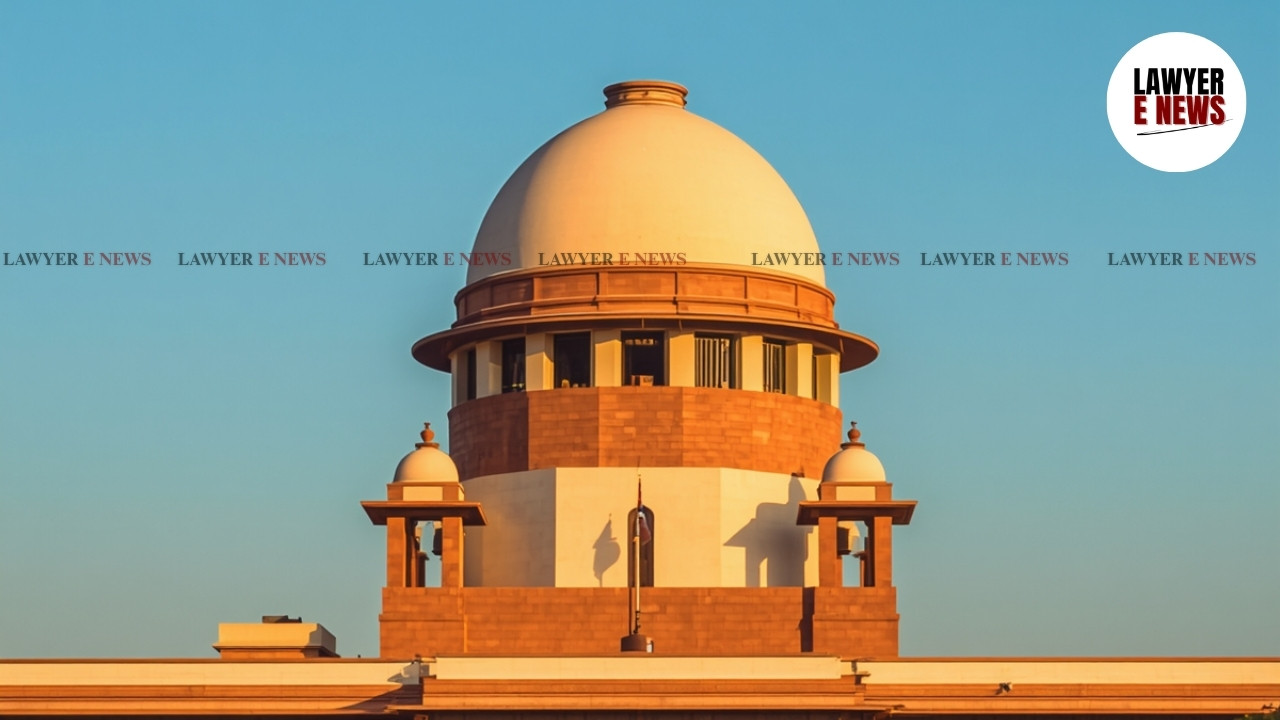
"Filing of such appeal, without even applying for a certified copy of the order sought to be impugned, practically meant that there was no filing of an appeal in the eyes of law," Supreme Court, in a significant ruling dated May 12, 2026, held that an appeal filed under Section 61 of the Insolvency and Bankruptcy Code (IBC) without a certified copy of the impugned order, where the appellant failed to even apply for such a copy within the limitation period, is "incurably tainted" and "wholly incompetent."
A bench of Justice Sanjay Kumar and Justice K. Vinod Chandran observed that such a filing does not satisfy the essential legal requirements and ought to be rejected at the threshold.
The case arose from a challenge to an order passed by the National Company Law Tribunal (NCLT), Kochi, which had approved a resolution plan submitted by the Angelwoods Apartment Allottees Association. Respondent No. 1, claiming to be a financial creditor and being the mother of a suspended director of the Corporate Debtor, sought to challenge this approval before the National Company Law Appellate Tribunal (NCLAT), Chennai.
Primary Legal Issue Before The Court
The primary question before the Court was whether an appeal filed within the condonable period under Section 61(2) of the IBC can be considered valid if it is not accompanied by a certified copy of the impugned order and no application for such a copy was made before the expiry of the limitation period. The Court also examined the extent of the NCLAT's power to condone delays in refiling when fundamental defects remain uncured.
Mandatory Requirement Of Certified Copy Under NCLAT Rules
The Court emphasized that Rule 22(2) of the NCLAT Rules, 2016, categorically mandates that every appeal must be accompanied by a certified copy of the impugned order. The bench noted that while Rule 14 allows for the exemption of certain requirements, this does not confer an automatic right on a litigant to dispense with the rules.
Strict Timelines Of IBC Are Of Essence
The bench reiterated that the IBC is governed by strict timelines, which have been held to be of essence in previous rulings such as Ebix Singapore Private Limited vs. Committee of Creditors of Educomp Solutions Limited. A litigant cannot be permitted to circumvent these timelines by filing an appeal that is fundamentally lacking in legal essentials.
Court Explains The "Diligence" Required From Appellants
Relying on the three-judge bench decision in V. Nagarajan vs. SKS Ispat and Power Limited, the Court observed that the act of filing an application for a certified copy is not a mere technicality. It serves as a clear indication of the party's diligence in pursuing the litigation.
The Court noted that a person wishing to file an appeal is expected to apply for the certified copy before the limitation period expires. Only then can the "requisite time" taken to obtain the copy be excluded while computing the period of limitation for the appeal.
"No Filing In The Eyes Of Law" Without Timeous Application
In the present case, the NCLT order was passed on August 14, 2024. The 30-day limitation expired on September 13, 2024, and the 15-day condonable window ended on September 28, 2024. Although Respondent No. 1 e-filed the appeal on the final day, she did not apply for the certified copy until April 21, 2025—months after the appeal was purportedly filed.
The Court found that filing an appeal on the very last day available without even having applied for a certified copy meant that there was no valid institution of the appeal. This failure effectively rendered the filing non-existent in the legal sense.
> "The act of filing an application for a certified copy is not just a technical requirement for computation of limitation but an indication of the diligence of the party in pursuing the litigation in a timely fashion."
Failure To Seek Exemption Under Rules 14 and 15
The bench further pointed out that Respondent No. 1 did not even choose to file an application for exemption from filing the certified copy at the time of the initial filing or even during the refiling process. Such an application is a minimum requirement that the NCLAT could have considered under its discretionary powers.
By failing to follow this procedure, the appellant left the appeal "defective beyond redemption." The Court clarified that the issue was not merely a delay in refiling, which is often treated with less rigour, but a fundamental failure to satisfy the jurisdictional requirements of the appeal itself.
NCLAT Erred In Extending Indulgence To Incompetent Appeal
The Supreme Court criticized the NCLAT for losing sight of these vital aspects. The NCLAT had condoned a 150-day delay in refiling upon the payment of costs, treating it as a matter exclusively between the Tribunal and the appellant. However, the Supreme Court held that the NCLAT failed to first ascertain whether the appeal was instituted in accordance with legal norms.
The Court concluded that an appeal that is "wholly incompetent" and "incurably tainted" should not be revitalized through delay condonation if the basic requirements of the Code and the NCLAT Rules are ignored.
Final Directions Of The Court
Consequently, the Supreme Court set aside the NCLAT’s order dated November 10, 2025, which had condoned the delays in filing and refiling. The appeals filed by the Allottees Association were allowed, effectively terminating the incompetent challenge brought by Respondent No. 1.
Date of Decision: May 12, 2026