-
by sayum
28 July 2026 10:19 AM







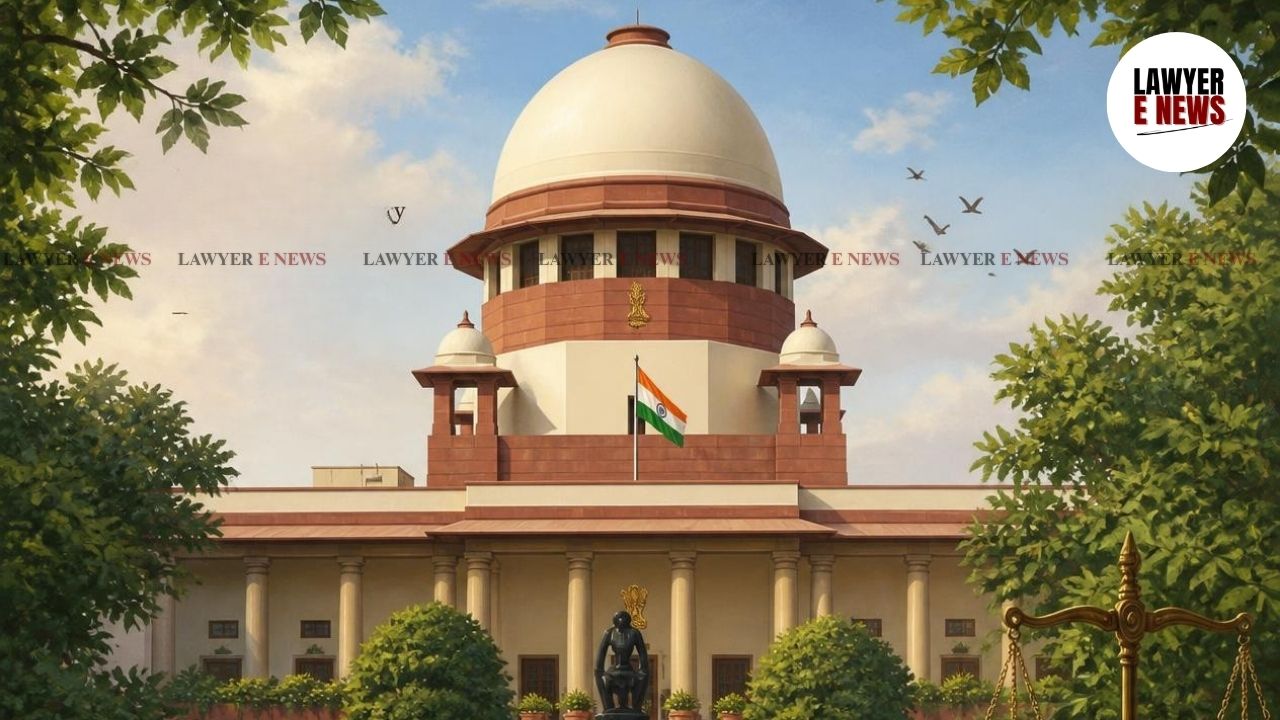
"But we do not think that the notional income of a student undergoing a Degree course in Engineering from a premier institute should be taken to be equivalent to the minimum wages admissible to an unskilled worker," Supreme Court, in a significant ruling dated May 12, 2026, has held that the notional income of a meritorious engineering student for the purpose of motor accident compensation cannot be pegged at the level of an unskilled worker’s minimum wage.
A bench of Justice Vijay Bishnoi and Justice S.V.N. Bhatti observed that while it is difficult to quantify the potential of a young student, the courts must ensure "just and reasonable compensation" that affords meaningful succour for the loss of a loved one.
The case arose from a fatal road accident on May 28, 2000, which claimed the life of Karan Pal Singh, a 22-year-old third-year Mechanical Engineering student. The Motor Accident Claims Tribunal (MACT) initially awarded a compensation of ₹2,23,000, which was later enhanced by the Punjab and Haryana High Court to ₹13,44,000. Aggrieved by the High Court's refusal to grant future prospects and its assessment of notional income at only ₹6,000 per month, the mother of the deceased (represented by her legal heir) moved the Supreme Court seeking further enhancement.
The primary question before the court was whether the notional income of a meritorious engineering student should be assessed based on professional potential rather than minimum wages. The court was also called upon to determine whether future prospects could be denied solely because the income of the deceased was assessed on a notional basis. Finally, the bench examined the adequacy of compensation under conventional non-pecuniary heads like filial consortium and funeral expenses.
Notional Income Must Reflect Professional Potential
The Supreme Court found that both the Tribunal and the High Court had undervalued the potential of the deceased. The bench noted that the deceased was not just an engineering student but also held a diploma in Plastic Engineering and a certification in AutoCAD. Relying on its previous ruling in Navjot Singh vs. Harpreet Singh, the court emphasized that students recruited through campus interviews often start with significant salaries.
Court Rejects Minimum Wage Standard For Professional Students
The bench observed that it is exceptionally difficult to quantify the potential of a young student, yet the High Court's assessment of ₹6,000 per month was "wholly inadequate." The court highlighted that students from premier institutes cannot be equated to unskilled labour. Given that the accident occurred in the year 2000, the Supreme Court determined that a monthly notional income of ₹12,000 was appropriate to reflect the deceased's academic promise and future prospects.
Future Prospects Apply To Notional Income
The court took serious exception to the High Court’s refusal to grant future prospects on the grounds that the income was notional. The bench clarified that such an approach is contrary to the well-settled principles enunciated in Sarla Verma vs. DTC and affirmed by the Constitution Bench in National Insurance Co. Ltd. vs. Pranay Sethi. The court held that since the deceased was below 40 years of age, 40% future prospects must be added to the notional income.
"The High Court erroneously denied future prospects solely on grounds that the income was notional. This approach is contrary to the well-settled principles... Resultantly, 40% future prospects ought to be added to the notional monthly income."
Application Of Correct Multiplier And Deductions
Following the standards set in Pranay Sethi, the court added 40% to the assessed income of ₹12,000, totaling ₹16,800. As the deceased was a bachelor, the court deducted 50% for personal and living expenses, bringing the monthly dependency to ₹8,400. Applying the correct multiplier of 18 for a 22-year-old, the court computed the total loss of dependency at ₹18,14,400, a significant increase from the High Court's calculation.
Enhancement Of Conventional Heads And Filial Consortium
The court further interfered with the compensation awarded under non-pecuniary heads, stating they were on the lower side. Citing Magma General Insurance Co. Ltd. vs. Nanu Ram, the bench awarded ₹40,000 towards filial consortium to the claimant. It also increased the funeral expenses to ₹30,000, noting the specific costs incurred in transporting the deceased's body from Agra to Hoshiarpur for last rites.
"We are of the view that the compensation awarded under the conventional non-pecuniary heads also calls for interference for being on the lower side. The Constitution Bench has provided reasonable figures of Rs. 15,000, Rs. 40,000 and Rs. 15,000 under conventional heads."
Property Damage And Interest Rates
Regarding the damage to the motorcycle, the court set aside the depreciated valuation of ₹18,000 and awarded ₹25,670 as per the original surveyor’s report. On the issue of interest, the Supreme Court upheld the High Court's decision to reduce the rate from 9% to 7.5% per annum, finding it "reasonable and adequately serving the ends of justice" for the period from the filing of the petition until realization.
The Supreme Court ultimately enhanced the total compensation from ₹13,44,000 to ₹19,25,070. The bench directed the respondents to pay the enhanced amount, along with 7.5% interest, within eight weeks. By recognizing the professional trajectory of engineering students, the court has reinforced the principle that "just compensation" must account for the specific educational qualifications and career potential of the victim.
Date of Decision: May 12, 2026