-
by sayum
28 August 2026 2:11 PM







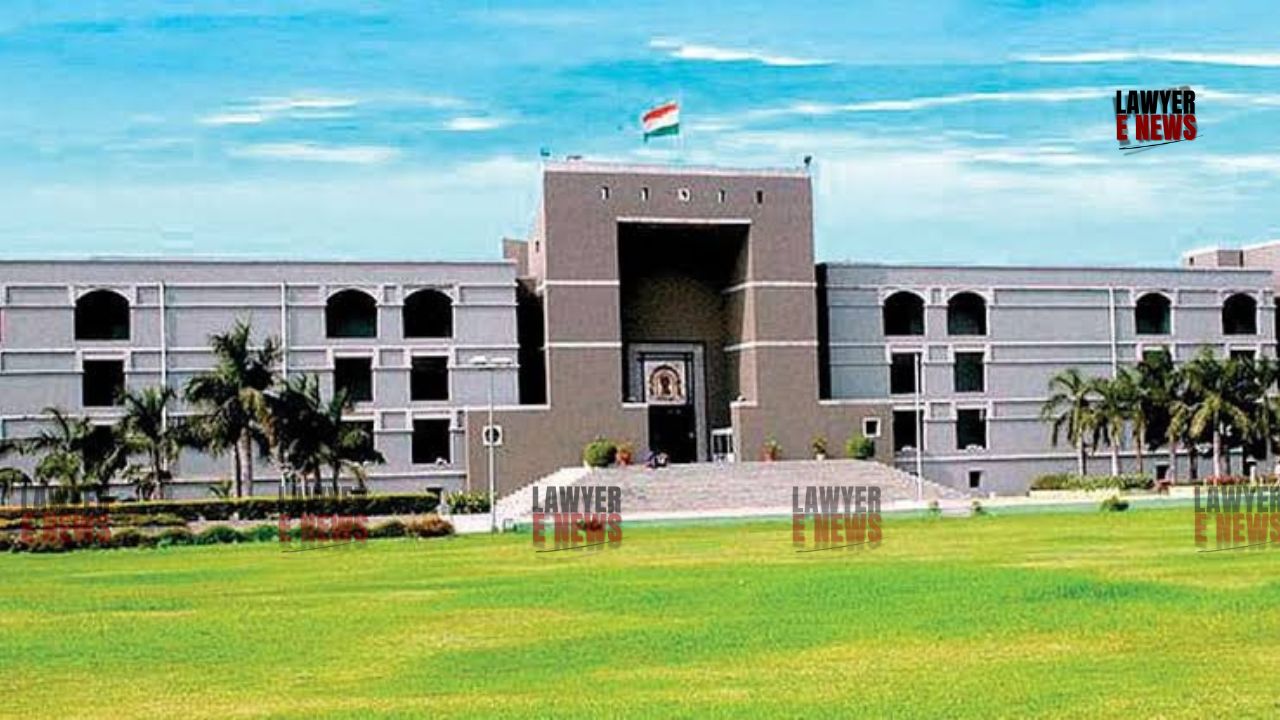
“Courts Are Not Bound to Reward Indolence by Granting Discretion” - In a judgment that reiterates the non-negotiable nature of limitation law, the Gujarat High Court dismissed a civil application for condonation of 1357-day delay in filing a second appeal by the Kutchh District Panchayat, ruling that the applicant had shown “gross negligence, indolent conduct, and complete absence of due diligence” in approaching the Court.
The Court, presided over by Justice Maulik J. Shelat, held that "the delay is not only inordinate but entirely unjustified," and made it clear that the State and its instrumentalities will not be afforded any separate standard of leniency under Section 5 of the Limitation Act, 1963.
“The Right to Litigate Cannot Be Used to Frustrate Finality of Judgments” — Court Emphasises That Decree Passed in 2018 Became Final Due to Inaction
The dispute originated from a Regular Civil Suit filed in 2006, wherein the trial court exonerated the Panchayat (Defendant No.1) but passed a money decree against other defendants, directing payment of pensionary benefits with interest to the original plaintiff. However, upon an appeal filed by Defendants Nos. 2 to 4, the Appellate Court on 25th April 2018 not only upheld the decree but added monetary liability upon Defendant No. 1 (the Panchayat) as well.
Despite this adverse ruling, the Panchayat remained passive and did not challenge the decree. It was only after execution proceedings were initiated in 2023, including attachment of its immovable property, that the Panchayat filed a belated second appeal in April 2024, accompanied by a civil application seeking condonation of a delay of 1357 days.
The explanation offered by the Panchayat was that it was only upon receiving notice in the execution application that it came to know about the appellate decree — a contention the Court outrightly rejected as “contrived and contrary to record.”
“Limitation Law Rewards Vigilance, Not Lethargy” — Court Finds No Sufficient Cause Under Section 5
The High Court meticulously examined the application under Section 5 of the Limitation Act, concluding that there was “not even a trace of bona fide explanation” for the delay. The Court emphasised that:
“A bare reading of the delay application shows that the applicant has failed to explain why no action was taken between 2018 and 2024. The explanation is vague, evasive, and clearly an afterthought.”
Rejecting the Panchayat’s plea that public interest required consideration on merits, the Court reminded that “public bodies are expected to set higher standards of diligence, not lower.”
“Lack of internal communication or bureaucratic red tape cannot form the basis of sufficient cause. The law of limitation applies equally to all — State or citizen.” — Justice Maulik J. Shelat
“Decree of Appellate Court Prevails and Merges Trial Court’s Finding” — Defendant No. 1 Bound by Decree Passed in 2018
The Panchayat attempted to argue that since it was originally exonerated by the trial court, it could not be held liable under an appellate decree passed without any specific appeal by the plaintiff. The Court rejected this on well-settled principles of merger under civil procedure, observing:
“The decree of the Trial Court merges into the decree of the Appellate Court. Once the appellate decree imposed monetary obligations upon the applicant, failure to challenge it within time made it final and binding.”
The High Court reiterated that the Appellate Court’s decree having not been challenged by any of the defendants, and more specifically by the applicant herein for nearly six years, cannot now be undone under the garb of ‘justice on merits’.
“Discretion to Condon Delay Is Not Absolute; It Ends Where Negligence Begins” — Court Cites Supreme Court Precedents
Relying on numerous Supreme Court decisions, the High Court reiterated that condonation of delay is not a matter of right, but a discretionary remedy that demands honesty of intention and reasonable cause.
Citing Basawaraj v. Special Land Acquisition Officer, (2013) 14 SCC 81, the Court observed: “Where a party is found to be negligent or lacking in bona fides, or has not acted diligently, there can be no justified ground to condone the delay.”
Further referring to Rajneesh Kumar v. Ved Prakash (2024), the Court reiterated that: “Litigants cannot shift the blame entirely on their advocates. A vigilant litigant is expected to monitor the fate of his own case and not sit idle for years.”
The Court also invoked Pathapati Subba Reddy (2024), cautioning that “Courts must not confuse liberal interpretation of ‘sufficient cause’ with license for gross negligence.”
“Merits Cannot Override Delay When No Explanation Exists” — Court Rejects the Panchayat’s Plea to Consider Appeal on Merits
The applicant’s counsel urged the Court to condone the delay on the basis of strong merits of the second appeal, claiming that the Panchayat had a valid legal case. But the Court firmly held:
“When the explanation for delay is found to be fabricated or non-existent, the Court should not even reach the merits of the matter.”
Referring to Shivamma (2025 INSC 1104), the Court noted: “It cannot be presumed that the delay is non-deliberate. The length of the delay must be traced to a cause arising within the period of limitation.”
“State Cannot Escape Consequences of Its Own Negligence” — Costs Directed to be Paid to Plaintiff
Observing that valuable rights had crystallised in favour of the original plaintiff, the Court not only dismissed the application for condonation but also directed the Registry to refuse registration of the second appeal.
Further, the Court ordered that Rs. 10,000 in costs, already deposited by the applicant, be disbursed to the decree-holder (original plaintiff) through RTGS/NEFT.
“Litigation cannot be endless, and every party is entitled to finality. The right to appeal is not the right to delay.”
The Gujarat High Court’s ruling in Kutchh District Panchayat v. Anwarsha Maheboob Saiyed & Ors. is a clear and categorical reiteration of the sanctity of limitation law and a cautionary tale for government authorities. It sends an unmistakable message that the doors of justice will not remain open indefinitely, especially for those who fail to act despite full knowledge of their obligations.
“Justice is not for the sluggish, and delay without cause is delay without remedy.”
Date of Decision: 22 September 2025