-
by sayum
28 August 2026 12:24 PM







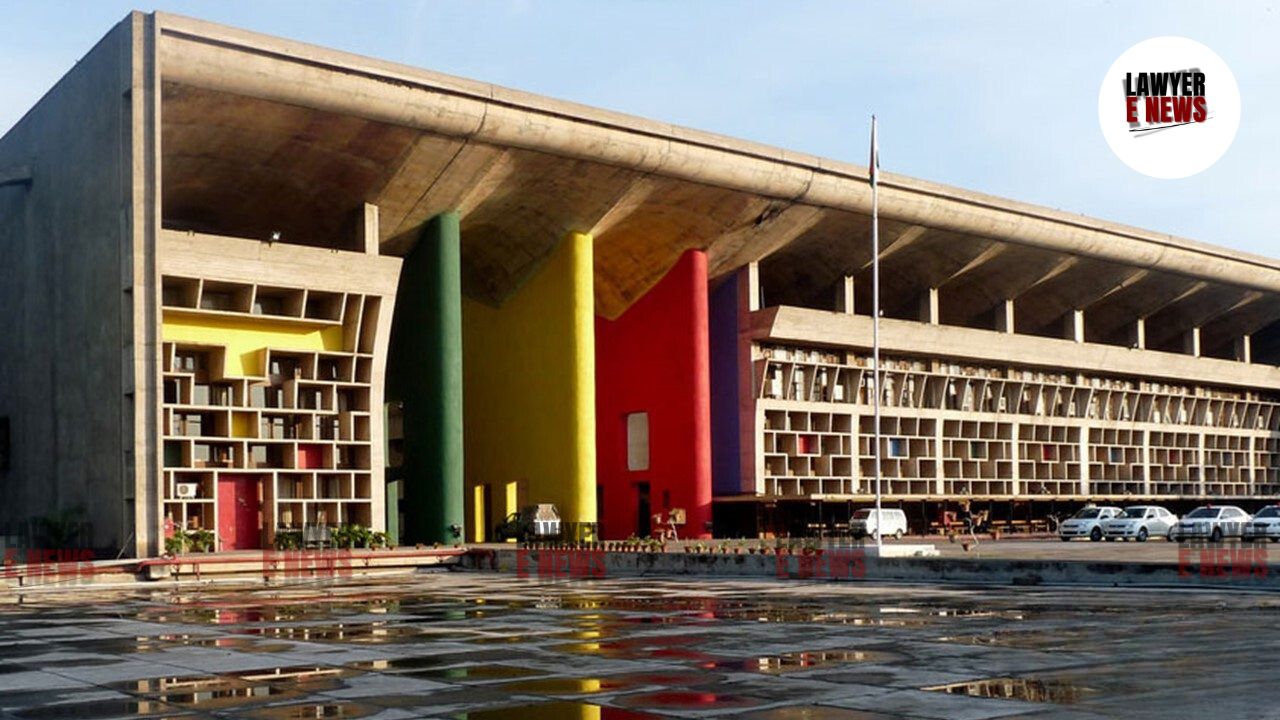
“Ad-hocism Is Not a Shield—It Is a Constitutional Breach”, Punjab and Haryana High Court in Hari Ram and Others v. State of Haryana and Others (CWP-25042-2025) delivered a stinging rebuke to the State for persistently denying regularization to employees who have rendered nearly three decades of continuous service. Justice Harpreet Singh Brar, speaking for the Court, denounced the use of “non-availability of sanctioned posts” as a pretext for denying dignity and equality in public employment, calling it a “conscious technique of denial” that corrodes constitutional values.
The Court held that long-term ad hoc employment, even when labeled as outsourcing or interim engagement, violates Articles 14, 16, and 21 of the Constitution, and rejected the misuse of the Supreme Court’s ruling in Umadevi as a cover for exploitative practices. The petitioners, whose services were continuously utilized since 1995, were granted full regularization and consequential benefits, with the Court declaring:
“If no order of regularization is passed within the stipulated period, the petitioners shall be deemed to be regularized and they would be entitled to seniority and regular pay.”
“Thirty Years of Service, Nine Rounds of Litigation – This Is Constitutional Exploitation”: Court’s Damning Critique of Bureaucratic Apathy
The Court began by tracing the background: the petitioners, along with one Vir Bahadur, had been appointed in 1995 and were part of a 2002 writ petition (CWP-17563-2002), which was allowed in 2005. While Vir Bahadur was regularized, the remaining petitioners were repeatedly denied parity under the excuse that no sanctioned posts were available. This petition marked the ninth time they had approached the judiciary for relief.
The State maintained that Vir Bahadur's case was distinct due to the availability of sanctioned posts. The Court, however, dismissed this distinction as legally irrelevant given the nature of work performed and the length of service rendered.
“State Cannot Balance Budgets on the Backs of Those Performing Basic and Recurring Public Functions”
In a trenchant passage, Justice Brar drew upon recent Supreme Court pronouncements to denounce the logic of financial stringency used by State entities:
“The State (here referring to both the Union and the State governments) is not a mere market participant but a constitutional employer. It cannot balance budgets on the backs of those who perform the most basic and recurring public functions.”
Relying on the Supreme Court’s judgment in Dharam Singh v. State of U.P., 2025 SCC OnLine SC 1735, the Court emphasized that Umadevi cannot be invoked to perpetuate precariousness and deny fair employment where work is inherently perennial.
The Court also cited with approval the rulings in Jaggo v. Union of India (2024), Vinod Kumar v. Union of India (2024), and Shripal v. Nagar Nigam, Ghaziabad (2025), all of which assert that denial of regularization to long-serving employees amounts to constitutional non-compliance.
“The Justice System Is Undermined When Its Judgments Are Ignored”
Deeply disturbed by the petitioners' prolonged legal battle, the Court declared: “What has deeply pricked the conscience of this Court is that the petitioners, after rendering spotless and unblemished service for nearly three decades, have been compelled to approach this Court for the 9th time.”
The Court lambasted the systemic administrative apathy, emphasizing that mere pronouncement of judgments is not sufficient. True justice demands swift and effective implementation. In this regard, the Court warned:
“The delivery of judgments alone does not guarantee the credibility of the justice system. True justice is realized only when the administration acts promptly and effectively to enforce the decisions of the courts.”
“This Is Not Mere Laxity—It Is a Conscious Technique of Denial of Rights”
In what may become a defining moment for service jurisprudence, the Court expressly called out State practices of circumventing judicial decisions by tweaking policies, delaying files, and using procedural excuses such as lack of budgetary sanction or qualification requirements.
“Tweaking these directions by introducing a new policy is not merely administrative laxity but rather it is a cognizant technique of denial of well-deserved rights of citizens that corrode the livelihoods and dignity of these employees.”
“Prolonged Ad-Hocism Is a Violation of Constitutional Discipline”
Drawing from the reasoning in Shripal and Dharam Singh, the Court declared that outsourcing and ad-hocism cannot be used as a backdoor to avoid regular employment:
“Sensitivity to the human consequences of prolonged insecurity is not sentimentality. It is a constitutional discipline that should inform every decision affecting those who keep public offices running.”
“Judgment Implementation Cells Must Be Constituted—Accountability Must Be Enforced”
Realizing the structural nature of the issue, the Court issued systemic guidelines for effective enforcement of court orders. These include:
Naming accountable officers in each service matter.
Mandatory timelines for compliance with judicial directions.
Creation of centralized Judgment Implementation Cells in every department.
Online transparency to track progress on service-related court orders.
Inclusion of compliance in officer appraisals.
The Court warned that non-implementation of such orders could lead to contempt proceedings under Article 215 of the Constitution.
“This Court Will Not Allow the Rights of the Bottom Pyramid Workers to Be Reduced to Dust”
In a rare show of judicial empathy, the Court acknowledged the emotional and economic toll inflicted on low-level employees who are made to fight legal battles for what is legally theirs. The ruling affirmed that constitutional morality must protect not just the powerful but also the most vulnerable.
The Court allowed the writ petition, directing: “The respondent-Corporation is directed to regularise the services of the petitioners within a period of six weeks… If no order of regularization is passed within the stipulated period, the petitioners shall be deemed to be regularized and they would be entitled to seniority and regular pay.”
The petitioners were also granted all consequential benefits, including parity with Vir Bahadur, whose case the respondents tried to differentiate unsuccessfully.
Any deviation from this ruling would empower the petitioners to invoke contempt jurisdiction against the authorities.
This judgment stands not merely as a legal victory for a handful of employees, but as a resounding constitutional message that employment is not charity, but a right rooted in dignity and equality. It redefines the role of the State as a model employer, and sends a clear signal that the courts will no longer tolerate procedural evasions and administrative indifference in service matters.
The ruling not only offers justice to the petitioners, but also opens the door for thousands of similarly placed employees across India to challenge the unconstitutional perpetuation of ad hocism in public employment.
Date of Decision: 08.09.2025