-
by sayum
04 August 2026 1:39 PM







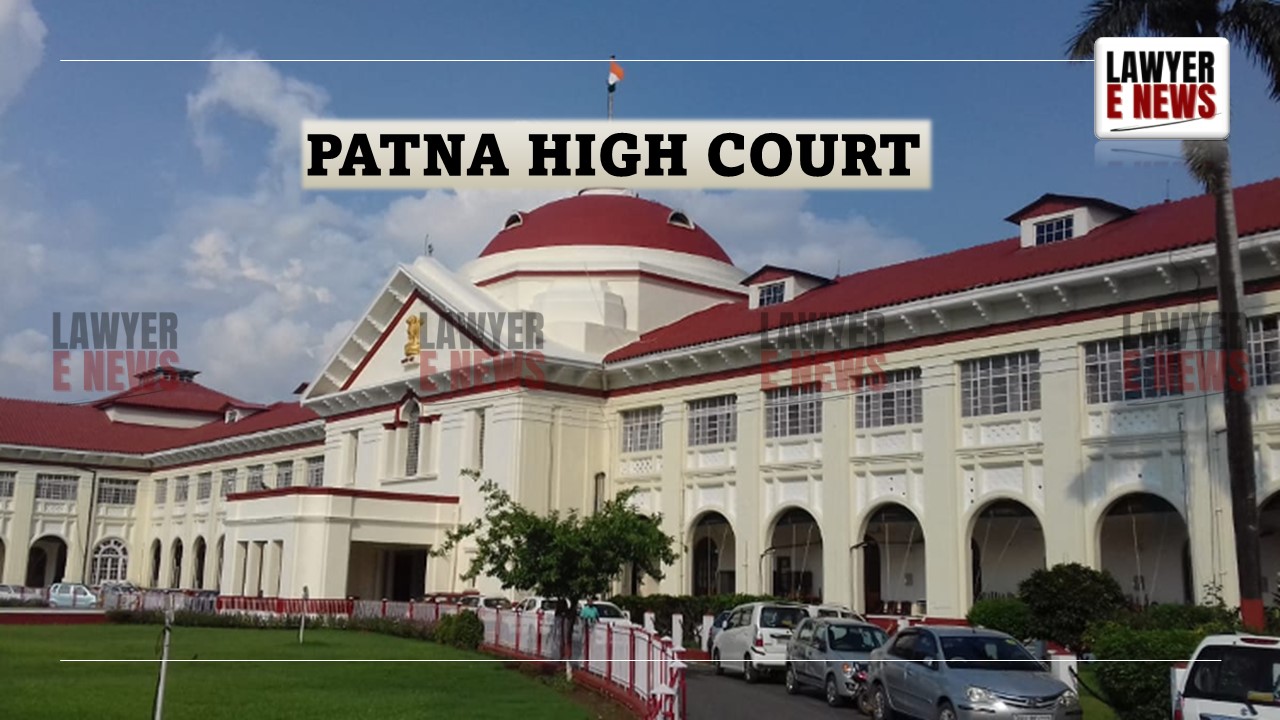
“Fifteen Years Lost in Litigation — Courts Cannot Let Matrimonial Disputes Drag Indefinitely”: In a significant judgment Patna High Court rejected a plea by Prabhash Kumar seeking review of a 2024 order that directed the Family Court to dispose of Matrimonial Case No. 481 of 2011 within six months. The Division Bench of Justice P.B. Bajanthri and Justice Alok Kumar Pandey imposed a cost of ₹5000 on the petitioner for what it termed a frivolous and delaying tactic, stressing that 15 years of litigation is “too long to let matrimonial disputes linger”.
The Court asserted: “The petitioner has intentionally approached this Court without pointing out what is the present status of the trial… He wants to linger the matter at one pretext or another though marriage took place in the year 2010.”
The petitioner-husband, Prabhash Kumar, had earlier challenged a matrimonial judgment in Misc. Appeal No. 113 of 2022, arising from Matrimonial Case No. 481/2011. The Court had then remitted the matter to the Additional Principal Judge, Family Court, Patna, directing it to dispose of the case within six months.
In the present review petition, Prabhash, appearing in person, claimed that the High Court’s imposition of a time-bound schedule contradicted the principles laid down by the Constitutional Bench of the Supreme Court in High Court Bar Association, Allahabad v. State of U.P., where it was held:
“Constitutional Courts, in the ordinary course, should refrain from fixing a time-bound schedule for the disposal of cases pending before other Courts, except in exceptional circumstances.”
Rejecting the petitioner's reliance on the High Court Bar Association decision, the Court held that the facts of this case clearly constituted an “exceptional circumstance” justifying a deadline:
“In matrimonial cases, the relation between husband and wife is always at stake… If amicable settlement does not take place, then valuable lifetime would defeat and it cannot revive.”
Emphasizing that litigation has already consumed 15 years, the Court remarked: “Both parties have lost their life nearly about 15 years in litigation… The very purpose for establishment of Family Court is to secure speedy settlement of disputes.”
On the issue of judicial propriety, the Court cited Order 47 Rule 1 CPC and Supreme Court rulings, including S. Murali Sundaram v. Jothibai Kannan and Sanjay Kumar Agarwal v. State Tax Officer, reiterating the narrow scope of review:
“A review petition has a limited purpose and cannot be allowed to be an appeal in disguise… There is no error apparent on the face of the record.”
The petitioner had neither shown any material error nor submitted any update on the Family Court proceedings. Instead, the Court found his conduct indicative of delay and obstruction.
In a stinging rebuke to litigative delays in matrimonial matters, the Patna High Court upheld its earlier direction for time-bound disposal and refused to allow the proceedings to be reopened or stalled further.
The Court held: “The grievance of the petitioner is devoid of any merit… The review petition stands dismissed.”
It further imposed a cost of ₹5000 payable to the Lawyers’ Association Welfare Benevolent Fund, warning against misuse of court time through unwarranted review petitions: “So that he should not litigate the matter unnecessarily just to keep the record pending for indefinite period.”
Date of Decision: 14 May 2025