-
by sayum
06 August 2026 1:47 PM







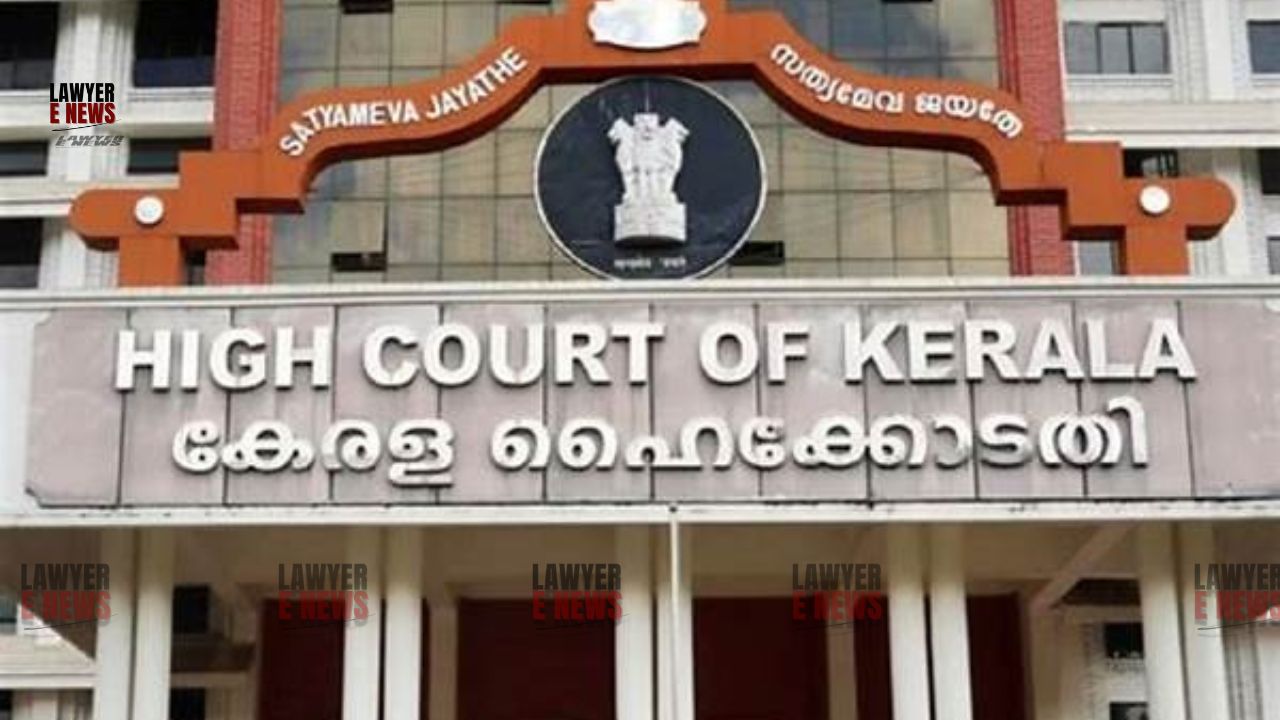
“Intemperate words alone, devoid of sexual intent, do not make out a case under Section 354A IPC or Section 12 of POCSO” — Kerala High Court, through Justice G. Girish, delivered a crucial verdict in Dr. E.D. Joseph v. State of Kerala & Others, quashing criminal proceedings against the Chairman of the Child Welfare Committee, Kannur, who was accused of sexually harassing two minor girls during official counselling sessions. The Court held that although the petitioner’s remarks may have been “inappropriate” or “intemperate,” they did not reflect sexual intent, a mandatory requirement for offences under both Section 354A(1)(iv) IPC and Sections 11 and 12 of the POCSO Act, 2012.
This ruling marks a significant moment in defining the limits of criminal liability under sexual harassment laws, particularly in institutional and counselling settings.
Official Interaction Lacked Sexual Intent — Inappropriate Tone Not Enough to Attract POCSO or IPC Offences
The Court was called upon to examine the legality of criminal prosecutions launched against the petitioner in SC Nos. 466/2021 and 467/2021—two cases alleging sexual harassment of two minor girls during counselling at the Child Welfare Committee office. The cases were registered under:
Section 354A(1)(iv), IPC – making sexually coloured remarks.
Sections 11 and 12 of the POCSO Act – sexual harassment of a child.
Section 482 CrPC – the provision invoked by the petitioner for quashing.
The primary allegation was that Dr. E.D. Joseph, during the counselling of two girls who had reportedly been “kidnapped” by their maternal uncle after complaining of abuse by their father, made comments about their sexual relationships, attire, and behaviour that were construed as sexually coloured or harassing.
The Court noted:
“The alleged words, though intemperate and inappropriate in tone, do not amount to sexually coloured remarks or indicate sexual intent… Interaction occurred in official capacity and in the presence of another counsellor.” [Para 10]
Statements Made During Counselling Not ‘Sexually Coloured’ in Context
The Court scrutinised the actual words attributed to the petitioner. In relation to the elder minor girl, the petitioner had allegedly said:
“I know that you had sexual intercourse with your lover. You are aged only 17 years. If I did not report this matter I am liable to be prosecuted.” [Para 6]
He also questioned the girl about her attire, specifically why she continued to wear a shawl, and commented that her lover had shared her photographs with friends.
In relation to the younger girl, the statement was:
“I know all your things. Didn't you do that for instantaneous pleasure? I know how your mother was behaving. Your father had beaten you for good.” [Para 9]
While these words were found to be blunt, moralistic, and inappropriate, the Court emphasized that they lacked any evidence of sexual motivation, especially since the petitioner had conducted the session in an official capacity and in the presence of a female counsellor.
“At the most, it could be said that the petitioner, since he was holding a responsible post of a statutory body constituted for the protection and wellbeing of children, ought to have shown some restraint in the use of words while interacting with the two children.” [Para 10]
POCSO Provisions Require Proof of Sexual Intent, Not Mere Moral Policing
Importantly, the Court clarified the interpretational threshold for invoking POCSO provisions, which is sexual intent, as defined in Section 11 r/w Section 12 of the POCSO Act.
“To attract offence of sexual harassment under POCSO, the act must involve sexual intent — mere inappropriate or offensive language, without such intent, is insufficient.” [Para 8]
The petitioner, in his defence, had maintained that he had simply reported the minor girls’ admission of sexual relations with their boyfriends, triggering criminal proceedings under the POCSO Act against the boys. He argued that the allegations were retaliatory, made out of enmity by the girls who disapproved of him reporting their relationships to the police.
The Court found merit in this argument:
“Having regard to the background… it cannot be said that the words spoken by the petitioner amounted to sexual harassment… or that they were sexually coloured.” [Paras 8, 10]
Court Condemns Frivolous Litigation — Labels Case as Abuse of Process
Reinforcing the inherent powers of the High Court under Section 482 CrPC, the Court categorically stated that continuation of the prosecution would amount to misuse of the judicial process.
“The criminal prosecution launched against the petitioner in both these cases amounted to an abuse of process of law.” [Para 10]
Accordingly, the Court allowed both Criminal Miscellaneous Cases (Crl.M.C. Nos. 2457/2022 & 2464/2022) and quashed the pending Sessions Court cases arising from the FIRs registered at Thalassery Police Station (Crime Nos. 1216/2020 & 1220/2020).
Misguided Morality vs. Criminal Liability — High Court Draws Clear Line
In this judgment, the Kerala High Court has distinguished between inappropriate counselling conduct and actual criminal sexual harassment, making it clear that sexual intent is indispensable for liability under Section 354A IPC and POCSO Section 12. While the Court acknowledged that the petitioner’s moralistic tone was unsuitable for a statutory authority dealing with vulnerable children, it firmly held that criminal law cannot be invoked unless the core ingredients of the offence are satisfied.
This ruling reinforces the balance courts must maintain in protecting children while preventing misuse of sensitive criminal provisions for ulterior motives.
Date of Decision: 17 October 2025