
-
by sayum
25 August 2026 9:55 AM







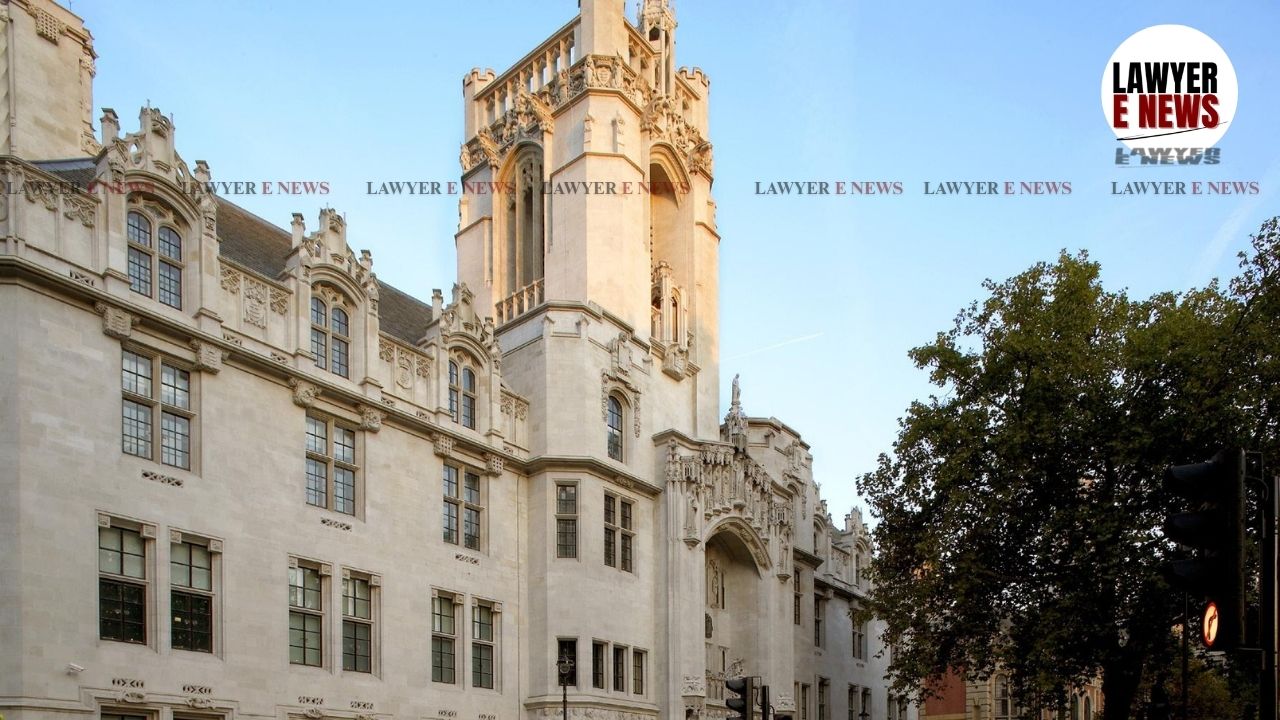
“The Equality Act 2010 uses the terms ‘sex’, ‘woman’, and ‘man’ as biological categories”— UK Supreme Court delivered a highly consequential judgment in For Women Scotland Ltd v The Scottish Ministers, resolving a long-running legal dispute about the meaning of “woman” in the context of equality law. The Court unanimously held that the terms “sex”, “woman”, and “man” in the Equality Act 2010 refer to biological sex, not legal sex acquired through a Gender Recognition Certificate (GRC). This decision significantly limits the scope of the Gender Recognition Act 2004 by affirming that the effect of a GRC does not apply for the purposes of interpreting “sex” in the Equality Act, and invalidates Scottish Government guidance that had sought to include trans women with GRCs as “women” for the purpose of public board representation.
Clash Between Gender Recognition Law and Equality Law
The dispute arose from the Gender Representation on Public Boards (Scotland) Act 2018, which aimed to improve the representation of women in public appointments. The Scottish Ministers issued statutory guidance interpreting “woman” to include trans women who hold a Gender Recognition Certificate. This was challenged by For Women Scotland, a group advocating for sex-based rights, which argued that the Equality Act 2010—an overarching piece of UK legislation—uses “woman” and “man” exclusively in reference to biological sex, and therefore the 2018 Act’s definition and guidance was unlawful.
The case had previously come before the Court of Session in Scotland, where the Inner House upheld the Government’s interpretation. The Court accepted that while certain Equality Act provisions, like those on pregnancy, require a biological understanding of sex, others could accommodate a “variable definition” that includes legally transitioned individuals. This reasoning was rejected on appeal by the Supreme Court.
The principal legal question was whether the word “sex” in the Equality Act 2010—particularly when used to define the protected characteristics of “woman” and “man”—refers to biological sex or the legal sex as recognised by the Gender Recognition Act 2004. Section 9(1) of the 2004 Act states that a GRC changes a person’s sex “for all purposes”, but section 9(3) provides an exception where other legislation makes contrary provision. The key issue was whether the Equality Act is such legislation.
For Women Scotland contended that the Equality Act uses sex in its original biological sense, continuing the legal tradition of the Sex Discrimination Act 1975. They argued that extending sex to include legal changes by GRCs would undermine the internal structure of the Equality Act, rendering multiple provisions incoherent—such as those governing maternity rights, sexual orientation, and single-sex services.
The Scottish Ministers and their supporters insisted that, in the absence of an express exclusion in the Equality Act, a GRC should change a person’s sex for the purposes of that Act. They urged the Court to adopt a contextual or flexible approach, allowing different interpretations depending on the provision in question.
A number of interveners filed submissions. The Equality and Human Rights Commission (EHRC) highlighted the practical confusion caused by the conflation of legal and biological sex, and reiterated its 2023 recommendation that Parliament amend the Equality Act to clarify that sex means biological sex. Other groups, such as Amnesty International UK, supported the inclusive interpretation of sex, citing the need to recognise trans women’s dignity and rights.
Judgment: “Variable Definitions of Sex Are Incompatible with Equality Law”
Delivering a unanimous decision, the Supreme Court firmly rejected the notion that sex under the Equality Act could bear variable meanings. It ruled that the terms “woman” and “man” in the 2010 Act must be understood according to their biological sense—female and male respectively. The Court stressed the continuity of statutory language: since the Equality Act was a legislative successor to the Sex Discrimination Act 1975, it was presumed to carry forward the original biological meaning of sex unless clearly stated otherwise.
In a significant statement of principle, the Court held:
“The scheme and purpose of the Equality Act are inconsistent with the concept of sex as a variable, subjective, or self-identified category. The coherence of sex-based protections requires the term ‘sex’ to operate as a fixed, biological characteristic.”
The justices conducted a detailed analysis of several provisions of the Equality Act that would become “unworkable or incoherent” if sex were interpreted based on legal recognition rather than biological reality. The judgment noted:
Disapplication of GRA 2004: The Equality Act “Makes Contrary Provision”
Critically, the Court found that the Equality Act 2010 is legislation that “makes provision to the contrary” within the meaning of section 9(3) of the Gender Recognition Act 2004. Therefore, while a GRC changes a person’s legal sex for most purposes, it does not alter their sex for the purposes of the Equality Act.
The Court explained:
“The interpretative rule in section 9(1) of the 2004 Act is displaced where the statute in question—here, the Equality Act—makes its own coherent, biologically-based provision that cannot accommodate the GRC’s effect.”
On this basis, a trans woman with a GRC remains legally male for purposes of sex discrimination provisions in the Equality Act, although she retains the separate protection afforded by the characteristic of gender reassignment.
The Court was clear that its ruling does not deprive trans individuals of protection. Trans people remain shielded by provisions on indirect discrimination, harassment, and direct discrimination based on perceived gender reassignment. The ruling preserves the distinct character of the protected categories under the Act, avoiding overlap or confusion.
Scottish Legislation Saved, But Guidance Quashed
Although the Scottish Government’s guidance was ruled unlawful, the 2018 Act itself was held to be within the legislative competence of the Scottish Parliament—provided it is interpreted in line with the Court’s findings, i.e., that “woman” means biological woman. Since the guidance failed to follow this interpretation, it was struck down.
The ruling thus preserves the legislative goal of improving biological women’s representation on public boards but prohibits the Scottish Government from broadening the category of “woman” to include males, regardless of their legal recognition status.
A Landmark Clarification in UK Equality Law
With this decision, the UK Supreme Court has settled one of the most fraught legal issues in contemporary equality law—how to define “sex” under the Equality Act 2010. The Court has reasserted the primacy of biological sex as the organising principle of sex-based rights, disallowed variable or certificate-based definitions, and reaffirmed the separate but vital protections available to trans individuals under gender reassignment law.
This decision will have far-reaching consequences across the legal, policy, employment, healthcare, and education sectors. It also provides long-sought clarity on a question that has divided public authorities and campaign groups for over a decade.
Case Title: For Women Scotland Ltd v The Scottish Ministers [2025] UKSC 15