-
by sayum
04 August 2026 1:39 PM








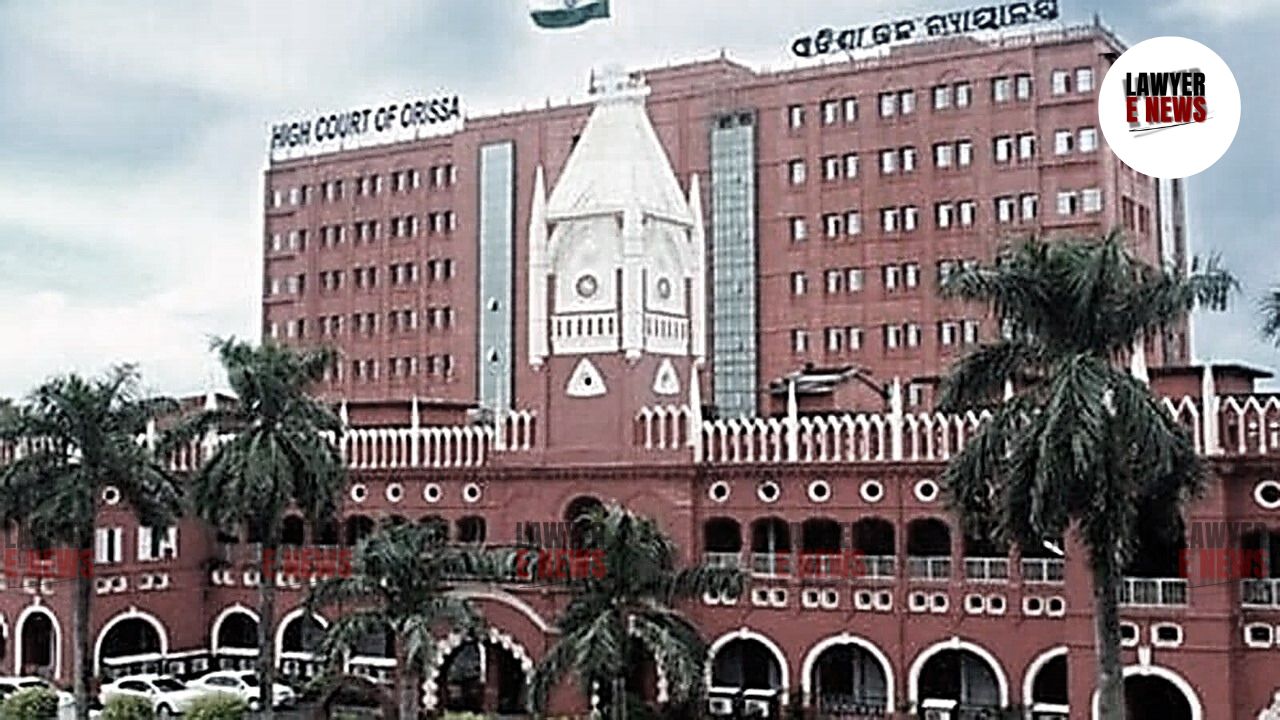
“Practicing Advocates Are Exempt—No Need to Prove That They Are Lawyers to Avoid Service Tax”:- Orissa High Court decisively quashed a service tax demand of ₹2.14 lakhs imposed on a practicing advocate by the CGST authorities, reaffirming that individual legal practitioners are fully exempt from the levy of service tax for legal services rendered in their professional capacity. Division Bench comprising Chief Justice Harish Tandon and Justice B.P. Routray condemned the harassment caused to advocates through unwarranted tax demands, citing existing departmental instructions and prior High Court rulings.
The petitioner, Shivananda Ray, a practicing lawyer at Bhubaneswar, was issued a demand-cum-show cause notice on April 15, 2021, under Section 73 of the Finance Act, 1994, alleging non-payment of service tax amounting to ₹2,14,600 for the financial year 2015–16. A subsequent recovery notice dated January 28, 2025, sought to enforce the recovery of this amount along with a penalty of ₹2,34,600 and applicable interest.
The petitioner challenged these notices on the ground that legal services rendered by practicing advocates are exempt under the negative list provisions and applicable service tax notifications. The Department, however, claimed that the notice was issued based on third-party income disclosures from the Income Tax Department and that the petitioner failed to participate in adjudication, which led to an ex parte order.
Rejection of Tax Demand Against Practicing Advocates:
Citing its earlier judgment in W.P.(C) No. 27727 of 2020 dated March 31, 2021, the Court reminded the Department of settled legal principles:
“The Court expressed its concern that practicing advocates should not have to face harassment on account of the Department issuing notices calling upon them to pay service tax/GST when they are exempted from doing so, and in the process also having to prove they are practicing advocates.”
The Court referred to the binding departmental instructions dated April 9 and April 15, 2021, which explicitly clarified that legal services provided by individual advocates or firms of advocates are exempt unless provided to a business entity exceeding a threshold turnover.
The Bench reiterated that: “In view of the admitted fact that the Petitioner is a practicing lawyer and the earlier directions issued by this court... the Petitioner is exempted from levy of service tax for such income he derived from his legal service as a lawyer.”
Department Permitted to Proceed Only for Income from Non-Legal Sources:
Interestingly, the Court noted that the petitioner had also disclosed rental income from house property in his income tax returns for the assessment years 2018–19 and 2020–21. On this limited point, the Court permitted the Department to initiate proceedings under service tax law, if applicable, but strictly with respect to non-exempt income.
“It is open for the Department... to proceed in respect of the income from house property, if any applicable, to levy service tax in accordance with law.”
The High Court set aside both the show cause notice and the recovery order to the extent they related to professional legal services, reaffirming that such services are non-taxable under the existing framework. The ruling is a strong reiteration that practicing lawyers are protected from arbitrary tax demands and cannot be asked to "prove" their exempt status repeatedly in response to mechanical departmental actions.
Date of Decision: April 7, 2025