
-
by sayum
28 August 2026 2:11 PM







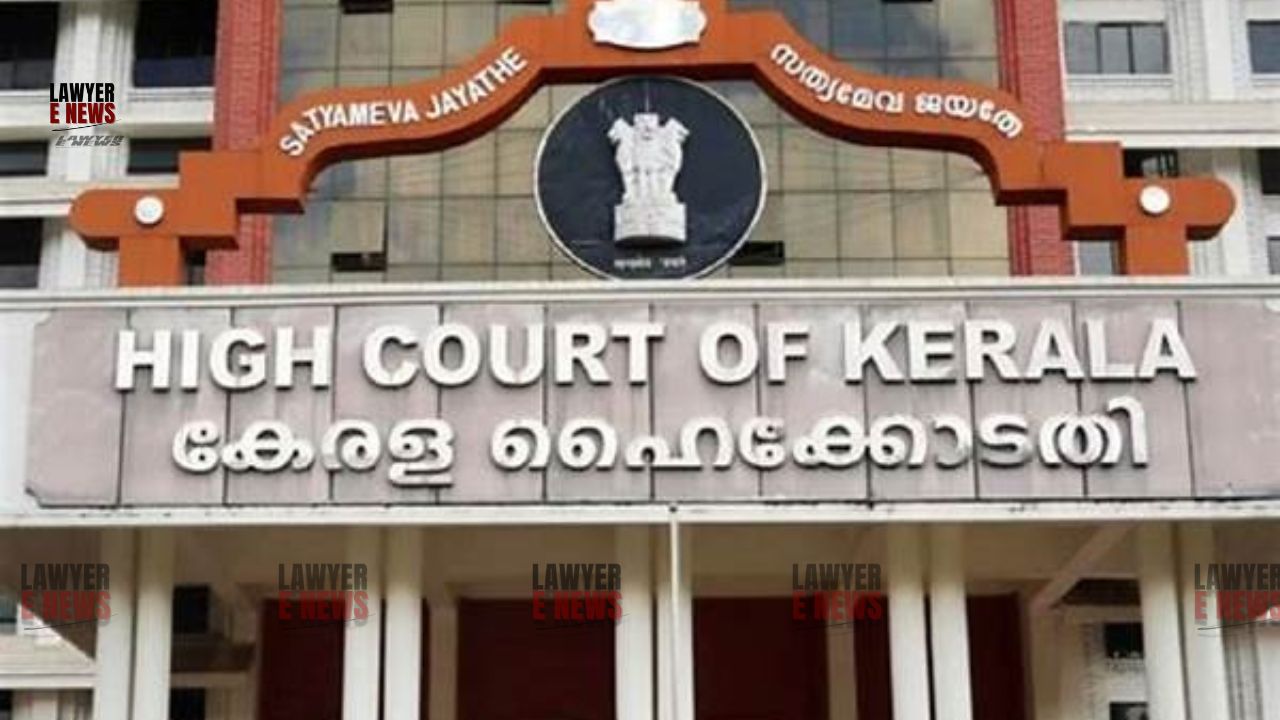
"Exhibiting an Object to Humiliate a Woman Is an Offence Under Section 509 IPC" - In a significant ruling on 29th September 2025, the Kerala High Court held that the act of sending old and disfigured female undergarments to a woman principal with intent to insult her dignity constitutes a "gesture" and "exhibition of an object" within the meaning of Section 509 of the Indian Penal Code, and thus, criminal prosecution under the provision must continue. However, the Court ruled that the same act does not fall under the ambit of ‘indecent representation’ under the Indecent Representation of Women (Prohibition) Act, 1986, and discharged the accused from charges under Sections 4 and 6 of that Act.
Justice G. Girish observed that the gesture in question clearly targets the modesty and privacy of a woman, fulfilling the ingredients of Section 509 IPC, which penalizes any word, sound, gesture, or exhibition of an object intended to insult a woman’s modesty.
The High Court further rejected the accused's claim of double jeopardy under Article 20(2) of the Constitution, noting that although a similar offence was committed by the accused in Tamil Nadu, it was involving a different victim and a distinct act, and thus, no constitutional bar arises against a separate prosecution in Kerala.
The ruling reaffirms the Court’s willingness to recognize non-contact forms of sexual harassment and public indignity, while also setting clear limits on the scope of morality-based statutes like the Indecent Representation Act.
"Sending Old Female Undergarments by Parcel Is a Gesture Insulting Modesty—Fulfills Ingredients of Section 509 IPC"
Rejecting the plea for complete discharge under Section 239 CrPC, the Court addressed the core of the case—whether the act of sending a parcel containing "old and ugly undergarments of ladies" to a female school principal constitutes an offence under Section 509 IPC.
Justice G. Girish, after citing the statutory language of Section 509 IPC, held: “The act of the accused sending old and ugly undergarments of ladies by way of parcel to the additional second respondent... would definitely amount to exhibiting an object and making a gesture, and intruding into the privacy of that lady with the intention to insult her modesty.”
The Court thus dismissed the petitioners’ contention that the act lacked the necessary ingredients under Section 509 IPC. The words "exhibiting any object" and "gesture" were interpreted broadly to include non-verbal, symbolic acts designed to insult or demean a woman’s dignity.
Accordingly, the Magistrate's decision to allow the trial to proceed under Section 509 read with Section 34 IPC was upheld.
"No Indecent Representation Where There Is No Depiction of Woman’s Form or Body" — Kerala High Court Discharges Accused from Morality Offence
While the Court upheld the continuance of trial under IPC, it took a narrower view when examining the charges under the Indecent Representation of Women (Prohibition) Act, 1986.
Sections 4 and 6 of the Act penalize publication and exhibition of materials involving the indecent representation of women. However, Section 2(c) defines such “representation” as depiction in any manner of the figure of a woman, her form or body, in a manner that is indecent, derogatory, depraving or corrupting.
Justice G. Girish ruled: “As far as the present case is concerned, the act of the petitioners sending old and ugly undergarments will not come under the aforesaid definition contained in Section 2(c) of the Act.”
The Court made it clear that mere delivery of an object—however offensive—without any visual or representational depiction of a woman’s body does not fall within the statutory framework of the 1986 Act. The absence of any visual portrayal or publication that objectifies or sexualizes women rendered the Act inapplicable.
Accordingly, the revision petition was allowed to the limited extent of discharging the petitioners under Sections 4 and 6 of the Indecent Representation of Women (Prohibition) Act
"Double Jeopardy Is Not a Shield for Separate and Distinct Acts Against Different Victims" — No Bar to Fresh Prosecution
Another core legal issue addressed was the plea of double jeopardy, as the accused claimed they were already prosecuted in Tamil Nadu for allegedly sending similar objectionable items to another woman. They contended that a second prosecution in Kerala for the same kind of conduct violated their protection under Article 20(2) of the Constitution of India and Section 300 of the CrPC.
Rejecting this argument, the Court held: “The prosecution initiated against them at Tamil Nadu is said to be in connection with a similar offence of sending objectionable items to another lady at Tamil Nadu… The act of the petitioners is totally distinct from the offence for which they are undergoing prosecution before the Court at Neyyattinkara.”
The Court ruled that the distinct identity of the victims, place of offence, and date of commission clearly establishes the two as separate criminal acts, and hence there is no bar on successive prosecution.
This ruling clarifies that double jeopardy protection applies only to identical offences for the same act and victim, and not to similar offences committed against different persons.
Court Reiterates Limited Scope of Judicial Interference Under Section 239 CrPC
The Court also reaffirmed that at the stage of considering discharge under Section 239 CrPC, the trial court is not required to conduct a mini-trial or assess evidence in detail. It is sufficient if there exists a prima facie ground for presuming that the accused has committed the offence.
The High Court noted that the Magistrate had rightly discharged the accused from Section 354 IPC, which requires use of criminal force to outrage modesty. However, since the gesture and intrusion of privacy by sending the parcel were clearly made out, Section 509 IPC warranted trial.
Law Must Recognize Non-Physical Yet Intentional Insults to Dignity of Women
Summing up the case, Justice G. Girish observed that insult to a woman’s modesty need not involve physical contact, and symbolic or suggestive acts designed to intimidate or demean are equally culpable under the law. However, he also cautioned against over-extending morality laws like the Indecent Representation of Women Act, which must be applied within the limits of their definitions.
The final order read: “The revision petitioners are discharged from the criminal prosecution in respect of the offences under Section 4 read with Section 6 of the Indecent Representation of Women Prohibition Act, 1986... The Judicial First Class Magistrate Court-I, Neyyattinkara, shall proceed against the petitioners in connection with the offence under Section 509 read with Section 34 IPC.”
Date of Decision: 29 September 2025





