-
by sayum
11 November 2026 4:32 PM







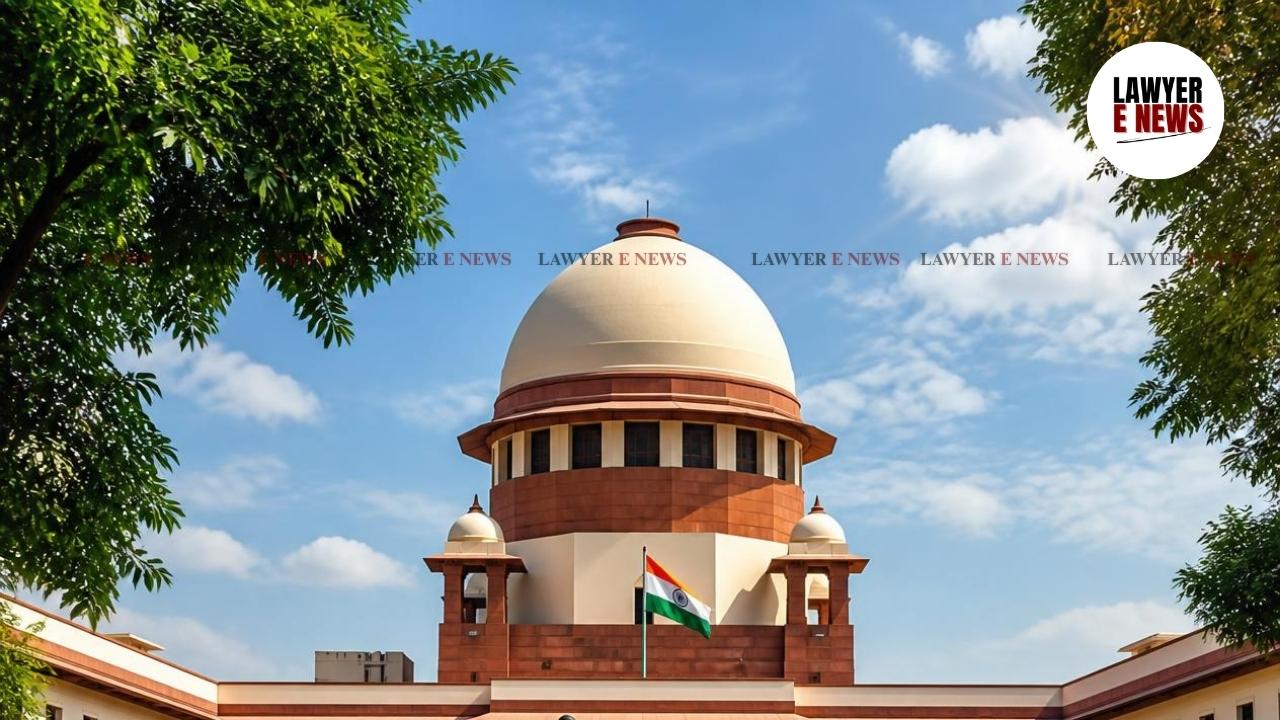
"The expectation of decree, having remained pending for several decades, cannot be rendered fruitless by reason of the unwillingness or recalcitrance of a Judgment Debtor." Holding that statutory entitlements crystallized upon state reorganisation cannot be endlessly frustrated by judgment debtors during execution proceedings, a three-judge bench of the Supreme Court comprising Chief Justice of India Surya Kant, Justice Joymalya Bagchi, and Justice V. Mohana on November 6, 2026, brought final quietus to a three-decade-old original suit by enforcing Himachal Pradesh’s 7.19% power share under Section 78 of the Punjab Reorganisation Act, 1966.
The dispute originated from the 1966 trifurcation of composite Punjab, following which Himachal Pradesh claimed a defined 7.19% entitlement in the power generated by the Bhakra-Nangal and Beas Hydro-Electric Projects based on transferred population. After the Union of India rejected the claim in 1994, the State instituted an original suit under Article 131 of the Constitution in 1996, which was partially decreed on September 27, 2011, establishing its legal right under Section 78. Protracted disagreements between Punjab, Haryana, and Himachal Pradesh over energy computation and capital expenditure liabilities led to the present execution proceedings before the Apex Court.
Whether the statutory apportionment under Section 78 of the Punjab Reorganisation Act, 1966, conclusively decreed in 2011, can be discharged through an in-kind cashless framework?
Whether the judgment debtors can relitigate settled issues to inflate the plaintiff State’s capital-cost liabilities and reduce energy arrears?
Execution proceedings cannot serve as a vehicle to relitigate substantive rights conclusively settled under Article 131
The bench emphasized that the present proceedings were strictly in the nature of execution, necessitated by prolonged friction over computation, rather than an avenue to reopen the substantive decree of September 27, 2011. The Court firmly observed that Section 78(1) of the Punjab Reorganisation Act, 1966 had already conferred an enforceable legal right which was affirmed in the declaratory decree.
Rejecting the objections raised by the State of Punjab, the Court noted that attempting to re-agitate settled questions constituted an abuse of judicial process. The bench observed:
"The present exercise is not intended to reopen matters conclusively decided by this Court in its decree dated 27.09.2011, nor to afford the parties an opportunity to re-agitate issues that already stand settled. The exercise is, rather, in the nature of execution proceedings, necessitated by the differences that have arisen amongst the parties with respect to the computation made by the Union of India."
Rejection of superficial objections raised against the Attorney General’s settlement formula
The bench scrutinized Punjab’s contention that the supply of 1.2 lakh units per day at the concessional rate had been omitted from the arrears computation. The Court held that this adjustment had already been duly factored into the capital-cost reconstruction formulated by the Union of India.
Characterizing Punjab’s contentions as vague and superficial, the bench pointed out that the arrears related to a historical period and could not be evaluated at contemporary Operation and Maintenance rates. The Court recorded:
"In the computation made by the Union of India, the adjustment has been effected after taking into account a number of variables, including the ratios of energy distribution determined by the decree of this Court, the energy arrears owed to the Plaintiff-State by the two States, and the liability owed by the Plaintiff-State for energy supplied to it."
Enforcement of a cashless set-off mechanism balancing energy arrears against capital liabilities
To eliminate inter-state financial friction and prevent further execution bottlenecks, the Court sanctioned a cashless mechanism. Gross energy arrears of 13,066 million units were adjusted against Himachal Pradesh’s reconstructed capital-cost liability of Rs. 420.77 crores, valued at the market-aligned rate of Rs. 3.85 per unit.
This conversion resulted in an offset of approximately 1,093 million units, leaving a net balance of 11,973 million units payable to Himachal Pradesh. Balancing the convenience of the judgment debtor States, the bench extended the supply period from 15 to 20 years to prevent severe grid disruptions.
The Supreme Court disposed of the suit by directing Punjab and Haryana to supply the net balance of 11,973 million units of electricity to Himachal Pradesh at the rate of approximately 598 million units per annum across 20 lean seasons spanning October to March. The inter se liability was apportioned in the ratio of 58:42 for the Bhakra-Nangal Project and 60:40 for the Beas Projects, with Himachal Pradesh paying the annual charges fixed by the Bhakra Beas Management Board.
Date of Decision: November 6, 2026