-
by sayum
11 November 2026 4:32 PM







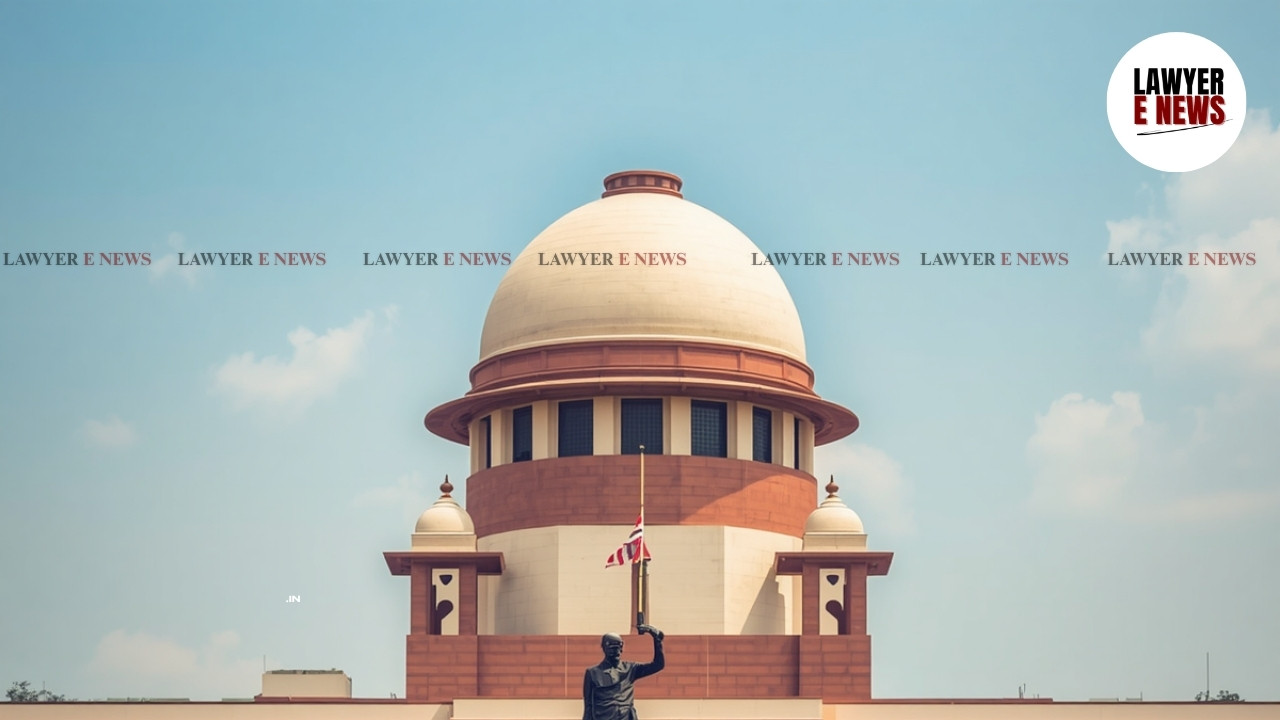
"The judgment cannot be construed as directing a general revision of service allocations or seniority across successive recruitment years, nor does it confer individual relief upon persons who were not parties to the original proceedings." Supreme Court on Friday held that its declaration of law barring the mechanical exclusion of candidates from the OBC Non-Creamy Layer by conflating parental salary income in PSUs cannot be applied retrospectively to dismantle concluded selections, yet it mandatorily governs all pending service allocations including the Civil Services Examination 2025.
A Bench comprising Justice Pamidighantam Sri Narasimha and Justice R. Mahadevan disposed of miscellaneous applications preferred by the Union of India seeking clarification and modification of the Court's earlier judgment dated March 11, 2026.
The dispute originated when successful OBC candidates in the Civil Services Examinations were denied service allocation under the Non-Creamy Layer category by the Department of Personnel and Training (DoPT) on the basis that their parents employed in Public Sector Undertakings earned salaries exceeding the income criteria under the 1993 Office Memorandum and 2004 Letter. After the Central Administrative Tribunal and three High Courts ruled in favour of the candidates, the Supreme Court on March 11, 2026, dismissed the Union's appeals and directed the creation of supernumerary posts to accommodate the affected parties and intervenors within six months. Apprehending wide administrative disruption across over 3.70 lakh reserved vacancies filled in the past decade, the Union approached the Apex Court seeking a two-year deferral to establish equivalence of posts and permission to complete CSE-2025 allocations under the prior formula.
Whether the judgment dated March 11, 2026 operates retrospectively to require a general revision and reopening of concluded selections, service allocations, and settled seniority across public employment.
Whether the Union Government can be permitted to apply the pre-existing creamy-layer determination formula for service allocation in CSE-2025 merely because final results were declared five days prior to the Court's judgment.
Whether miscellaneous applications in disposed-of civil appeals can be entertained to prescribe timelines for executive determination of post equivalence.
Court's Observations And Judgment
The Supreme Court strictly demarcated the distinction between individual adjudicatory relief granted inter partes and the binding legal principle operating under Article 141 of the Constitution of India.
Operative Relief Confined Inter Partes Without Retrospectively Unsettling Settled Service Seniority
The Court observed that the original judgment adjudicated the specific rights of the identified candidates and intervenors litigating before it, and did not issue a general mandate to overturn past administrative selections.
"A perusal of the judgement in its entirety reveals that this Court determined the rights of the respondent candidates in the Civil Appeals primarily with regard to their entitlement to posts under the OBC-reserved category... We find no observation or direction requiring the Union Government to revisit appointments already made, revise the seniority of any person, or undertake any selection, appointment or service allocation exercise afresh."
The Bench stressed that public employment involves an intricate web of roster points, comparative merit, cadre strengths, and promotions which cannot be subjected to wholesale chaos through retrospective application.
Binding Precedent Distinct From Relief Granted To Parties Under Article 141
Addressing the Union's apprehension that the judgment would unsettle lakhs of appointments made over the last decade, the Court explained the limits of the binding precedent under Article 141.
"The binding force of the legal principle enunciated by this Court under Article 141 of the Constitution is, however, distinct from the scope of the operative relief. The distinction between the binding legal principle and the relief granted to the parties must, therefore, be borne in mind while examining the scope and temporal operation of the directions contained in the judgment."
The Court clarified that the creation of supernumerary posts stipulated in Paragraph 43 applied strictly to the candidates and intervenors before the Court, as assured by the DoPT before the Parliamentary Committee.
Miscellaneous Applications Cannot Circumvent Review Jurisdiction Or Seek Merits Rehearing
Expressing disapproval of attempts to use miscellaneous applications to re-argue concluded questions, the Bench reiterated well-settled jurisdictional thresholds.
"It is also well settled that miscellaneous applications cannot be employed as a means to seek a rehearing of matters already decided or to reopen issues concluded by the judgment. Such applications may be entertained only for the correction of clerical or arithmetical errors or the resolution of genuine difficulties in implementing the directions issued by the Court."
The Court rejected the Union's request for a two-year transition period to establish post equivalence, ruling that prescribing timelines for executive and legislative functions is beyond the judicial remit.
Pending Service Allocations In CSE-2025 Must Strictly Adhere To The Clarified Creamy Layer Principle
While concluding selections remain untouched, the Bench firmly rejected the Union’s plea to process CSE-2025 under the older, incorrect creamy layer criteria.
"With respect to M.A. Diary No.51879 of 2026, although the result of the Civil Services Examination, 2025 was declared on 06.03.2026, the allocation of services has not yet been finalised. Since the process of allocation remains pending and there is no convincing or reasonable justification for deferring the implementation of the judgment dated 11.03.2026, the creamy layer principle, as interpreted in the said judgment, shall govern the allocation of services to OBC candidates selected through the Civil Services Examination, 2025."
The Bench clarified that while completed appointments cannot be reopened, any similarly situated candidates with matters pending before Courts or Tribunals are entitled to have their cases evaluated on merits under the clarified interpretation.
The Supreme Court disposed of the miscellaneous applications by clarifying that its March 11, 2026 judgment operates prospectively regarding concluded appointments and seniority, but mandatorily governs all pending and future allocations, including the pending allocation of services for CSE-2025. The Court extended the time for compliance in respect of the original respondent candidates and intervenors by a further period of two months.
Decision Date: November 06, 2026