-
by sayum
07 October 2026 6:40 AM








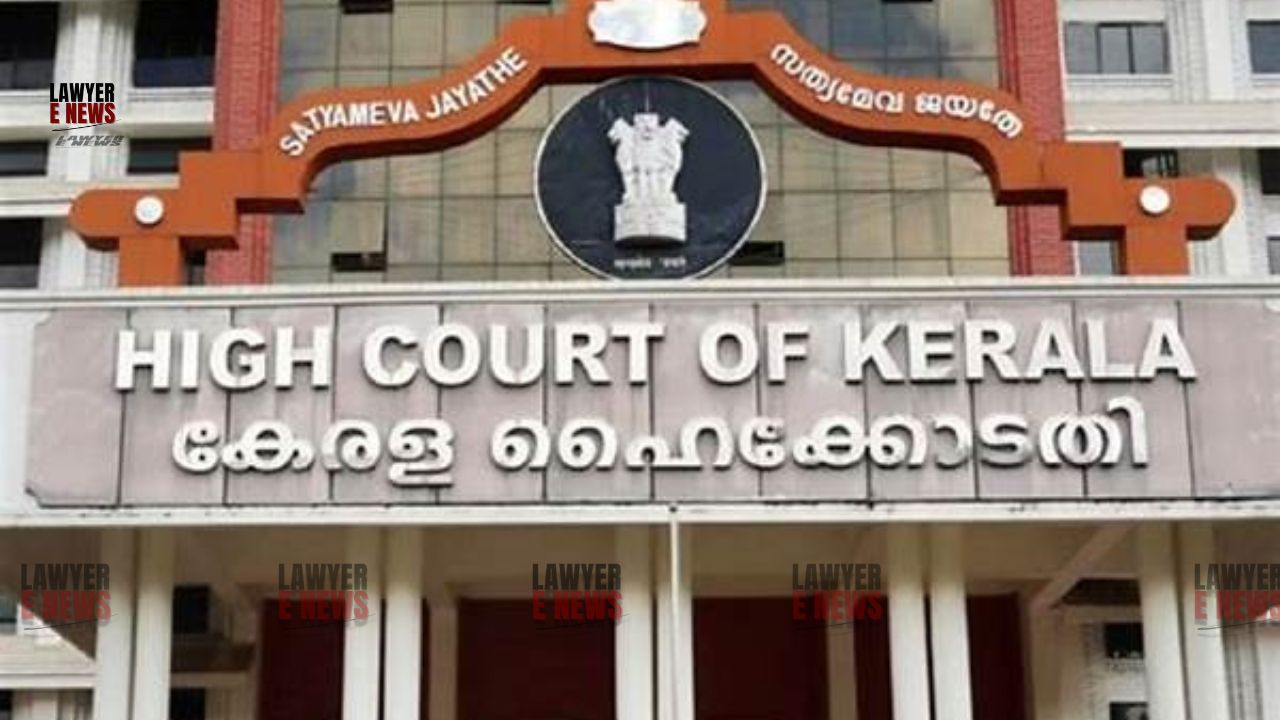
"Pre-arrest bail cannot be granted as a matter of course. The power under Section 482 of BNSS could be exercised only when a special case is made out, that too, recording reasons thereof." Kerala High Court, in a ruling dated 06 October 2026, held that the extraordinary jurisdiction to grant anticipatory bail under Section 482 of the Bharatiya Nagarik Suraksha Sanhita (BNSS), 2023, cannot be exercised routinely, especially when the allegations involve serious, premeditated criminal acts and the recovery of incriminating material is pending.
A bench of Dr. Justice Kauser Edappagath observed that the court must satisfy itself that a special case exists before granting such relief.
The applicant, accused of offences punishable under Sections 303(2), 314, and 316 read with Section 3(5) of the Bharatiya Nyaya Sanhita (BNS), 2023, allegedly misappropriated a vehicle borrowed under the pretext of a medical emergency. The prosecution contends that the applicant, in conspiracy with others, subsequently committed theft of the vehicle, resulting in a loss of over Rs. 4,00,000 to the complainant.
The primary question before the court was whether the petitioner had made out a special case warranting the invocation of its power under Section 482 of the BNSS for the grant of pre-arrest bail. The court was also called upon to determine whether the gravity of the allegations and the status of the investigation precluded the granting of such relief at the present juncture.
Gravity of Accusation and Recovery
The court examined the case diary and noted that the accusations against the applicant were serious and prima facie indicated a premeditated criminal act. The court highlighted that specific overt acts were attributed to the applicant, and crucially, the vehicle involved in the alleged theft had not yet been recovered by the investigating agency.
Requirement of Exceptional Circumstances
While the applicant argued that he had been falsely implicated and that there was no evidence to connect him to the crime, the court remained unpersuaded. The bench emphasized that the mere assertion of innocence does not entitle an accused to anticipatory bail, particularly when the investigative process is at a sensitive stage.
"The power under Section 482 of BNSS could be exercised only when a special case is made out, that too, recording reasons thereof."
Rejection of Relief and Procedural Directions
Finding the case unsuitable for the exercise of its extraordinary jurisdiction, the court declined to grant pre-arrest bail. However, it directed the applicant to surrender before the investigating officer within one week for interrogation. The court further ordered that, upon arrest, the applicant be produced before the jurisdictional court, which should consider any subsequent regular bail application on its own merits, preferably on the same day.
Practical Implications for Counsel
The ruling serves as a reminder to the legal fraternity that the threshold for obtaining anticipatory bail remains high under the new criminal code. Practitioners must demonstrate substantial grounds or exceptional circumstances rather than relying on standard procedural arguments to secure relief before an arrest is effected, especially in cases involving economic offences or missing property.
Date of Decision: 06 October 2026