-
by sayum
07 October 2026 4:36 AM







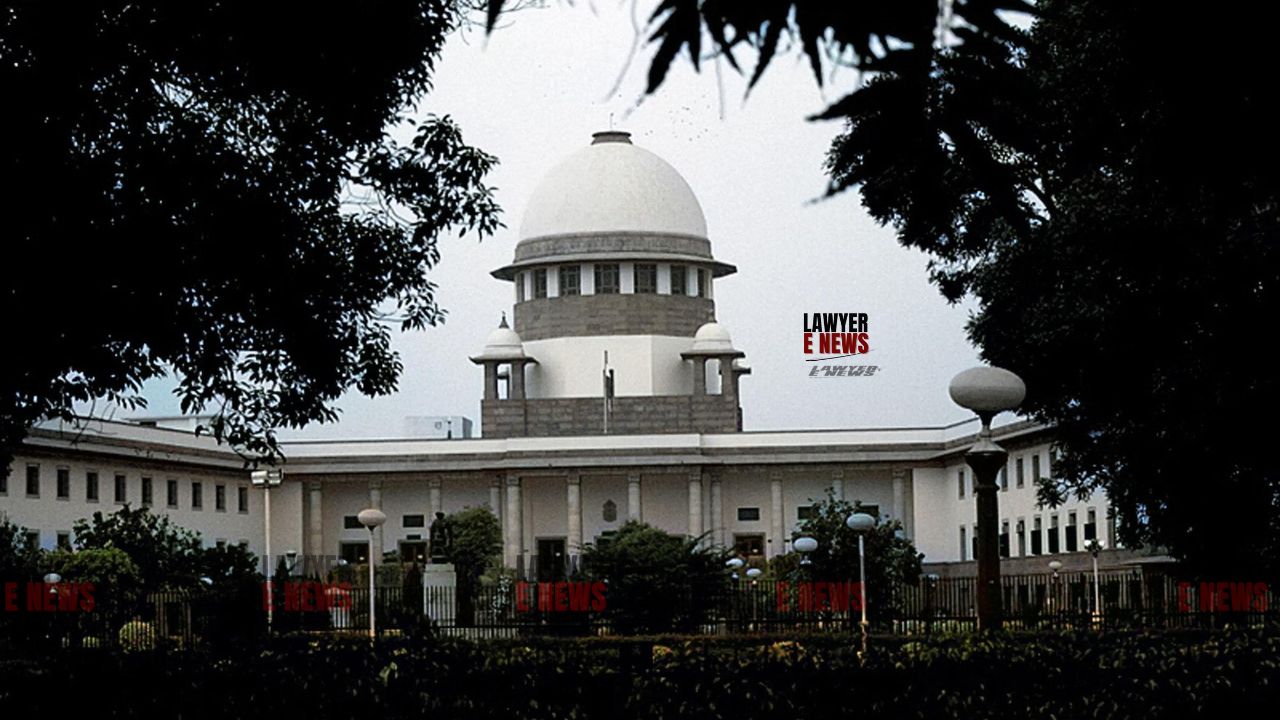
"The law gives discretion to the Court concerned to form an opinion as to whether it would itself compare the signatures on its own or seek an expert opinion." Supreme Court, in a significant ruling, held that a court is not obligated to mandatorily refer disputed documents to a handwriting expert in every instance.
A bench comprising Justice Ahsanuddin Amanullah and Justice Manmohan observed that while the court has the discretion to seek expert assistance, particularly in cases involving smudgy or unclear impressions, the ultimate responsibility to determine the genuineness of a signature or writing under Section 72 of the Bharatiya Sakshya Adhiniyam, 2023, remains with the court.
Court Rejects Mechanical Referral To Experts
The bench emphasized that the mere assertion that a document is disputed does not strip the court of its competence to perform a judicial comparison. The Supreme Court clarified that the evidence of a handwriting expert is merely an opinion and is not binding upon the court. Therefore, the lower court’s function of determining the veracity of documents cannot be avoided by claiming the court is not an expert.
Court Clarifies Scope Of Section 72
The court underscored that Section 72 of the Bharatiya Sakshya Adhiniyam, 2023, empowers the court to compare signatures, writings, or seals with those admitted or proved to the satisfaction of the court. This statutory provision is a tool for judicial determination. The bench categorically stated that the court must exercise its duty to compare such evidence and arrive at its own conclusion based on the records before it.
Distinction Between Finger Impression And Handwriting
The Supreme Court further distinguished the present matter from its earlier decision in Thiruvengada Pillai v. Navaneethammal & Anr. (2008) 4 SCC 530. The bench noted that the reliance placed on that judgment by the respondents was misplaced as it dealt specifically with finger impressions and not handwriting or signatures. Consequently, the court held that the observation in that judgment could not be read to mandate the examination of an expert in every case involving disputed signatures or handwriting.
"It is the duty of the Court to compare the signature or writing and come to its own conclusion and the same cannot be avoided by recourse to a statement that the Court is not an expert."
Context Of The Dispute
The case arose from an eviction dispute where the trial court had rejected the tenant's prayer to send a "Will" to a handwriting expert, holding that the court was competent to decide the issue itself. The Madhya Pradesh High Court had previously overturned this, labeling the expert examination as "essential." The Supreme Court, however, found no infirmity in the Trial Court's initial approach and restored its order.
Expedited Disposal Of Eviction Proceedings
While allowing the appeal and setting aside the High Court's order, the Supreme Court directed the trial court to expedite the eviction proceedings. The bench emphasized that the matter should be taken to its logical conclusion expeditiously in accordance with law, ensuring that legal technicalities regarding expert evidence do not lead to unnecessary, long-drawn-out litigation.
Date of Decision: 18 September 2026