-
by sayum
07 October 2026 6:40 AM







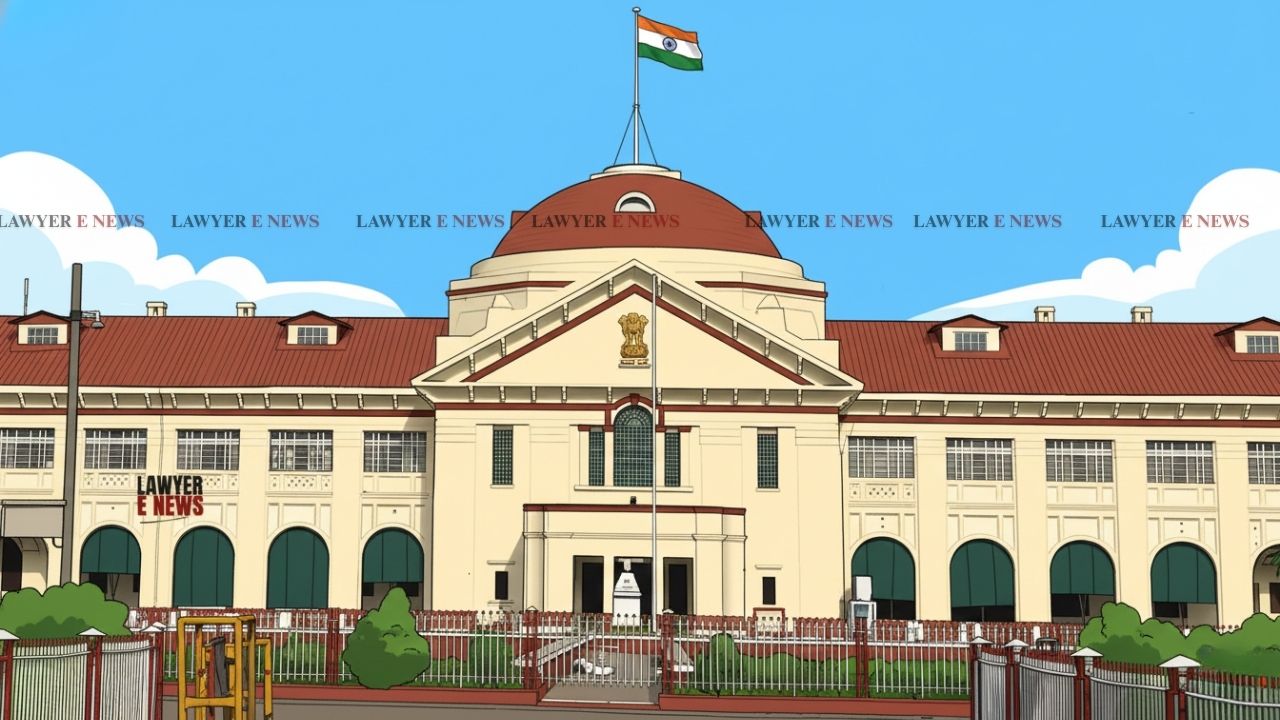
"In a partition suit a defendant seeking a share is in the position of a plaintiff and one plaintiff cannot withdraw without the permission of another." Patna High Court, in a significant ruling dated 01 October 2026, held that a defendant in a partition suit who has asserted a specific share in their written statement is entitled to be transposed as a plaintiff under Order 23 Rule 1-A of the Code of Civil Procedure (CPC) if the original plaintiffs seek to withdraw the suit.
A bench of Justice Ramesh Chand Malviya observed that the power to allow such transposition is "very wide" and exists to ensure the "effectual and comprehensive adjudication of all the matters in controversy in the suit," thereby preventing the defeat of a co-sharer's rights and avoiding a multiplicity of proceedings.
The dispute arose from a partition suit (T.S. No. 254 of 2019) filed by the original plaintiffs (Opposite Parties) claiming a half-share in the suit property. The petitioners (defendants) entered a contest, asserting a two-thirds share in the property and pleading that the original plaintiffs’ title was based on a fraudulent probate. After several years of litigation, the plaintiffs moved an application to withdraw the suit unconditionally, claiming they had never actually filed it and that their signatures had been forged by "mischief-mongers." The Trial Court allowed the withdrawal and rejected the defendants' application to be transposed as plaintiffs.
The primary questions before the court were whether the trial court was justified in allowing an unconditional withdrawal of the suit without considering the defendants' pleaded claim to a share in the property, and whether the court applied the correct legal test in rejecting the petitioners' application for transposition under Order XXIII Rule 1-A CPC.
Court Explains Nature Of Partition Suits
The Court noted that while a plaintiff generally has an unqualified right to withdraw a suit under Order XXIII Rule 1(1) CPC, this right is curtailed in partition suits. Relying on the Supreme Court’s dictum in R. Ramamurthi Iyer v. Raja V. Rajeswara Rao, the bench emphasized that because each party in a partition suit seeking a share stands in the position of a plaintiff, the original plaintiff cannot be permitted to defeat the defendant’s claim by a unilateral withdrawal.
Court Defines Scope Of Order XXIII Rule 1-A CPC
Addressing the transposition of parties, the court referred to R. Dhanasundari alias R. Rajeswari v. A.N. Umakanth, which clarified that Order XXIII Rule 1-A is designed to protect a defendant who possesses a "substantial question to be decided against the co-defendant." The bench held that the petitioners' claim to a two-thirds share in the property constituted a substantial question, rendering them eligible for transposition.
"The basic requirement for exercise of powers under Rule 1-A ibid. would be to examine if the plaintiff is seeking to withdraw or to abandon his claim under Rule 1 of Order 23 and the defendant seeking transposition is having an interest in the subject-matter of the suit and thereby, a substantial question to be adjudicated against the other defendant."
Rejection Of 'No Counter-Claim' Argument
The Trial Court had rejected the transposition on the ground that the defendants had not filed a formal "counter-claim." The High Court overruled this, holding that a prayer for partition in a written statement is substantively a counter-claim for the purposes of Rule 1-A. The bench noted that the rule does not require a formal caption, but rather the existence of a triable interest.
Irregularity In Admitting Evidence
The court further criticized the Trial Court for refusing to consider documents that were already part of the court's own record, merely because the defendants had submitted uncertified copies. The bench held that treating judicial records as inadmissible for want of certification, while ignoring their presence in the very file before the court, constituted a material irregularity in the exercise of jurisdiction.
Final Directions And Restored Status
Setting aside the order of the Trial Court, the High Court directed the immediate transposition of the petitioners as plaintiffs and the original plaintiffs as defendants. The suit was ordered to be restored to its original number, with the Trial Court granted liberty to conduct a factual inquiry into the allegation of forged signatures on the plaint during the course of the trial.
Date of Decision: 01 October 2026