-
by sayum
28 August 2026 2:11 PM







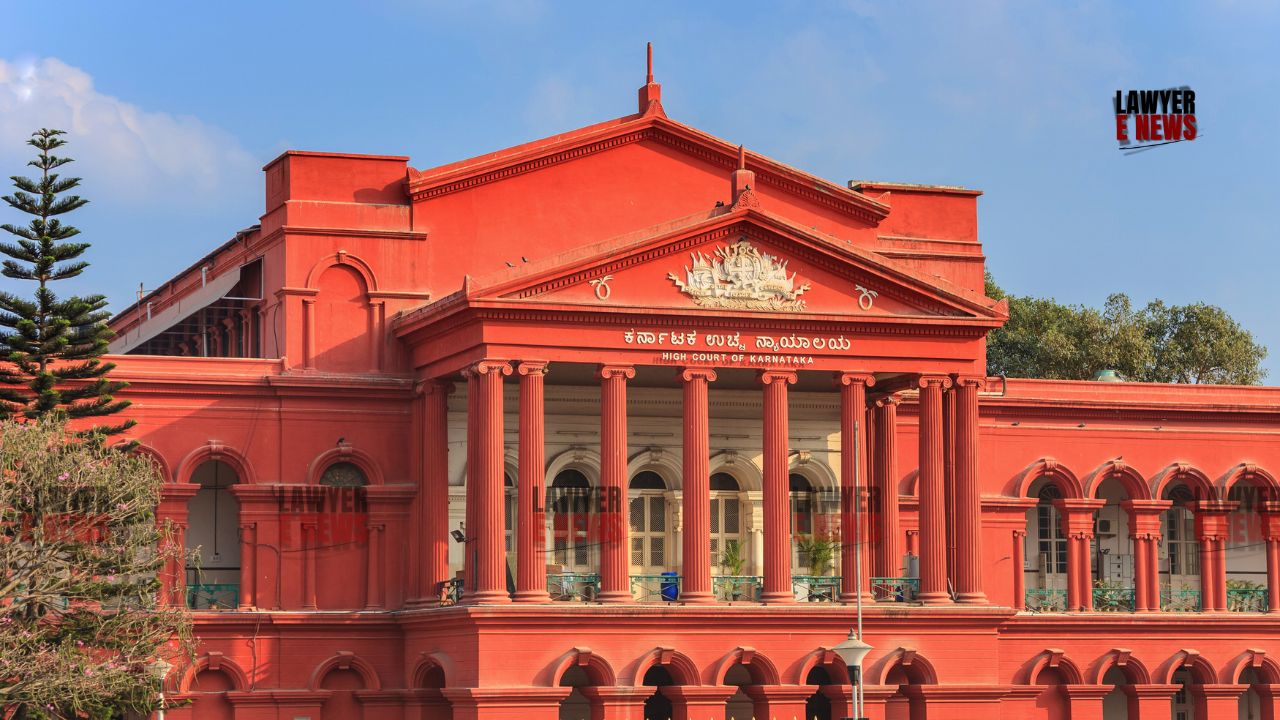
“The letters sought to be produced have no nexus with the core allegations of sexual assault — they are not essential to the just decision of the case” — In a detailed decision Karnataka High Court dismissed petitions filed by the victim in a high-profile POCSO and rape trial, seeking recall of Prosecution Witness No.14 and production of two 2007 ‘appreciation letters’ allegedly issued by Accused No.1. The Court, speaking through Justice M. Nagaprasanna, held that the letters had no evidentiary value in the context of the allegations and permitting their production at this stage would amount to filling a lacuna in the prosecution’s case, thereby causing delay and potential prejudice to the accused.
The petition was filed under Section 482 of the CrPC (now mirrored in Section 528 of the BNSS, 2023), challenging the Special Court’s order dated 19 July 2025, which had rejected the prosecution’s application under Sections 311 and 91 CrPC to recall the witness and produce the letters. The High Court affirmed the trial court’s reasoning, particularly in view of the Supreme Court’s directive to conclude the trial within one year, and held that there was no tenability in the request.
"Recall is Not a Matter of Course — Discretion Under Section 311 Must Be Used to Discover Truth, Not to Supplement Weak Evidence"
The core question before the High Court was whether the Special Court's rejection of a Section 311 r/w 91 CrPC application warranted interference, especially when the documents in question were two “letters of appreciation” allegedly written by Accused No.1 in 2007 to PW-14, a former administrator of the Murugha Mutt, who later supported the victim by facilitating her counselling after the alleged sexual assault.
Rejecting the plea, the Court made it clear: “The documents sought to be produced were encomiums given by the accused to PW-14 seventeen years ago. Of what use they would be to the present trial, which turns on the testimony of the victim, is incomprehensible.”
The Court emphasised that PW-14 was neither the informant, nor the victim, nor the accused, and that his role was only facilitative in nature — arranging counselling for the victim after she reported the incident.
"Judicial Discretion Is Not for the Asking — Section 311 CrPC Cannot Be Used as a Backdoor to Introduce Irrelevant Material"
The High Court reiterated the well-established legal position that Section 311 CrPC confers wide but not unfettered discretion on trial courts. Relying heavily on the Supreme Court’s latest pronouncement in Sovaran Singh Prajapati v. State of U.P., 2025 SCC OnLine SC 351, the Court observed:
“Recall must be exercised judiciously, not arbitrarily. Wider the power, greater the need for judicial restraint. The second limb of Section 311 is mandatory only when the new evidence is essential to the just decision of the case.”
The Court further observed that the two appreciation letters had no bearing on the core allegations of repeated sexual assault and rape of the victim, a minor girl residing at Akkamahadevi Vasathi Nilaya, who had alleged that the accused called her into his private chamber within the Mutt and assaulted her.
“This is not a case where justice demands recalling the witness. This is a case where the prosecution had every opportunity to bring those documents during PW-14’s examination-in-chief or cross. That was not done,” the Court said.
"Once 54 Witnesses Examined and Accused’s Statements Recorded, No Room for Procedural Intrusions to Delay Trial"
The timing of the application under Section 311 CrPC also weighed heavily with the Court. It noted that 54 witnesses had already been examined, including the victim (PW-1) and PW-14, and that statements under Section 313 CrPC had been recorded.
Refusing to allow what it termed a “for-the-asking” application, the Court observed:
“Allowing this application now would certainly amount to filling in a lacuna and prolonging the trial. The Hon’ble Supreme Court has already directed that the matter be concluded within one year. Extension has been sought. Any further delay is unwarranted.”
It also drew attention to the fact that the defence had alleged misappropriation of Mutt funds by PW-14, and the letters were sought to rebut this slur. But the Court remained unpersuaded:
“This is not a trial about financial mismanagement. This is a trial concerning heinous charges under POCSO and IPC Sections 376(2)(n) and 376(3). The letters are peripheral, not pivotal.”
“Recall Cannot Be Used to Bolster the Image of a Prosecution Witness” — Trial Court’s Rejection Affirmed
The Special Court had rejected the application after noting that:
PW-14 had ample opportunity to mention the appreciation letters during his deposition but did not.
The letters had no nexus with the actual sexual assault charges, which were primarily based on the victim’s direct testimony.
Recalling PW-14 would prejudice the accused and delay the proceedings, especially since the Supreme Court’s time-limit for concluding the case had already lapsed.
Affirming this reasoning, the High Court held: “This Court finds no error in the order passed by the concerned Court. It has rightly rejected the attempt to reopen part of the prosecution’s case on irrelevant material. There is no warrant for interference.”
The petitions were dismissed, and any interim order stood dissolved.
Section 311 CrPC Power Exists for Truth — Not Tactical Advantage
This judgment is a significant reaffirmation of the principle that Section 311 CrPC cannot be weaponised to plug evidentiary gaps or serve tactical ends, especially in sensitive trials where the testimony of the prosecutrix is central, and procedural delay may compromise justice.
By refusing to allow production of letters with no nexus to the core crime, the High Court reminded stakeholders that trial timelines, evidentiary relevance, and judicial discretion must walk hand in hand — especially when the liberty of the accused and the dignity of the victim are both at stake.
Date of Decision: 10 September 2025