-
by sayum
10 November 2026 6:45 PM







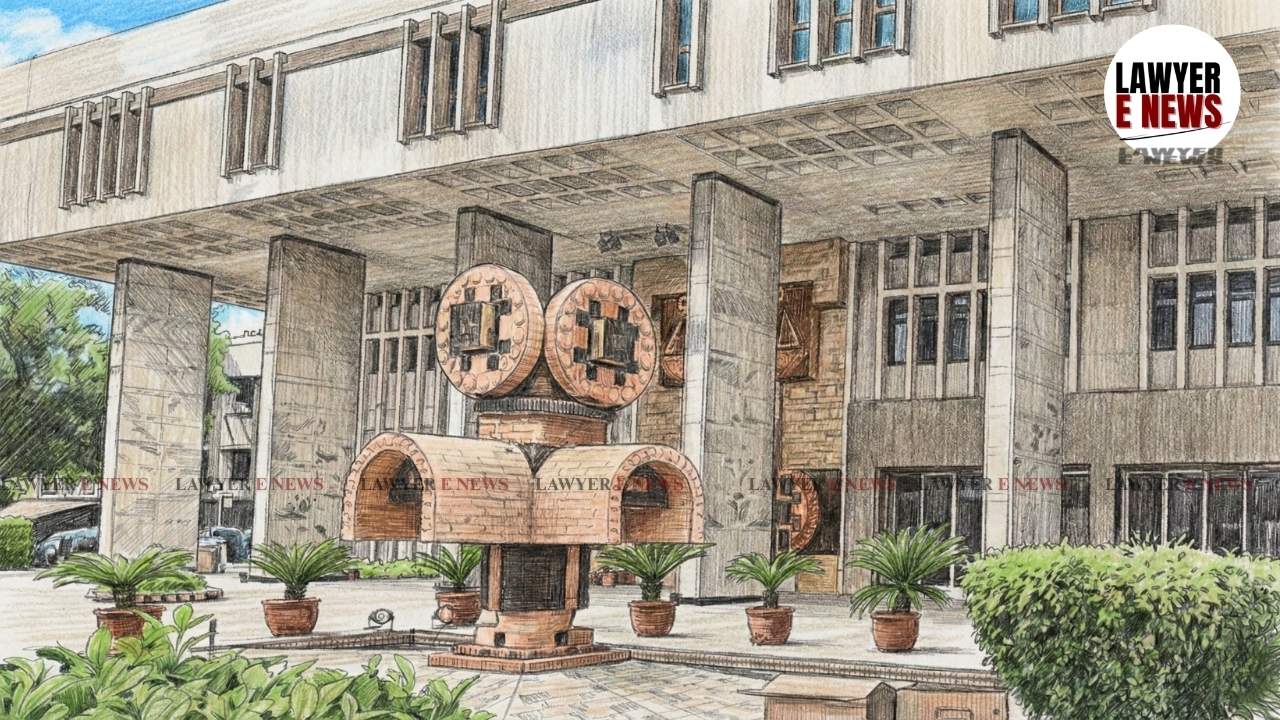
"The statutory consequence cannot be retrospectively imported into an appointment made under the earlier regime merely because the factual circumstance which now attracts statutory ineligibility was already present at the time of such appointment." Delhi High Court, in a significant ruling dated September 30, 2026, held that the statutory disqualifications introduced by the 2015 Amendment to the Arbitration and Conciliation Act, 1996, specifically Section 12(5) read with the Seventh Schedule, cannot be applied retrospectively to invalidate an arbitrator's appointment made prior to the commencement of the Amendment Act on October 23, 2015.
A division bench comprising Justice Anil Kshetarpal and Justice Bharat Parashar observed that unless the parties have expressly agreed to subject an ongoing arbitration to the amended regime, the legality of the tribunal's constitution must be tested under the law prevailing at the time of the commencement of proceedings and the appointment of the arbitrator.
The dispute arose from a license agreement between the Delhi Metro Rail Corporation (DMRC) and a proprietorship concern, which was terminated in 2014. Upon the invocation of the arbitration clause in June 2014, a sole arbitrator was appointed by DMRC in March 2015, well before the 2015 Amendment Act came into effect. The arbitrator subsequently rendered an award in 2017, which was challenged by the respondent before the District Judge solely on the ground of the arbitrator’s ineligibility as an employee of the appellant.
The primary question for the court's determination was whether Section 12(5) and the Seventh Schedule of the A&C Act could be invoked to invalidate an appointment made before the 2015 Amendment, even if the arbitral proceedings continued thereafter. The court also examined whether the contractual stipulation in the agreement providing that proceedings would be governed by the A&C Act "as amended from time to time" constituted an agreement by the parties to retrospectively apply the new statutory regime.
Contractual Intent Versus Statutory Rule
The bench emphasized that Section 26 of the 2015 Amendment Act acts as a clear legislative demarcation, stating that the amended provisions do not apply to arbitral proceedings commenced before its enforcement unless parties otherwise agree. The court noted that while the arbitration agreement contained a reference to future statutory amendments, it also included a specific temporal reference to "provisions in force at the time the reference is made."
Read Together As A Whole
The court held that these two stipulations must be read together, observing that a general reference to future amendments does not override the specific intent to anchor the proceedings to the law existing at the time of the reference. Consequently, the court found no unequivocal agreement to depart from the default rule of non-retrospectivity established by Section 26 of the Amendment Act.
No Automatic Disqualification
"A clause which, on a fair reading, also identifies the applicable provisions by reference to the law in force when the reference is made cannot readily be construed as an unequivocal agreement to subject an already commenced arbitration to a subsequent substantive disqualification."
The court distinguished the present case from subsequent Supreme Court jurisprudence, such as TRF Ltd. and Perkins, noting that those decisions were rendered in the context of the post-2015 statutory regime. The bench clarified that the principle of nemo judex in causa sua was always a recognized standard, but the specific statutory bar of ineligibility under the Seventh Schedule is a creature of the 2015 Amendment.
Requirement of Proving Actual Bias
The judges observed that under the pre-2015 regime, the employment of an arbitrator by a state instrumentality did not, ipso facto, constitute a statutory disqualification. The court noted that in the absence of evidence demonstrating actual bias, personal interest in the dispute, or the arbitrator being the direct subordinate of an officer whose decision was under challenge, the appointment remained valid under the legal framework applicable in March 2015.
Precedent on Temporal Applicability
The court relied heavily on the framework established in Hanson Agro Ltd. v. GAIL (India) Ltd., affirming that the legality of the tribunal’s constitution must be examined against the statutory backdrop existing at the time of the appointment. The court concluded that the respondent had failed to establish that the arbitrator was inherently ineligible under the law then in force.
Finding that the learned District Judge erred in applying the 2015 Amendment retrospectively, the High Court set aside the impugned judgment. The challenge to the constitution of the arbitral tribunal was rejected, and the arbitral award was restored, effectively upholding the appointment of the sole arbitrator made in March 2015.
Date of Decision: 30 September 2026