-
by sayum
10 November 2026 6:45 PM







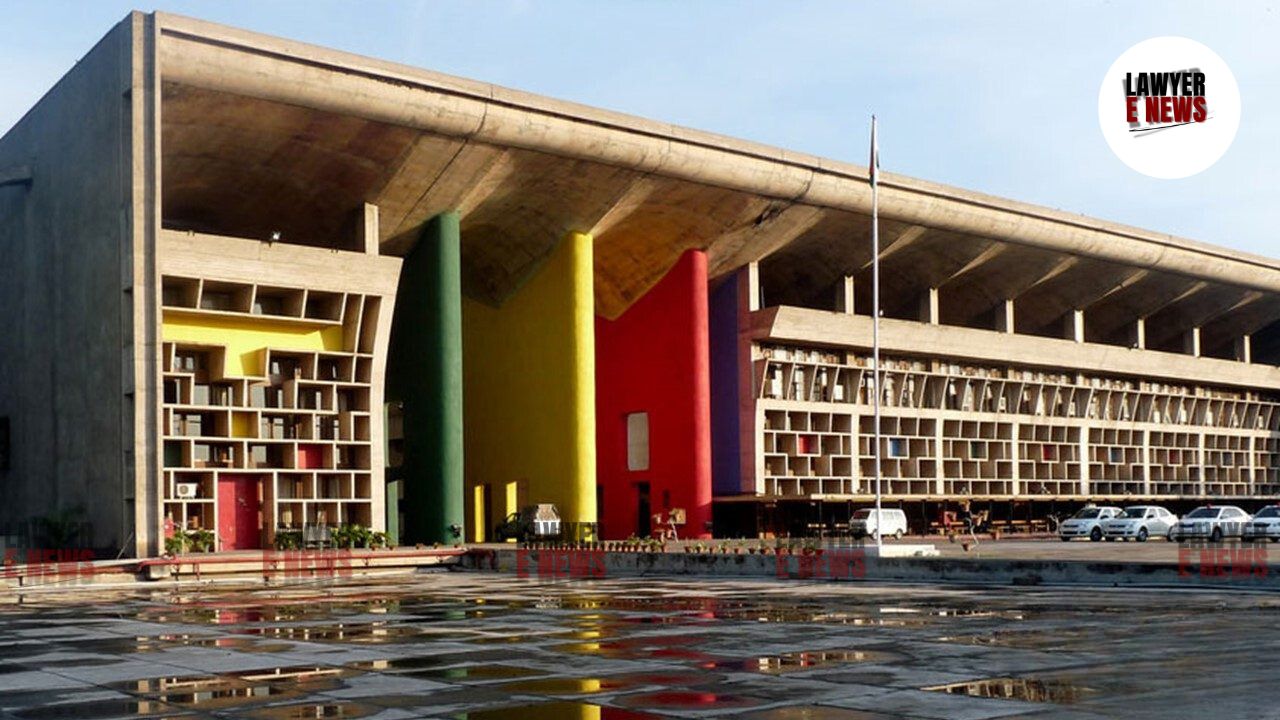
"Panjab University is not a central university or a centrally funded institution. It is a unique inter-state body corporate under Section 72 of the Panjab Reorganisation Act, 1966. The UGC Regulations, 2010 are not automatically applicable to Panjab University; their adoption requires the discretion and sanction of the appropriate government." Punjab and Haryana High Court held that Panjab University is neither a Central University nor a centrally funded institution, ruling that University Grants Commission Regulations enhancing the age of superannuation to 65 years cannot be automatically enforced without express statutory sanction from the Central Government under Section 31(1) of the Panjab University Act, 1947.
A Division Bench comprising Justice Anoop Chitkara and Justice Ramesh Chander Dimri pronounced on October 31, 2026, that until the Central Government sanctions the proposed amendment to Regulation 17.3, teachers superannuate at the age of 60 and can only seek re-employment strictly in an academic capacity without holding administrative positions.
The petitioner, serving as Principal of Panjab University Constituent College, Sikhwala, approached the High Court under Article 226 of the Constitution seeking a writ of mandamus to continue in service until the age of 65 years. He asserted that the University receives major funding from the Centre and had resolved to implement the UGC Regulations, 2010. Resisting the plea, the University maintained that under Regulation 17.3, the superannuation age remains 60 years and any post-retirement re-employment is restricted entirely to teaching duties without administrative or financial powers.
The legal issues raised before the Court were whether Panjab University qualifies as a Central University or a centrally funded institution for the purpose of the writ petition, whether the UGC Regulations, 2010 are automatically applicable to Panjab University, and whether the resolution passed by the Senate to amend Regulation 17.3 required the prior approval of the Central Government and had obtained such approval.
Examining the constitutional and legislative framework, the Division Bench noted that Panjab University was originally established under the Panjab University Act, 1947, as a State University. However, following the enactment of the Punjab Reorganisation Act, 1966, the institution transformed into an Inter-State Body Corporate under Section 72.
Funding pattern does not alter statutory status into a Central University
The Court observed that merely because the Central Government determines financial grants or contributes substantially toward the university's budget, it does not elevate the institution to the status of a Central University incorporated under a Union legislation.
Relying on established precedents, the Bench reiterated that the statutory character of the institution is governed strictly by the 1947 Act and the 1966 Act, maintaining its identity as an inter-state statutory corporation.
UGC recommendations cannot be forced on institutions without sovereign adoption
Turning to the enforceability of UGC Regulations, the Court placed reliance on the Supreme Court's ruling in Jagdish Prasad Sharma v. State of Bihar, underscoring that schemes formulated by the UGC concerning pay revisions and superannuation enhancement are not self-executing.
The Bench observed that such recommendations require a conscious, discretionary decision by the competent government, having regard to financial burdens and administrative repercussions, meaning the UGC Regulations, 2010 cannot apply automatically.
Senate resolutions cannot override statutory regulations without Central Government sanction
The Court examined the statutory rule-making mechanism under Section 31(1) of the Panjab University Act, 1947, which mandates that the Senate can make or amend regulations only with the sanction of the Government, defined under Section 2(b) as the Central Government.
The Bench highlighted that although the Senate initiated a proposal to amend Regulation 17.3 to enhance the retirement age from 60 to 65 years, the Central Government has not sanctioned the amendment.
Reaffirming the Division Bench view in Krishan Sharma v. Panjab University, the Court observed that a mere resolution of the Senate or Syndicate cannot supersede an existing statutory regulation in the absence of Central Government approval.
Re-employment beyond superannuation is strictly confined to academic assignments
The Court highlighted that under Chapter-IV of University Calendar Volume-III and the Syndicate's resolution dated February 4, 2023, teaching staff continuing beyond 60 years on a re-employment basis are categorically barred from exercising administrative and financial powers.
The Bench observed that the petitioner possessed no vested legal right to cling to the administrative chair of the Principal in perpetuity, noting that an academician's paramount commitment lies in teaching rather than administrative control.
Omission to implead the newly appointed incumbent proves fatal
The Court further took serious note of the fact that the University had already appointed a regular successor as Principal, who had not been impleaded as a party to the proceedings.
The Bench held that non-joinder of the incumbent Principal, in whose favor substantive legal rights had accrued, rendered the petitioner's claim to continue in the administrative post legally unsustainable.
Dismissing the writ petition, the High Court held that the petitioner superannuated upon attaining the age of 60 years under Regulation 17.3 and possessed no legal right to retain the administrative office of Principal. The Court concluded that until the Central Government formally accords sanction to amend the University Regulations, superannuation remains set at 60 years, with extensions permissible solely for academic functions.
Date of Decision: October 31, 2026