-
by sayum
10 November 2026 6:45 PM







"A breach of a condition governing the office held by an arbitrator may entail consequences under the statutory or regulatory framework governing that office. Such consequence, however, cannot automatically be equated with termination of the arbitral mandate under Section 12(5), particularly when the alleged disability does not arise from any of the circumstances specified in the Seventh Schedule," Delhi High Court.
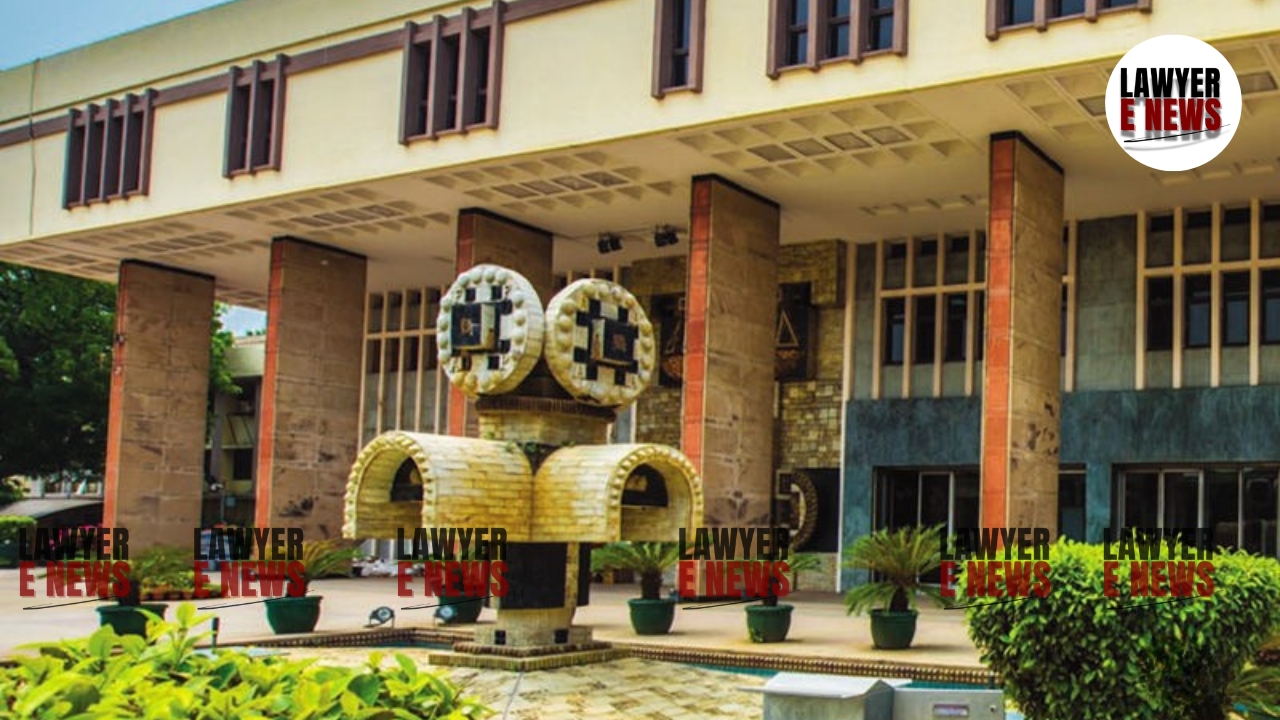
The Delhi High Court, in a judgment dated 28 September 2026, held that a violation of service conditions by an arbitrator does not, by itself, render the arbitrator de jure ineligible under Section 12(5) of the Arbitration and Conciliation Act, 1996 (A&C Act).
A division bench of Justice Anil Kshetarpal and Justice Shail Jain observed that service-rule restrictions cannot be equated with the statutory ineligibility contemplated by the Seventh Schedule to the A&C Act, and consequently, the lack of an express written waiver under the proviso to Section 12(5) is not fatal to the validity of the arbitral award.
The appellant, M/s Airport Handling Services, a registered MSME, had initiated arbitration against the Indian Institute of Technology, Kanpur, regarding outstanding dues under various service agreements. The dispute was referred to a Sole Arbitrator through the Delhi Arbitration Centre. Following the passing of an arbitral award in favour of the appellant, the respondent challenged the award under Section 34 of the A&C Act, specifically contending that the arbitrator was de jure ineligible to act because she was simultaneously serving as the President of the Delhi State Consumer Disputes Redressal Commission, which allegedly violated Rule 11(3) of the Consumer Protection (Conditions of Service) Model Rules, 2020. The District Judge set aside the award based on this objection.
The court was primarily tasked with determining whether a restriction on an arbitrator’s service conditions, such as Rule 11(3), renders the arbitrator de jure ineligible under Section 12(5) or de jure unable under Section 14(1)(a) of the A&C Act. Furthermore, the court examined whether the absence of an express written waiver under the proviso to Section 12(5) constitutes a ground for setting aside an award when the alleged disability is not rooted in the Seventh Schedule.
The court distinguished between de jure ineligibility and de jure inability, clarifying that while they are related, they are not interchangeable under the A&C Act. While de jure inability (the genus) refers to any legal incapacity to perform functions, de jure ineligibility (the species) is strictly confined to the categories enumerated in the Seventh Schedule to the A&C Act.
Distinguishing Genus and Species
The bench emphasized that the expression de jure inability under Section 14(1)(a) is not restricted solely to the circumstances arising under Section 12(5). Relying on the Supreme Court's ruling in Bhadra International (India) Pvt. Ltd. v. Airports Authority of India, the court noted that while Seventh Schedule disqualifications automatically trigger de jure inability, not every legal disability constitutes an ineligibility under Section 12(5).
Section 12(5) Proviso Not Universally Applicable
The court clarified that the requirement of an express written waiver under the proviso to Section 12(5) is a specific consequence of statutory ineligibility arising from the Seventh Schedule. Where an alleged disability—such as a service rule restriction—does not fall within the Seventh Schedule, the proviso cannot be invoked to invalidate an award for want of an express written waiver.
"The fact that a particular legal provision may, in an appropriate case, render an arbitrator de jure unable under Section 14(1)(a) does not mean that the arbitrator consequently falls within Section 12(5) unless the statutory requirements of that provision are independently satisfied."
No Automatic Termination of Mandate
The court found no evidence that the arbitrator had any relationship with the parties or the subject matter that would trigger the Seventh Schedule. Citing its previous decision in Delhi Integrated Multi Modal Transit Systems Ltd. v. Delhi Jal Board, the bench held that even if acting as an arbitrator were a violation of service conditions, such a breach does not cause the mandate of the arbitrator to stand automatically terminated under the A&C Act.
Participant Conduct and Waiver
The bench noted that the respondent participated in the arbitral proceedings without raising any objection under Section 16(2) of the A&C Act. Raising the objection regarding service conditions for the first time in rejoinder proceedings during a Section 34 challenge does not permit the respondent to recharacterize a service-condition restriction as an absolute statutory bar under Section 12(5).
Allowing the appeal, the court held that the District Judge erred in law by conflating service-condition restrictions with statutory ineligibility. Consequently, the High Court set aside the impugned judgment and restored the arbitral award, affirming that the arbitrator’s mandate remained valid as the objection did not meet the threshold of the Seventh Schedule.
Date of Decision: 28 September 2026