
-
by sayum
26 August 2026 1:49 PM







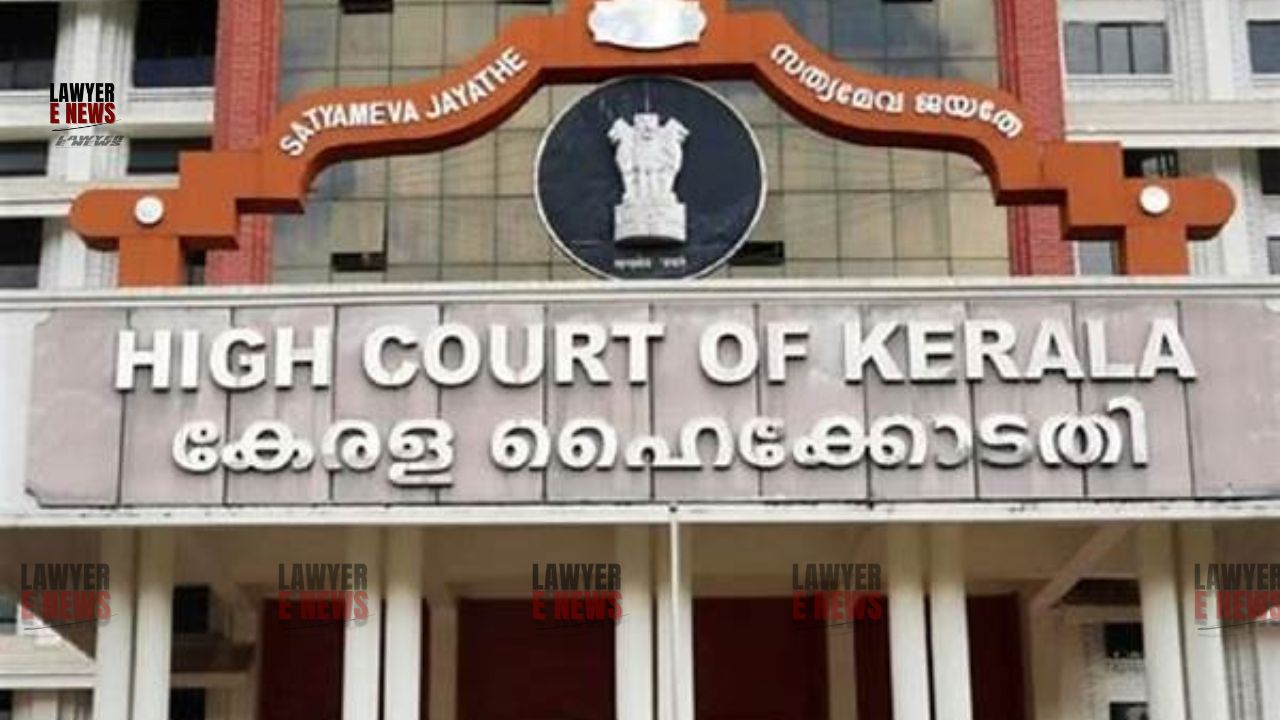
“When no disciplinary or criminal proceedings are pending on the date of the DPC, invoking the sealed cover procedure is impermissible. Doing so violates the employee’s fundamental right to equality under Article 14 of the Constitution” — Kerala High Court
In a landmark judgment delivered by Kerala High Court held that the sealing of promotion results after the DPC on the ground of disciplinary action initiated after the meeting is contrary to law and unconstitutional. The Court categorically ruled that the Bank acted illegally by denying promotion to a senior officer who had been found fit for promotion by the Departmental Promotion Committee (DPC) and had no charges pending on the date of consideration.
The Division Bench of Justice Sushrut Arvind Dharmadhikari and Justice Syam Kumar V.M. allowed the writ appeal, set aside the Single Judge’s dismissal, and directed the Indian Overseas Bank to promote the appellant retrospectively with effect from 01 July 2012, the date his junior was promoted.
“Promotion Cannot Be Denied Based on Disciplinary Proceedings Initiated After DPC—Such Action Is Unfair and Illegal”
The appellant, Venkitachalam S.R., a bank officer who joined service in 1977 and retired in December 2012, was shortlisted for promotion to Deputy General Manager (DGM) by the DPC held on 09 June 2012. He was placed at Serial No. 22 in the merit list. However, while his junior at Serial No. 23 was promoted effective 01 July 2012, the appellant was not promoted.
The bank claimed that disciplinary proceedings were “contemplated” due to alleged irregularities between 2009–2011, and a charge sheet was issued only on 26 September 2012, three months after the DPC. Yet, the Bank applied the sealed cover procedure and withheld his promotion.
The Court rejected this action as procedurally illegal, holding:
“As on the date of the DPC, i.e., 09.06.2012, no disciplinary proceedings were pending against the appellant. Therefore, the respondent had no justification in keeping the DPC recommendation in a sealed cover.”
Citing the Supreme Court’s decision in Union of India v. Doly Loyi (2024), the Bench reiterated that:
“The charge sheet having been issued after the DPC date, the prosecution cannot retrospectively be used to justify sealed cover procedure. It was legally unsustainable.”
“Delay in Filing Writ Petition Justified by RTI Disclosure—Single Judge Erred in Dismissing on Laches Alone”
The writ petition had earlier been dismissed by a Single Judge on the ground of delay, holding that the appellant was aware of his junior’s promotion and could have acted earlier.
However, the Division Bench found that the appellant only became aware in 2014 through information received under the Right to Information Act, confirming that he had been selected by the DPC and that his name had been placed above his junior.
The Court held:
“The findings of the learned Single Judge regarding delay are factually incorrect. The appellant acted promptly upon learning of the violation of his rights. Delay cannot be a bar where injustice is writ large and the employer is at fault.”
“Bank’s Failure to Act Diligently and Its Arbitrary Application of Sealed Cover Violates Article 14”
The respondent-Bank argued that vigilance clearance had only been provisionally granted, and that proceedings were pending based on past misconduct. But the Court noted that:
Vigilance clearance was granted before the DPC
The charge sheet was issued only three months later
The Bank had no lawful basis to apply sealed cover on a retrospective ground
The Bench found this conduct arbitrary and violative of equality under Article 14 of the Constitution, observing:
“The respondent-Bank’s action of keeping the promotion in sealed cover despite there being no pending proceedings is a gross error of law and fairness.”
“Employee Entitled to Promotion with Retrospective Effect—Penalty Order After Retirement Not Interfered With”
While allowing the writ appeal, the Court issued the following specific directions:
“The respondent-Bank is directed to promote the appellant to the post of Deputy General Manager with effect from 01.07.2012, fix his pay in the promotional grade, and release arrears within three months.”
However, the Court did not interfere with the major penalty imposed on the appellant in February 2014, after retirement, since that order was not under challenge in the present proceedings.
Procedural Fairness Cannot Be Subverted by Administrative Delay—Retrospective Sealed Cover Action Is Void
The judgment stands as a strong affirmation of the principle that procedural justice must align with substantive rights, especially in matters of service and promotion. Once an employee is considered fit, and no proceedings are pending, future developments cannot retrospectively invalidate that eligibility.
"Sealed cover procedure is not a weapon for retrospective penalization. It is an exception, not a post-facto remedy to cover administrative lapses," the Court implicitly stated.
The ruling is expected to have a significant bearing on employment disputes in public sector organisations, where sealed cover misuse and inordinate delays in initiating disciplinary action are often used to stifle promotions of eligible candidates.
Date of Decision: 13 October 2025





