-
by kapil
27 October 2026 6:21 AM







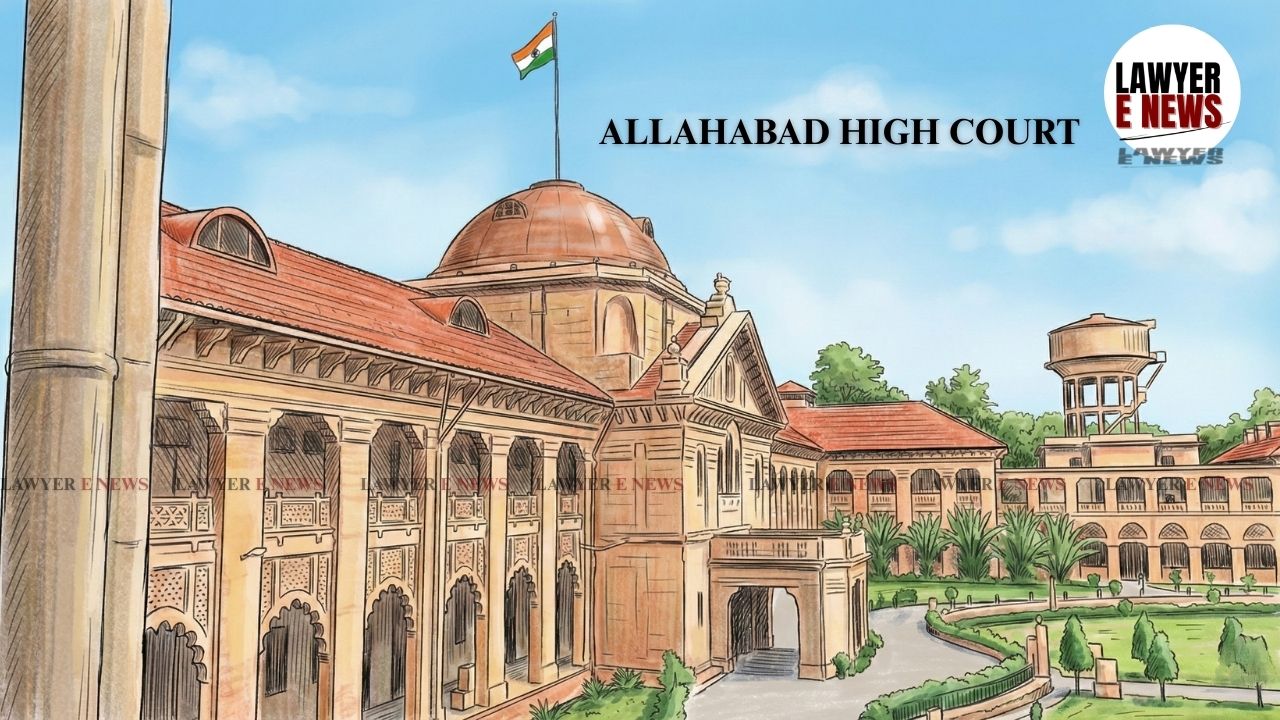
"The Special Court is thus not a passive recipient of the administrative report. It is the statutory authority entrusted with satisfying itself, upon the material placed before it, whether the relief paid meets the standard prescribed under the Schedule to Rule 12(4)." Allahabad High Court, in a significant ruling dated August 11, 2026, held that Special Courts constituted under the SC/ST (Prevention of Atrocities) Act, 1989, possess the mandatory jurisdiction to adjudicate upon the adequacy and timeliness of financial relief provided to victims under Rule 12(7) of the 1995 Rules.
A bench of Justice Santosh Rai observed that the trial court cannot abdicate its judicial duty by treating itself as a "passive recipient" of administrative reports, but must actively ensure that relief disbursed matches the statutory scale.
The appellants challenged an order passed by the Special Judge (SC/ST Act), Jhansi, which had rejected applications seeking the payment of balance relief amounts. The trial court had refused to intervene, reasoning that it lacked the authority to determine the nature of the offence or enhance the quantum of financial assistance determined by the District Level Committee. The appellants contended that the trial court misinterpreted the scope of Rule 12(7), which expressly empowers the judiciary to order the payment of due relief.
The primary issue before the Court was whether a Special Court constituted under the SC/ST Act is empowered under Rule 12(7) of the 1995 Rules to sit in judgment over the adequacy and quantum of relief provided by the District administration. The Court also addressed the necessity of establishing a robust regulatory mechanism to prevent the potential misuse of beneficial legislation by recurring claimants.
The Court clarified that the scheme of the SC/ST Rules is designed to provide immediate relief and rehabilitation, and Rule 12(7) acts as a critical judicial check against administrative arbitrariness. The Court held that the provision is not merely enabling but is "couched in terms that contemplate active judicial scrutiny" by the Special Court regarding the timeliness and sufficiency of payments.
Rule 12(7) Empowers Judicial Scrutiny
The bench underscored that the Special Court is the ultimate statutory authority tasked with ensuring that the amounts paid adhere to the scales provided in the Schedule to Rule 12(4). By rejecting the applications, the lower court had failed to exercise the jurisdiction specifically vested in it to prevent "under-payment, delayed payment or arbitrary curtailment of statutory relief."
"The Special Court is thus not a passive recipient of the administrative report. It is the statutory authority entrusted with satisfying itself, upon the material placed before it, whether the relief paid meets the standard prescribed under the Schedule."
Addressing Potential Misuse of Legislation
While affirming the right of genuine victims to timely compensation, the Court expressed deep concern over disclosures indicating that certain individuals were registering recurring criminal cases to obtain substantial financial benefits. The Court noted that such patterns undermine the integrity of the benevolent scheme.
Need for Intensive Regulatory Mechanism
The Court directed the Government of Uttar Pradesh to initiate a state-wide enquiry to develop an "effective regulatory mechanism and supervisory system" for the disbursement of funds under the SC/ST Act. It emphasized that authorities must conduct rigorous verification before releasing public funds to ensure that beneficial provisions are not converted into a tool for unwarranted financial gain.
"The beneficial provisions of the Act and the Rules are intended to provide immediate relief, rehabilitation and financial assistance to genuine victims of atrocities. Such beneficial provisions cannot, however, be permitted to be misused for obtaining financial benefits from the State exchequer."
Directions for Re-adjudication
The High Court set aside the impugned orders and remitted the matters to the Special Judge, Jhansi, for fresh consideration. The trial court was directed to examine the ingredients of the offences—not merely the sections mentioned in the charge-sheet—to determine whether the victims are entitled to the relief prescribed under Sl. Nos. 18, 19, or 41 of the Schedule. The District Welfare Committee has been ordered to provide a reasoned, speaking order regarding the applicable quantum of compensation within six weeks.
Date of Decision: 11 August 2026