
-
by kapil
27 October 2026 6:21 AM







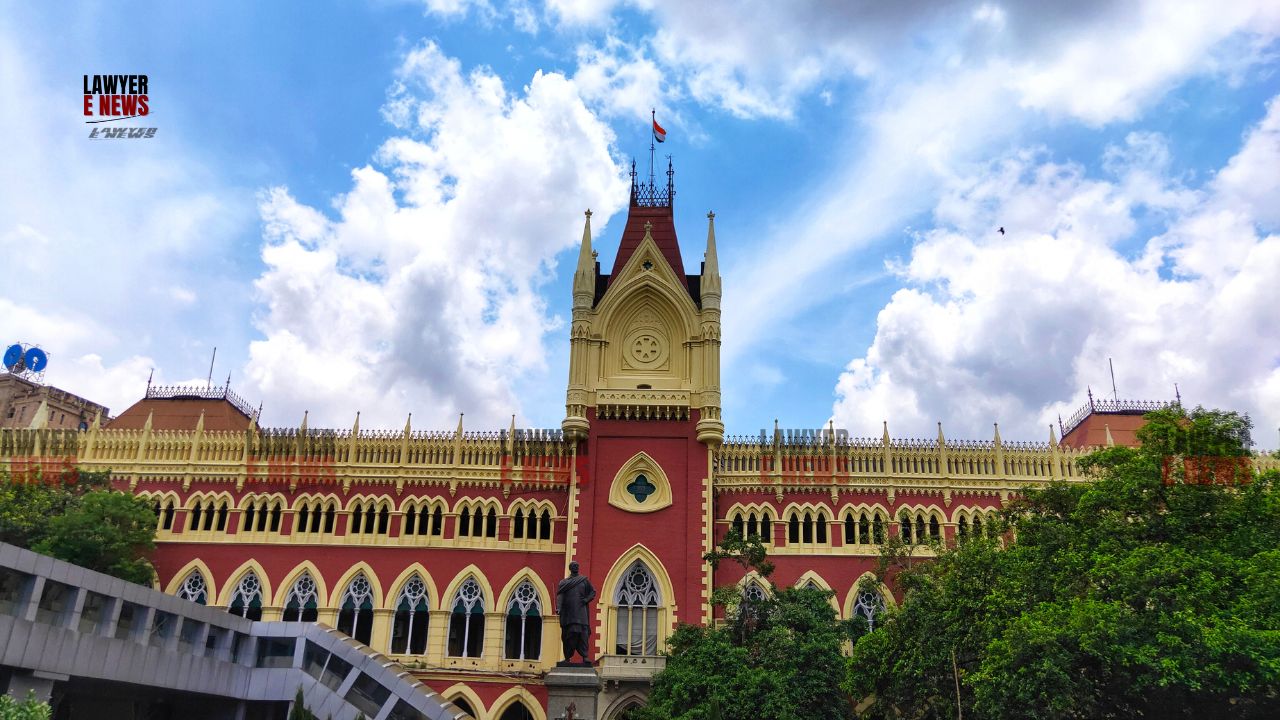
"The issue of his candidature being considered as an unreserved candidate in the provisional list dated 03.03.2023, thus attained finality. Accordingly, the petitioner was considered as an unreserved category candidate at the time of issuance of the final list of selected candidates." Calcutta High Court, in a judgment dated 18 September 2026, held that a candidate who fails to challenge a provisional merit list—which explicitly marks their candidature as 'unreserved' due to the submission of a belated caste certificate—cannot subsequently challenge the final selection list.
A bench of Justice Madhuresh Prasad and Justice Prasenjit Biswas observed that by failing to file objections during the designated window provided by the Public Service Commission (PSC), the candidate acquiesces to their status and cannot later seek to disturb the vested rights of successfully appointed third parties.
The petitioner, an aspirant for the post of Fire Operator in the West Bengal Fire Services, challenged an order of the West Bengal Administrative Tribunal which had rejected his plea to be considered under the OBC-B category. Although the petitioner possessed an OBC-B certificate, it was issued after the closing date stipulated in the recruitment advertisement. Following a previous High Court mandate in WPST 44 of 2022, the PSC had conducted a fresh scrutiny of all certificates and published a provisional merit list on 3 March 2023, wherein the petitioner was categorized as 'General' with a specific remark citing his ineligibility for the reserved category due to the late issuance of his certificate.
The primary legal issues before the court were whether a candidate can seek the benefit of an OBC certificate issued after the cut-off date by relying on the Supreme Court's ruling in Ram Kumar Gijroya v. Delhi Subordinate Services Selection Board, and whether the petitioner, having failed to object to the provisional list, is estopped from challenging the subsequent final selection list. Additionally, the court examined the extent to which it could grant relief that would disrupt the appointments of nearly 1,400 candidates who had already joined the service.
Court Rejects Application of Ram Kumar Gijroya
The court held that while the petitioner sought to rely on Ram Kumar Gijroya to argue that an OBC certificate can be submitted until the selection stage, the present case involved specific, binding directions issued by a coordinate bench in WPST 44 of 2022. That earlier judgment had explicitly mandated that certificates must be issued on or before the closing date of 3 July 2018. Consequently, the High Court emphasized that it could not sit in appeal over the decision of a coordinate bench.
Binding Nature of Coordinate Bench Precedent
The bench underscored the doctrine of judicial discipline, noting that it could not ignore the explicit directions that governed the entire recruitment exercise. Citing State through CBI v. Hemendhra Reddy, the court reiterated that a coordinate bench cannot take a contrary view to an earlier ruling of another coordinate bench without referring the matter to a larger bench. Any attempt to do so, the court noted, would result in "judicial chaos" and is "atrocious and unacceptable."
Finality of Selection and Accrual of Third-Party Rights
The court further noted that the recruitment process had attained finality, with 1,343 candidates already having joined their posts. Invoking the principles laid down by the Supreme Court in Amarjeet Singh v. Devi Ratan and the final order in Karan Singh Yadav v. Govt of NCT of Delhi, the court held that the accrual of third-party rights created a significant barrier to granting the relief sought by the petitioner. The court emphasized that the petitioner’s failure to raise objections to the provisional list or challenge the underlying coordinate bench order precluded any further judicial intervention.
No Relief Due to Acquiescence
Ultimately, the court affirmed the Tribunal’s decision, ruling that the petitioner's silence during the objection period for the provisional merit list amounted to an acceptance of his status as an unreserved candidate. Consequently, the writ petition was dismissed, upholding the finality of the selection process and the integrity of the appointments already made.
Date of Decision: 18 September 2026