
-
by kapil
27 October 2026 6:21 AM







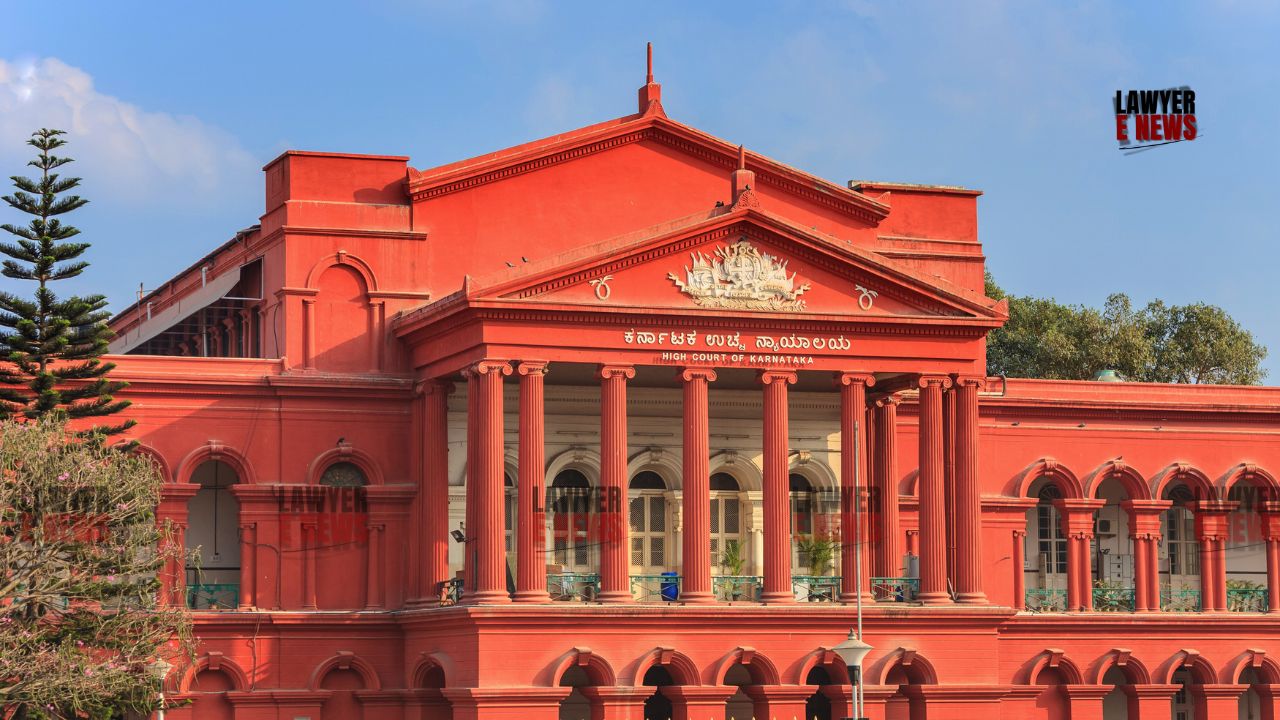
"Liberty of free expression is not to be confused with a licence to make unfounded, unwarranted and irresponsible aspersions against the judges or the courts in relation to judicial matters. No system of justice can tolerate such an unbridled licence." Karnataka High Court, in a judgment dated 11 September 2026, held that an advocate appearing as a party-in-person who disrupts court proceedings, uses derogatory language against presiding officers, and makes unsubstantiated allegations of bias commits criminal contempt under Section 2(c) of the Contempt of Courts Act, 1971.
A division bench of Justice Anu Sivaraman and Justice Venkatesh Naik T observed that such conduct erodes the majesty of the law and undermines the public's trust in the judicial system.
The proceedings originated from reports submitted by the Principal District and Sessions Judge, Uttara Kannada, detailing the conduct of advocate Sri Pankaj Kaushik. On two separate occasions in April 2022, the accused allegedly interrupted ongoing proceedings in the trial court, yelled at presiding officers, and accused them of accepting bribes. Furthermore, during an incident on 20 April 2022, the accused appeared before the court in an inebriated condition and disrupted a senior counsel’s arguments, leading to a medical examination that confirmed alcohol consumption.
The primary question before the court was whether the conduct of the accused, including shouting at judicial officers, making allegations of bribery, and disrupting proceedings while in an inebriated state, fell within the definition of "criminal contempt" under Section 2(c) of the Contempt of Courts Act. The court was also required to determine the appropriate punishment given the lack of genuine remorse and the persistent nature of the misconduct.
The bench emphasized that while the right to free speech and fair criticism is a fundamental tenet of a democratic society, it is not an absolute license to scandalize the judiciary or attribute improper motives to judges. Referring to the Supreme Court’s observations in Rajendra Sail v. M.P. High Court Bar Association, the bench noted that when an individual’s actions tend to create distrust in the working of the courts, they threaten the very foundation of the rule of law.
Judiciary Is Not A Cloistered Virtue
The court observed that while judges and judicial orders are subject to scrutiny and fair comment, such criticism must be bona fide, reasonable, and expressed in proper language. When an individual crosses the threshold from fair criticism to a deliberate, calculated attempt to impair the administration of justice, the court is duty-bound to exercise its powers under the Contempt of Courts Act to uphold its dignity.
Aggravated Conduct and Lack of Remorse
During the proceedings, the accused attempted to justify his conduct by citing health conditions and personal grievances. However, the court found these explanations to be mere excuses. The bench remarked that the accused’s demeanor throughout the contempt proceedings reflected an "adamant stand" and a complete apathy towards judicial decorum. The court highlighted that failing to punish such conduct would send a dangerous message to society, potentially encouraging other "sociopaths" to repeat similar offenses with impunity.
"The very demeanor and tone of the accused is clearly contemptuous of the orders and authority of the Court and the judicial system as such."
Application of Legal Principles
The court relied on the precedent set in Prashant Bhushan and another, in Re to reinforce that hostile criticism intended to scandalize the institution as a whole is not protected under Article 19(1)(a) of the Constitution of India. By confirming that the charges were proven beyond doubt, the High Court held that the accused’s actions—interrupting senior counsel, shouting at court staff, and being in a drunken state in the court hall—constituted a clear interference with the administration of justice.
Concluding that the gravity of the contempt warranted deterrent punishment, the court convicted the accused under Section 12(1) of the Contempt of Courts Act. The bench sentenced him to simple imprisonment until the rising of the court and imposed a fine of Rs. 2,000, noting that this sentence serves as an example to prevent future recurrences of such unprofessional behavior.
Date of Decision: 11 September 2026