-
by sayum
28 August 2026 2:11 PM







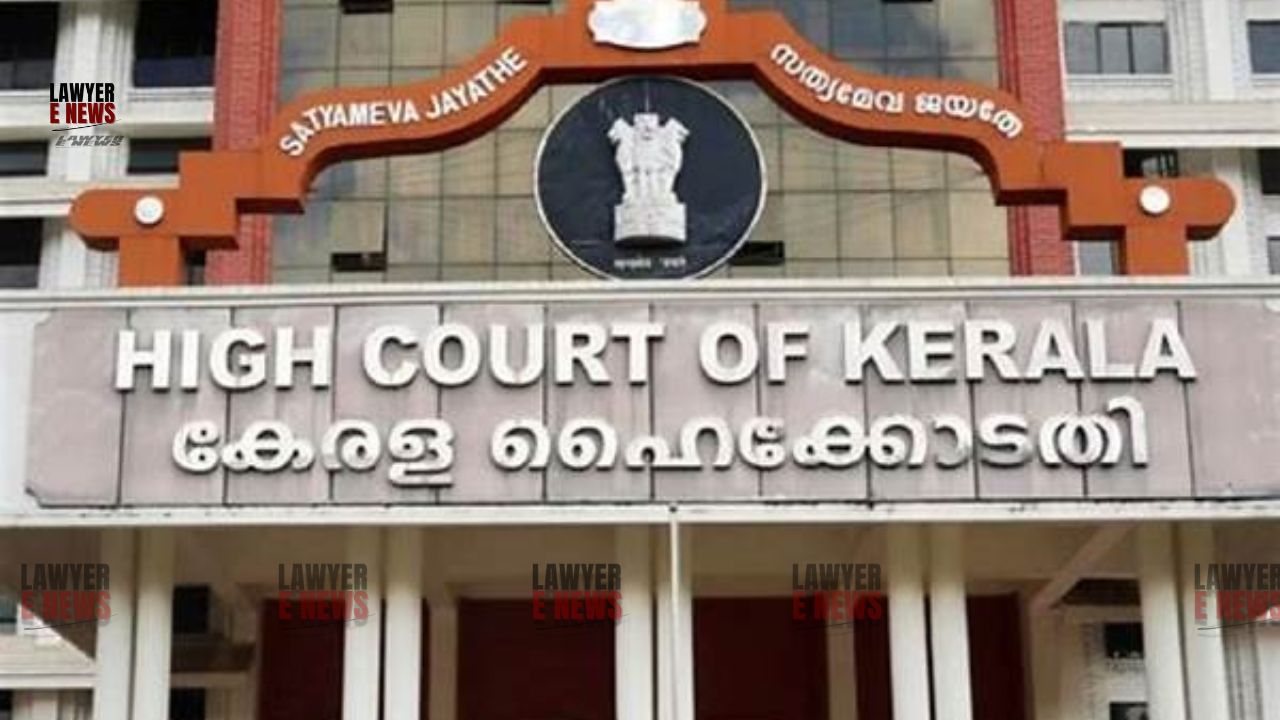
“When the unit itself is not operational or leased out, the very premise of revival and rehabilitation stands negated”, held the Kerala High Court while dismissing a writ petition challenging the classification of a registered MSME account as a Non-Performing Asset (NPA) and subsequent proceedings under the SARFAESI Act. The Court concluded that disputed questions of fact and lack of prima facie illegality rendered the writ remedy under Article 226 unavailable.
On September 25, 2025, the Kerala High Court clarifying the limited scope of judicial interference in NPA classification and SARFAESI action against MSME borrowers, especially where substantial factual disputes exist and alternate remedies are available.
“Disputed Lease to Third Party and Cessation of Operations — Facts Not Fit for Article 226 Adjudication”
The Court’s principal observation centered on the inappropriateness of writ jurisdiction in the presence of seriously disputed factual contentions. The bank had claimed, based on site inspection photographs (Ext.R2(a)) and field visits, that the steel manufacturing unit in question had ceased operations and was leased out to a third party operating under the brand name "Jothi Steels." This claim, if true, negated the application of RBI’s revival and rehabilitation framework for MSMEs.
Rejecting the petitioner’s attempt to refute the lease allegation by citing job-work agreements (Exhibits P16 to P18), the Court said:
“This fact is disputed by the petitioner, stating that there is no lease to a third party as alleged by the respondent bank. This is a matter that requires a factual adjudication. Therefore, I am not inclined to exercise the jurisdiction under Article 226...” [Para 9]
Thus, the Court emphasized that "factual controversies are not amenable to summary writ adjudication", particularly in commercial disputes involving bank finance and borrower conduct.
No Evidence of Invoking MSME Protection Before NPA Declaration: Court Finds Petitioners’ Conduct Lacking
The Court also found that the petitioners had not raised the issue of MSME protection at the relevant stages, such as prior to issuance of the Section 13(2) SARFAESI notice or in their initial response.
“No contention as such was taken by the unit claiming the benefits of the relevant RBI Circular affording protection to the MSMEs, before the filing of the writ petition. Even in the reply to the notice issued under Section 13(2), no such claim was made.” [Para 7]
This omission, the Court noted, undermined the credibility of the belated claim for restructuring under the RBI Framework for Revival and Rehabilitation of MSMEs (dated 17.03.2016 – Ext.P10).
The Court further held:
“The very premise of revival and rehabilitation stands negated” when the unit is admittedly leased or non-functional, as the purpose of the RBI guidelines is to support "functioning but stressed MSMEs", not defunct or third-party-run units. [Para 8]
NPA Classification Based on “Out of Order” Norm – Court Finds No Prima Facie Illegality
On the core legal issue of whether the NPA classification was legally valid, the Court sided with the respondent bank’s interpretation of RBI’s Master Circulars (Ext.R2(b), R2(d)).
The bank had invoked the principle that a Cash Credit account becomes NPA when it is “out of order,” i.e., when interest debited remains unpaid and not covered by credits for 90 consecutive days.
“There is nothing on record to discredit the said contention of the bank,” the Court held [Para 10], finding no arbitrariness or violation of the RBI circulars sufficient to invoke writ jurisdiction.
Notably, the Court distinguished the case from M/s Pro Knits v. Board of Directors, Canara Bank, (2024) 10 SCC 292, where the Supreme Court had held the MSME circulars mandatory before NPA classification. The High Court clarified that Pro Knits would not apply where the MSME unit is not eligible for revival due to non-operation or third-party lease.
Allegation of Usurious Interest Requires Evidence – Not Suitable for Writ Jurisdiction
The petitioners had alleged that the bank arbitrarily increased the interest rate from 10% to 18.15%, including penal interest on SMA classifications, in violation of the ruling in Central Bank of India v. Ravindra, (2002) 1 SCC 367.
However, the Court found: “The issue requires adjudication on evidence — not fit for determination under Article 226 at threshold stage.” [Para 2.1, 4.3]
The Court further held that the interest rates were part of the sanction conditions (Ext.R2(g)) accepted by the borrower and could not be challenged summarily in writ.
CERSAI Registration Challenge Rejected – Bank Produced Sufficient Documents
On the issue of valid mortgage registration under Section 26D of the SARFAESI Act, the petitioners had alleged that the secured interest was not properly registered with CERSAI.
However, the Court dismissed this claim, noting: “The bank produced documents showing registration of security interest. No cause to interfere in writ jurisdiction on this ground.” [Para 2.4]
Thus, the Court refused to intervene merely on technical procedural grounds that lacked factual foundation.
Availability of Alternate Remedy Under Section 17 – Writ Dismissed With Liberty
Reiterating the well-settled principle of alternate statutory remedy, the Court held:
“Since the bank has already taken steps under Section 13(4) of the Act, the petitioners have a remedy before the Debts Recovery Tribunal under Section 17 of the SARFAESI Act.” [Para 11]
Consequently, the writ petition was dismissed, but liberty was granted to the petitioners to approach the DRT to agitate their grievances.
The Court added: “Prima facie, there is nothing on record to suggest that the bank has illegally refused the claim put forth by the petitioner seeking protection under the Ext.P10 Framework dated 17.03.2016.”
The Kerala High Court’s decision in Bildon Steels India v. RBI & Ors. delivers a stern message on the limits of judicial interference in banking matters, particularly under the SARFAESI regime. The judgment reinforces that revival frameworks for MSMEs require operational viability, and factual disputes around borrower conduct must be adjudicated before the DRT, not under Article 226.
This ruling adds to a growing body of jurisprudence that holds RBI circulars binding, but not automatically applicable, especially when revival is factually untenable or procedurally forfeited.
Date of Decision: 25 September 2025