-
by sayum
04 August 2026 1:39 PM







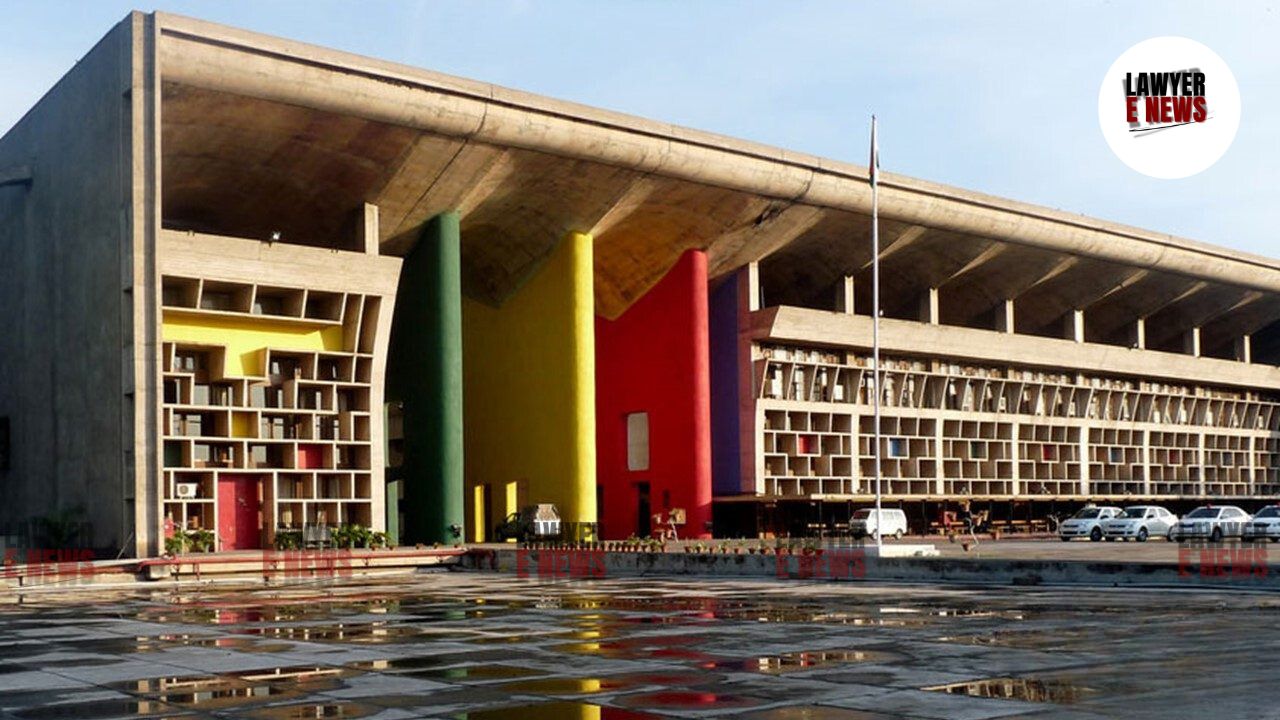
“The prayer for specific performance inserted by way of amendment would not, as a matter of course, relate back to the filing of the plaint” — In a significant ruling reinforcing the sanctity of limitation laws, the Punjab and Haryana High Court has held that a plaintiff cannot escape the bar of limitation by belatedly amending a suit for injunction into one seeking specific performance of a contract. Dismissing two second appeals filed by the same appellant, Justice Alka Sarin ruled that allowing an amendment under Order VI Rule 17 CPC does not revive a time-barred claim.
“The suit for specific performance, introduced years later through amendment, cannot be saved merely because the defendant raised no objection at the time,” observed the Court, adding that “substantive rights under limitation law cannot be defeated by procedural maneuvers.”
“Suit for Injunction Cannot Be Magically Transformed into a Timely Suit for Specific Performance”
The case arose from a civil suit originally filed by Om Parkash on 24 January 2001 seeking a permanent injunction against Smt. Shanti, the vendor, based on an agreement to sell dated 18 December 2000. Shanti, however, filed her written statement on 21 December 2001 clearly denying the execution of the agreement and the receipt of any earnest money.
Despite the denial of contract coming as early as 2001, the plaintiff waited until 28 November 2009—nearly eight years later—to file an application for amendment of the plaint, seeking the entirely new relief of specific performance of the agreement.
The Trial Court initially decreed the suit after the amendment was allowed, without objection from the defendants. But on appeal, the First Appellate Court reversed the decision, holding the suit barred by limitation. Two separate second appeals were then preferred by Om Parkash, challenging the judgments in favour of both the subsequent purchasers and the vendor.
“Limitation Begins When Agreement is Denied, Not When Plaintiff Wakes Up to Seek Relief”
Dismissing both second appeals, the High Court found no merit in the argument that the absence of objection to the amendment could cure the delay.
“It was well within the knowledge of the plaintiff on 21.12.2001 that the vendor had denied the execution of the agreement,” the Court held, stating further: “Therefore, limitation commenced from that date, and the suit for specific performance, filed through amendment in 2009, was hopelessly time-barred.”
In her reasoning, Justice Alka Sarin leaned heavily on the binding authority of the Supreme Court, particularly the judgment in Tarlok Singh v. Vijay Kumar Sabharwal (1996) 8 SCC 367, where it was held:
“Suit for perpetual injunction is different from suit for specific performance. The suit for specific performance filed by way of amendment operates only from the date on which the amendment is allowed. If limitation had already expired, the amendment cannot revive the claim.”
The Court also cited Atma Ram v. Charanjit Singh (2020) 3 SCC 311, where the apex court warned against litigants trying to circumvent limitation law by retaining a plaint for injunction and later converting it to specific performance under the guise of court fee payment or amendment.
“Specific Performance Is a Discretionary Relief — Not a Legal Loophole”
The High Court was emphatic that limitation law is not a mere technicality, but a vital substantive safeguard.
“Relief of specific performance is discretionary under Section 20 of the Specific Relief Act, 1963,” said the Court, “and cannot be granted when the suit itself is barred by limitation.”
Rejecting the plaintiff’s submission that the amendment should relate back to the date of the original plaint because no objection was raised by the defendants, the Court held:
“The argument that no objection to the amendment equals waiver of limitation is legally untenable. Waiver cannot override statutory limitation.”
Court Finds No Substantial Question of Law
Justice Sarin concluded that both the Trial Court and First Appellate Court were correct in treating the claim as time-barred and reiterated:
“No question of law, much less any substantial question of law, arises in these second appeals.”
With that, the Court dismissed both RSA No. 981 of 2019 and RSA No. 2382 of 2019, reiterating that procedural tools such as amendment cannot be used to revive a claim extinguished by the passage of time.
Date of Decision: 23 May 2025