-
by sayum
26 August 2026 10:38 AM







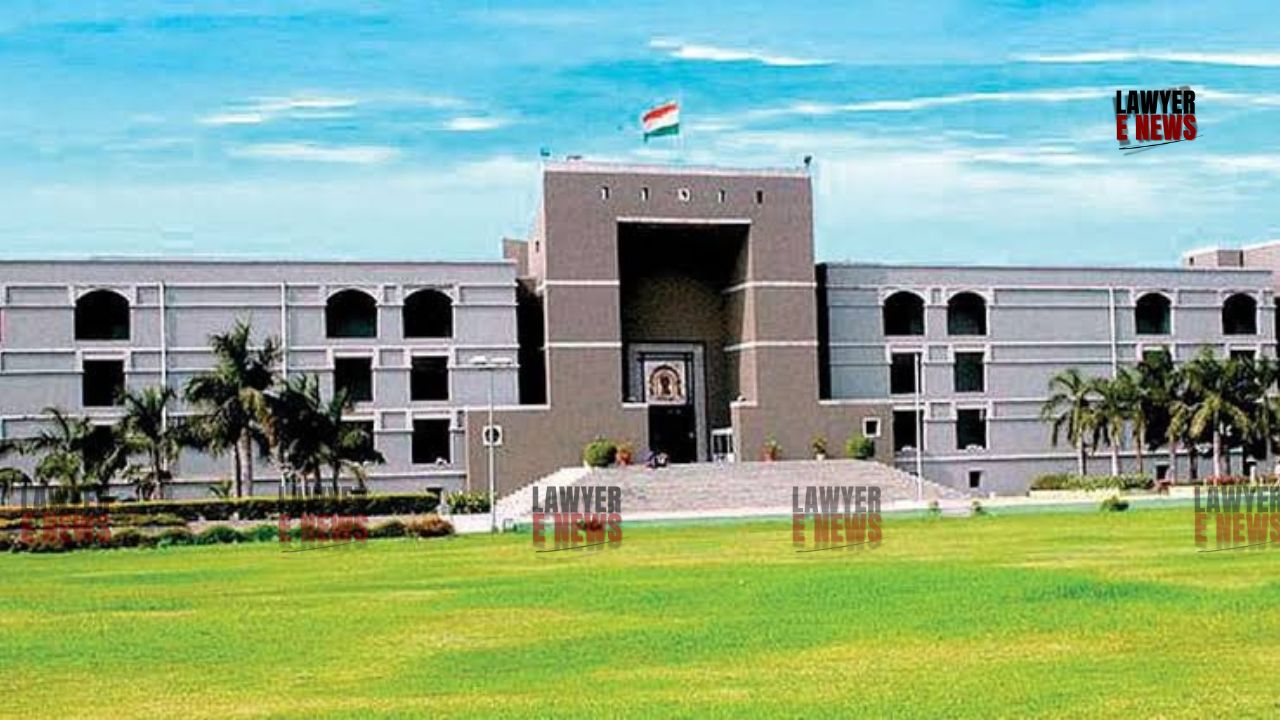
“Clear Admission Of Nikah Is The Best Evidence” – In a significant ruling reinforcing the evidentiary value of admission and the statutory nature of family pension, the Gujarat High Court quashed the orders of the Ahmedabad Municipal Corporation denying family pension to a widow on the ground that her Nikahnama was not registered and that her name did not appear in the service records of the deceased employee.
Justice Maulik J. Shelat held that registration of a Nikah is not compulsory under Muslim law unless specifically mandated, and that a categorical admission of marriage by the deceased husband in maintenance proceedings under Section 125 Cr.P.C. constitutes substantive and material evidence of marital relationship. The Court directed the Corporation to treat the petitioner as the legally wedded wife and grant her family pension with arrears.
Gujarat High Court delivered a reportable judgment under Articles 14, 21 and 226 of the Constitution of India, addressing whether a municipal corporation could deny family pension to a widow on hyper-technical grounds such as non-registration of Nikahnama, absence of nomination, and lack of entry in service book.
The Court ruled in favour of the petitioner, holding that the impugned orders dated 17/18.05.2019 and 14.05.2024 were arbitrary, suffered from grave irregularity, and ignored overwhelming documentary evidence. The petition was allowed, and the Corporation was directed to pay arrears of family pension by 15.05.2026, failing which interest at 6% per annum would apply.
The petitioner married late Mohammadhanif Abdulsamad Shaikh on 05.12.2007 through a Nikah ceremony, after the death of his first wife in July 2007. The deceased employee, a permanent employee of the Ahmedabad Municipal Corporation, died on 16.01.2011 while in service.
Upon his demise, the petitioner claimed family pension. The Corporation rejected her claim on the ground that her marriage was not proved. It relied on absence of registration of Nikahnama, absence of her name in service records, lack of nomination, and objections raised by the children of the first marriage.
The matter earlier reached the High Court in 2019, where the Corporation was directed to examine the legality of the Nikahnama and the Memorandum of Understanding between the petitioner and the children. The Court specifically clarified that succession certificate could not be insisted upon.
Despite remand and further directions in 2024, the Corporation reiterated its rejection, leading to the present adjudication.
“Nothing Shown That Nikahnama Requires Compulsory Registration”
One of the principal grounds for rejection was that the Nikahnama was not registered.
The Court firmly rejected this reasoning, observing:
“Nothing has been pointed out to this Court, that such Nikah Nama requires compulsory registration as per Muslim Law. In absence of any such requirement, it would not appropriate on the part of the officials of the Corporation to ask the proof of registration of marriage from petitioner.”
The Court held that insisting on registration, without any statutory mandate, amounted to imposing an extraneous condition on the petitioner’s right to family pension.
“Absence Of Photograph Or Entry In Service Book Cannot Disprove Marriage”
The Corporation also relied upon the absence of joint photographs, absence of entry in service book, and lack of nomination.
Justice Shelat termed such reasoning unjust and improper:
“It is unfathomable that in absence of photograph of couple… it can reach to conclusion that marriage was never solemnized.”
The Court further observed that had there been nomination or service record entry, the controversy may not have arisen, but absence thereof cannot negate a legally valid marriage.
Reiterating settled law, the Court made it clear that nomination is not determinative of marital status, and family pension is a statutory right flowing from status, not merely service book entries.
“Clear Admission In Section 125 Proceedings Is Substantive Evidence”
The turning point in the case was the admission made by the deceased husband during his lifetime.
In maintenance proceedings under Section 125 Cr.P.C., the deceased had filed a written reply stating:
“The marriage with the applicant took place through Nikah ceremony, but the fact that the applicant was performing the sacred duties of marriage, is false.”
The Court held that this categorical admission of the Nikah ceremony was decisive:
“When there is a clear admission of factum of marriage with petitioner… there is no other evidence ought to have been required by the Corporation.”
Additionally, criminal proceedings under Sections 323 and 498A IPC had been initiated by the petitioner against the deceased, further evidencing the marital relationship.
The Court held that the Corporation erred in ignoring judicial records and criminal proceedings between the parties, which constituted material evidence.
“Family Settlement Does Not Defeat Statutory Right To Pension”
Respondent Nos.3 and 4, children of the first marriage, argued that the petitioner had suppressed the fact that she received Rs.2,00,000/- under a family settlement.
The Court rejected this contention, holding:
“A settlement which has been arrived at between the private parties… would not have any bearing as regards entitlement of the petitioner to receive family pension.”
The Court further observed that the children had themselves benefited from post-death retiral dues pursuant to the Memorandum of Understanding and therefore could not dispute the petitioner’s marital status after accepting such benefits.
“Once the post death benefits received from the Corporation, it would not lie in mouth of the respondent Nos.3 & 4 to challenge petitioner’s status.”
Thus, the alleged suppression was held immaterial.
Administrative Arbitrariness And Non-Compliance With Court Directions
The High Court noted that despite earlier remand directions to examine the legality of marriage and consider relevant documents, the Corporation reiterated its earlier stand without properly appreciating the material evidence.
The Court concluded that the impugned decision “suffers from grave irregularity” and was “erroneous” and unsustainable in law.
Allowing the petition, the Court directed:
“The Corporation is hereby directed to treat the petitioner as the legally wedded wife of the deceased employee.”
The Corporation was further directed to prepare pension papers and pay arrears of family pension on or before 15th May 2026. In case of default, arrears would carry interest at 6% per annum from 16th May 2026 till realization. Regular pension was also directed to continue thereafter.
The Rule was made absolute with no order as to costs.
The judgment reaffirms three critical principles: that registration of Nikah is not mandatory under Muslim personal law unless specifically prescribed; that admission in judicial proceedings is substantive evidence; and that family pension, being a statutory right, cannot be denied on technical or procedural grounds such as absence of nomination or service book entries.
In doing so, the Gujarat High Court has ensured that administrative authorities do not defeat substantive rights through hyper-technical objections, particularly in matters affecting livelihood and dignity under Articles 14 and 21 of the Constitution.
Date of Decision: 20/02/2026