-
by sayum
04 August 2026 1:39 PM







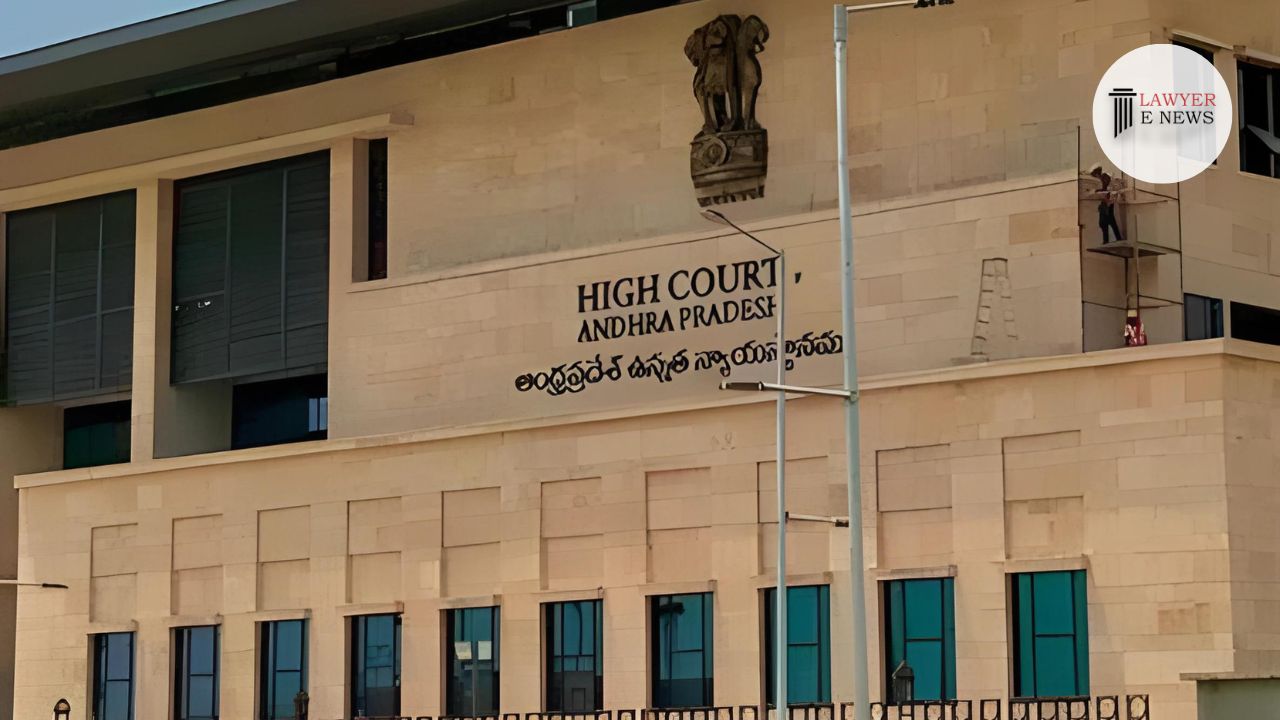
“Participation Under Interim Relief Does Not Ripen into a Right” – Candidates Can’t Skip Foundational Eligibility in Police Recruitment, Andhra Pradesh High Court, through a Division Bench comprising Justice Kiranmayee Mandava and Justice T.C.D. Sekhar, emphatically dismissed three writ appeals filed by police constable aspirants who sought hall tickets for the final written exam despite failing the preliminary stage. Court held that “no equity can be claimed based on interim participation in recruitment when eligibility norms are not met.”
The appellants had argued that they were allowed to participate in the second level physical efficiency test under interim orders passed in a prior writ petition. However, the Court made it clear:
“Interim protection does not confer a vested right to continue in a recruitment process where the foundational eligibility itself is absent.”
“You Cannot Bypass the First Step and Demand the Last” – Court Denies Relief to Aspirants Who Failed Preliminary Test
The recruitment notification dated 28.11.2022 issued by the State of Andhra Pradesh clearly prescribed a three-stage selection process for the post of Police Constable (Civil). The appellants had failed to qualify in the first stage – the Preliminary Written Test. Despite this, under interim directions passed earlier in W.P. No. 6631 of 2023, they were permitted to appear in the physical tests.
Their grievance arose when they were denied hall tickets for the final written examination. The appellants claimed that their qualification in the second stage gave them a right to proceed further.
Rejecting this contention, the Court categorically held:
“The appellants cannot be permitted to leapfrog the recruitment ladder by relying on interim relief. Recruitment cannot be reduced to an exercise in procedural leniency.”
“Recruitment Norms Must Be Followed Sequentially” – No Deviation Permitted from Notification Mandate
The Division Bench stressed that the terms of the recruitment notification are binding. It noted that the process was designed in a sequential manner—each level contingent upon success in the previous one.
“As per the notification dated 28.11.2022, a candidate must qualify the preliminary test to be eligible for the second stage. The appellants, having failed the first, cannot demand participation in the third.”
The Court also acknowledged that the petitioners were allowed to take the second level test only as a consequence of interim orders, and such participation does not translate into entitlement.
“They were merely permitted to participate conditionally. That cannot create substantive rights against the very terms of the notification.”
“W.P. No. 6631 of 2023 Binds the Field – Equity Was Already Denied Therein”
In the earlier round of litigation (W.P. No. 6631 of 2023), the High Court had issued limited interim directions and eventually settled the matter by directing the authorities to prepare a separate merit list for Home Guards—but with a crucial caveat.
Referring to that decision, the present Bench noted:
“It was categorically observed in W.P. No. 6631 of 2023 that the appellants shall not claim any equity based on the interim directions.”
The Single Judge, in the present instance, merely reiterated and enforced those binding directions, leaving no scope for fresh relief. The Bench affirmed:
“We do not find any infirmity in the order of the learned Single Judge, who simply followed binding precedent that has attained finality.”
Interim Relief Cannot Cure Disqualification
Having found no error in the Single Judge’s application of settled law, the Division Bench dismissed all three writ appeals, reiterating that merely being allowed to participate conditionally does not establish eligibility under the law.
“The appellants cannot have any grievance against non-issuance of hall tickets for the 3rd level of examination. Their disqualification stems from their own failure in the first level, not from any administrative wrong.”
This decision of the Andhra Pradesh High Court serves as a reaffirmation that recruitment is governed not by judicial indulgence but by statutory structure. Courts may temporarily intervene for procedural fairness, but they do not rewrite eligibility.
“The Constitution under Article 226 empowers the Court to ensure fairness—but fairness does not mean bypassing mandatory qualifications.”
In short, the Court declared that equity cannot override examination rules, and participation under interim orders does not grant any automatic right to proceed further in a recruitment process.
Date of Decision: 30 May 2025