-
by sayum
28 July 2026 4:37 AM







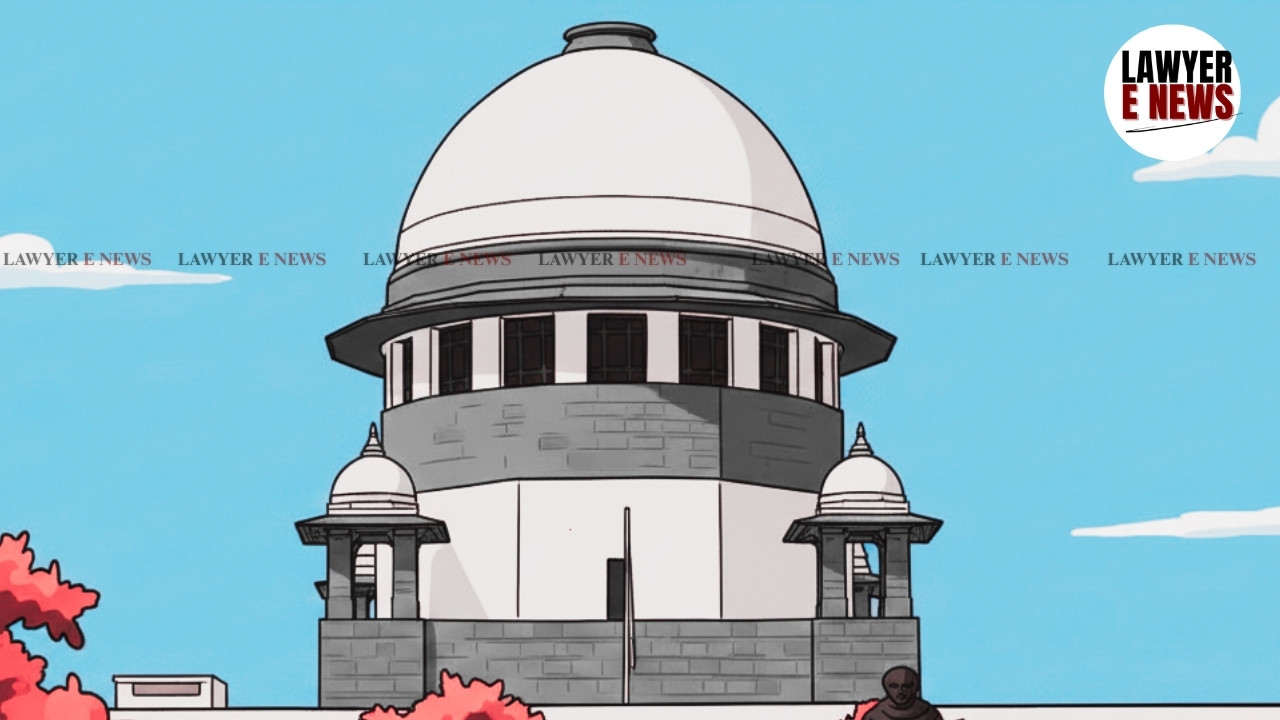
"Once a delinquent employee had successfully defended a charge, the disciplinary authority, in absence of a fresh show cause notice, cannot punish the delinquent employee on a completely different charge which was not framed. This would be a denial of fair and reasonable opportunity of hearing," Supreme Court, in a significant ruling dated May 6, 2026, held that a disciplinary authority cannot impose a penalty on an individual based on a charge that was not specifically mentioned in the original show cause notice.
A bench comprising Justice Dipankar Datta and Justice Satish Chandra Sharma observed that punishing a person for a different misconduct without giving them an opportunity to respond to the new allegation constitutes a gross violation of the principles of natural justice.
The appeal was filed by Dr. Nigam Prakash Narain, a 76-year-old pediatrician and former Professor at Patna Medical College (PMC). The Medical Council of India (MCI) had ordered the removal of his name from the Indian Medical Register for three months based on an alleged mis-declaration regarding his employment history in a faculty declaration form. While a Single Judge of the Patna High Court had set aside the penalty, the Division Bench later restored it, leading the doctor to approach the apex court.
The primary question before the court was whether the Division Bench of the High Court was justified in restoring the penalty imposed by the Ethics Committee of the MCI. The court was also called upon to determine whether the disciplinary proceedings were vitiated by a breach of natural justice because the final findings were based on a charge not contained in the initial show cause notice.
Initial Charge vs. Final Finding
Court Highlights Discrepancy In Disciplinary Charges
The Supreme Court noted that the initial show cause notice issued on December 9, 2015, required Dr. Narain to explain his conduct regarding "fake faculty declaration forms" where names of doctors appeared in more than one medical college. The doctor successfully defended this by proving he was in Amsterdam during the surprise inspection and was not "appearing" as faculty in two places simultaneously.
New Charge Of Omission Without Fresh Notice
However, the Court observed that when the original charge was successfully defended, the Executive Committee prodded the Ethics Committee to look into whether the doctor had disclosed his prior stint at another institution in his declaration form. The Ethics Committee subsequently held him guilty of an "act of omission" for not disclosing his previous service—a charge that was never part of the original show cause notice.
Absence Of Notice On New Charge Is A Serious Flaw
The bench emphasized that the disciplinary authority changed the goalposts without informing the appellant or calling for a fresh explanation. Drawing a parallel with service jurisprudence, the Court held that the Executive Committee could not have imposed the punishment without granting Dr. Narain a fair and reasonable opportunity to respond to the new and alternative charge under consideration.
Principles Of Natural Justice Must Be Upheld
Reliance On Precedents Regarding Disciplinary Inquiry
The Court relied on the coordinate bench decision in Ravi Oraon v. State of Jharkhand, which established that once a delinquent employee defends a specific charge, the authority cannot punish them for a completely different unframed charge. The bench categorically stated that the Executive Committee’s decision suffered from a "serious flaw" in this regard.
"There has, indeed, been a breach of principles of natural justice. The Executive Committee’s decision, to that extent, does suffer from a serious flaw."
The Issue Of Admitted Mis-declaration
Omission In Declaration Form Cannot Be Entirely Condoned
Despite the procedural lapses, the Court did not entirely exonerate the doctor on the merits of the declaration. It noted that Dr. Narain had failed to explain why his declaration form stated he had "not presented himself to any other Institution" during the current academic year, when he had briefly served at Shridev Suman Subharti Medical College. The Court observed that such a "brazen mis-declaration" would ordinarily afford a ground for misconduct.
Invocation Of Article 142 For Complete Justice
Balancing Professional Repute With Individual Stakes
Recognizing that the appellant is now 76 years old and has had the "sword of Damocles" hanging over his head for a decade, the Court decided against upholding the three-month suspension. While acknowledging the National Medical Commission's (NMC) duty to maintain the highest professional standards, the bench felt that at this late stage, a milder penalty would serve the ends of justice.
Penalty Reduced To Censure/Warning
In exercise of its plenary powers under Article 142 of the Constitution of India, the Supreme Court requested the NMC to reduce the punishment from the removal of the doctor's name for three months to the issuance of a "censure or warning." The Court clarified that this order was passed to ensure complete justice between the parties without faulting the overall regulatory process undertaken by the MCI.
The Supreme Court allowed the civil appeal in part, setting aside the three-month suspension and substituting it with a formal censure. The ruling reaffirms that even in regulatory proceedings involving professional misconduct, the procedural safeguards of notice and the right to be heard on specific charges remain non-negotiable requirements of the law.
Date of Decision: May 06, 2026