-
by sayum
27 August 2026 3:32 PM







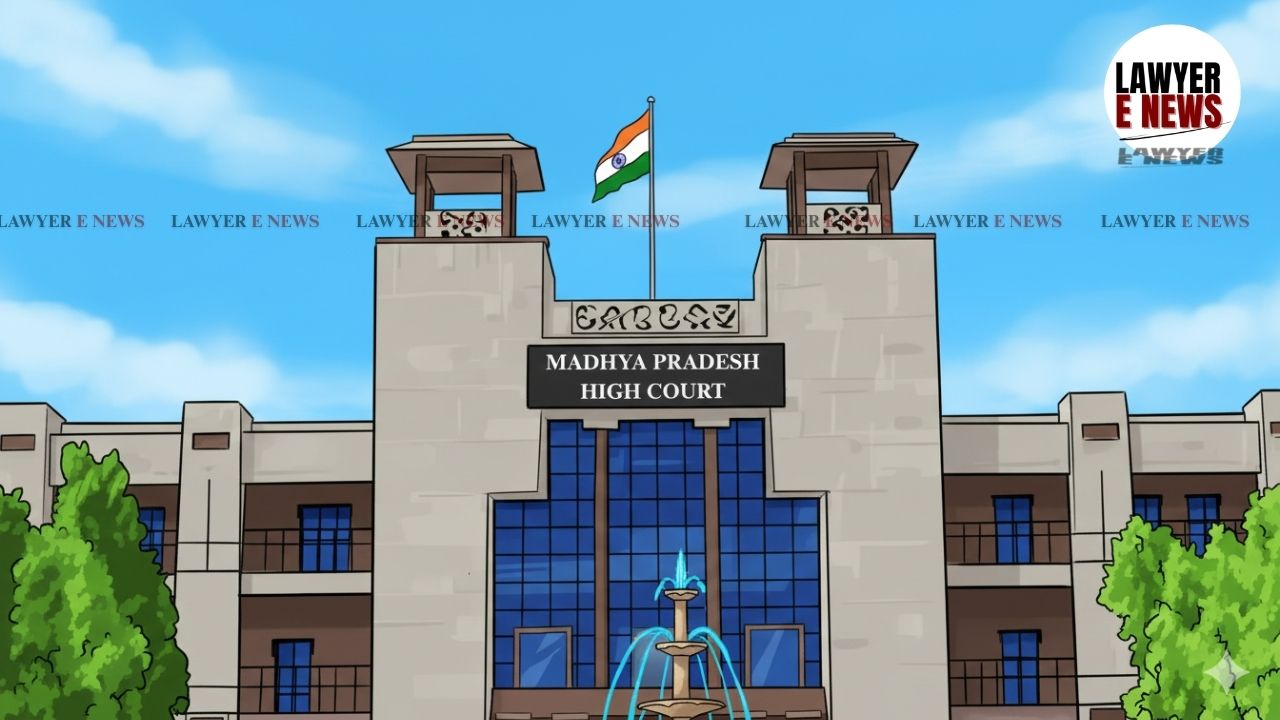
"Order 23 Rule 1 CPC cannot be read so as to bar a suit which has already been instituted before the other suit has been abandoned or dismissed," Madhya Pradesh High Court has held that the bar under Order 23 Rule 1 of the Code of Civil Procedure (CPC) against instituting fresh proceedings after withdrawing a previous suit without liberty does not apply to cases where the second proceeding was already instituted while the first one was still pending.
A bench of Justice Ratnesh Chandra Singh Bisen, in a recent order, observed that the procedural restriction is intended to prevent a "fresh" suit after withdrawal, not to invalidate a parallel proceeding that was already in existence.
The dispute arose from an order passed by the Second Additional District Judge, Khandwa, under Section 27 of the M.P. Public Trust Act, 1951, appointing Respondent No. 3 as the Executive Trustee of the Shri Omkareshwar Temple Public Trust. The appellant initially filed a Miscellaneous Appeal (M.A. No. 9547/2025) which remained defective, and subsequently filed the present appeal (M.A. No. 9896/2025) before withdrawing the first one. The respondents challenged the maintainability of the second appeal, arguing that it was filed without seeking liberty from the court during the withdrawal of the first appeal.
The primary question before the court was whether the present appeal was maintainable under Order 23 Rule 1 of the CPC given that a previous appeal against the same order was withdrawn without express liberty to file afresh. The court also had to determine whether a Miscellaneous Appeal could be converted into a First Appeal in accordance with the High Court Rules.
Scope Of Order 23 Rule 1 CPC Regarding Parallel Proceedings
The Court examined the preliminary objection raised by the respondents regarding the maintainability of the appeal. The respondents contended that since the earlier appeal was dismissed as withdrawn without the court expressly granting liberty to file a fresh one, the subsequent appeal was barred. The Court, however, noted that the second appeal was filed on December 8, 2025, while the first appeal was still pending and was only withdrawn later on January 5, 2026.
Bar Applies To Suits Filed After Withdrawal, Not Before
The Court held that the prohibition contained in Order 23 Rule 1(4) of the CPC pertains to the institution of a "new" suit after the withdrawal of a previous one. It clarified that this rule does not apply to a suit or appeal that has already been filed and is in existence at the time of withdrawal. The bench emphasized that the temporal sequence of filing is the deciding factor in such procedural challenges.
"Rule 1(4) is prohibited from filing a new suit. This does not apply to a suit which has already been filed. In this case, the appeal has already filed... before withdrawal of M.A. No. 9547/2025."
Reliance On Supreme Court Precedent In Vimlesh Kumari Kulshrestha
To support its reasoning, the High Court relied heavily on the Supreme Court’s decision in Vimlesh Kumari Kulshrestha Vs. Sambhajirao, which clarified that Order 23 Rule 1 is not attracted if the second suit is filed before the first suit is withdrawn. The Court noted that in such situations, the conduct of the parties and the disclosure of the previous filing in the pleadings are essential factors.
Implied Liberty And Transparency In Pleadings
The Court observed that the appellant had clearly mentioned the filing of the earlier defective appeal in Paragraph 12 of the present appeal. This disclosure evidenced "full transparency and bona fides," negating any allegations of suppression of facts or abuse of the judicial process. The bench remarked that when a proceeding is already in existence, the requirement to grant liberty to "file a fresh" case becomes redundant.
"The application filed for withdrawal of the suit categorically stated about the pendency of the earlier suit. In a situation of this nature, an inference in regard to grant of permission can also be drawn from the conduct of the parties."
Conversion Of Miscellaneous Appeal To First Appeal
Regarding the second procedural issue, the appellant sought to convert the Miscellaneous Appeal into a First Appeal. The Court perused Chapter 2 Rule 8(8) of the M.P. High Court Rules, 2008, which mandates that a First Appeal lies to the High Court against an order or decree passed under Section 27(3) of the M.P. Public Trust Act, 1951.
Compliance With High Court Rules For Statutory Appeals
The Court accepted the appellant’s prayer for conversion, noting that the nature of the impugned order required it to be heard as a First Appeal rather than a Miscellaneous Appeal. By allowing this conversion, the Court ensured that the matter would be placed before the appropriate bench for a hearing on its merits, rather than being dismissed on a technical miscategorization.
The High Court rejected the respondent's preliminary objection, holding the appeal to be maintainable as it was filed before the withdrawal of the prior defective appeal. The Court further directed the Registry to convert the Miscellaneous Appeal into a First Appeal as per the High Court Rules and list it before the appropriate bench.
Date of Decision: 05 May 2026