-
by sayum
19 August 2026 1:58 PM







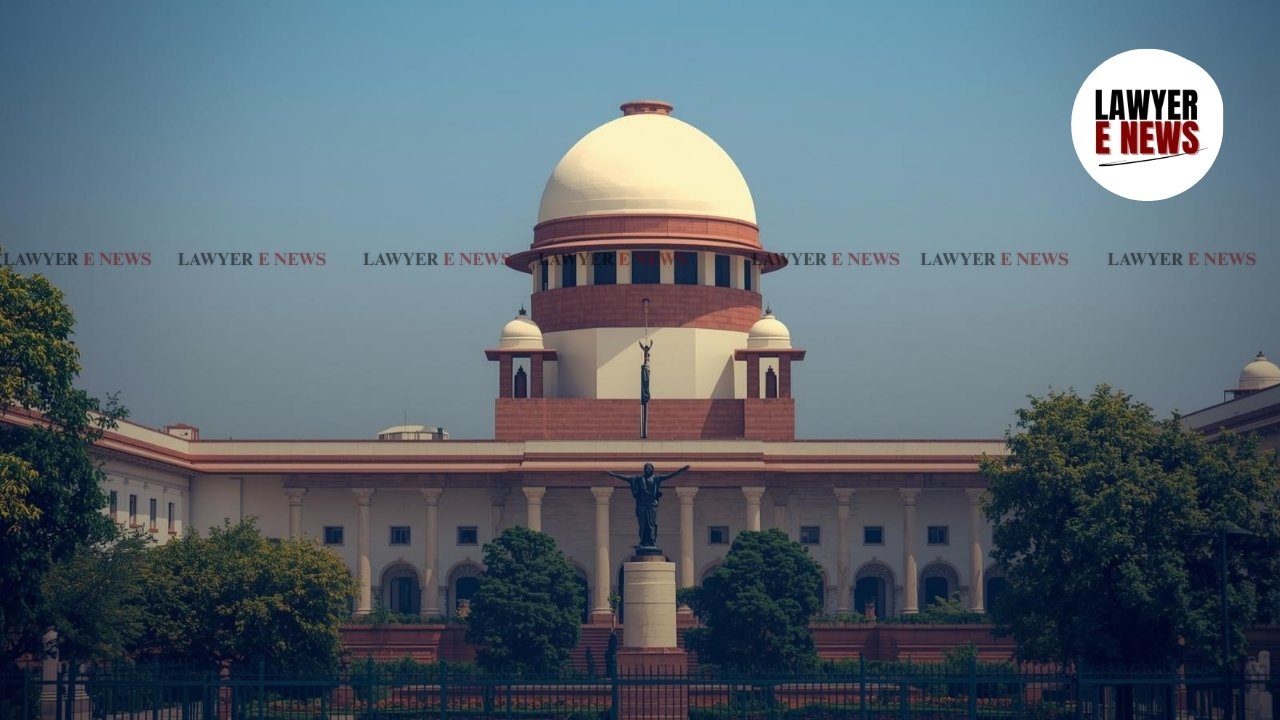
"By the time the accused respondents approached the High Court, they had lost the right to seek default bail by their acquiescence," Supreme Court, in a significant ruling, held that the right to seek default bail is lost by acquiescence if the accused fails to promptly challenge orders extending the investigation period and only approaches the High Court long after the chargesheet has been filed.
A bench of Justice Vikram Nath and Justice Sandeep Mehta observed that the High Court committed a "grave error in facts as well as in law" by granting default bail in a case involving the Unlawful Activities (Prevention) Act (UAPA) and widespread rioting.
The matter originated from an incident on February 8, 2024, involving widespread arson, rioting, and damage to public property, including a police station in Haldwani. The respondents were arrested on February 9, 2024, for various offences under the IPC, the UAPA, and the Arms Act. Before the 90-day statutory period expired, the investigating agency successfully moved the Trial Court for an extension of time to complete the probe.
The primary question before the court was whether the respondents were entitled to default bail under Section 167(2) of the CrPC read with Section 43D(2) of the UAPA. The court was also called upon to determine if the High Court’s finding of "sluggish investigation" was factually and legally sustainable.
High Court Erred In Fact Regarding Progress Of Investigation
The Supreme Court expressed strong disapproval of the High Court’s aspersions against the Investigating Officer. The High Court had previously observed that the investigation proceeded with "lethargy" and "carelessness," noting that only 12 witnesses were examined in three months. However, the Supreme Court found these observations to be factually incorrect based on the record presented by the State.
The bench noted that during the 90-day period, the statements of 65 witnesses had actually been recorded by the investigating agency, not 12 as claimed. The court emphasized that the case involved a large number of accused and the use of petrol bombs, which presented "grave challenges" to the authorities.
"In our opinion, it was absolutely unreasonable of the High Court to have observed that the investigating agency had not proceeded with investigation at a reasonable pace or that it had acted with lethargy."
Complexity Of UAPA Cases Justifies Extension Of Time
The bench highlighted the magnitude of the crime, involving widespread arson and damage to a police station building. It noted that several related FIRs were filed for similar incidents in nearby areas. The court held that the investigation was proceeding with "utmost expediency" given the circumstances.
The Trial Court had granted an initial extension of 28 days on May 10, 2024, after hearing the counsel for the accused. Subsequent extensions were granted on June 6 and July 1, 2024. The court found that these extensions were supported by the complexity of the case.
Accused Lost Right To Bail Through Delay And Acquiescence
A critical factor in the Supreme Court’s decision was the timing of the respondents' appeal. While the Trial Court rejected their default bail application on June 3, 2024, and the chargesheet was filed on July 7, 2024, the respondents only approached the High Court in September 2024.
The bench observed that the respondents did not challenge the extension orders or the bail rejection promptly. By waiting until after the chargesheet was filed to assail the earlier orders, they effectively waived their right to seek default bail.
"The High Court failed to advert to the important fact that the accused respondents never challenged the orders of extension of time and rejection of bail by promptly approaching the High Court and instead waited till September, 2024."
Right To Default Bail Is Not Indefeasible After Chargesheet Filing In This Context
The court reiterated that once the investigation is completed and the chargesheet is filed within the extended time granted by a court, and such extension remains unchallenged until the filing, the indefeasible right to default bail cannot be resurrected later.
The bench concluded that the High Court’s decision to grant bail was based on an erroneous understanding of the facts and a failure to consider the legal consequence of the respondents' delay.
"Thus, we are of the opinion that by the time, the accused respondents approached the High Court, they had lost the right to seek default bail by their acquiescence."
The Supreme Court allowed the appeal by the State of Uttarakhand and set aside the High Court's order. The respondents have been directed to surrender before the Trial Court within two weeks. The bench clarified that the respondents remain at liberty to apply for regular bail, which should be considered on its own merits without being influenced by the observations in this judgment.
Date of Decision: 04 May 2026