-
by sayum
25 August 2026 12:32 PM







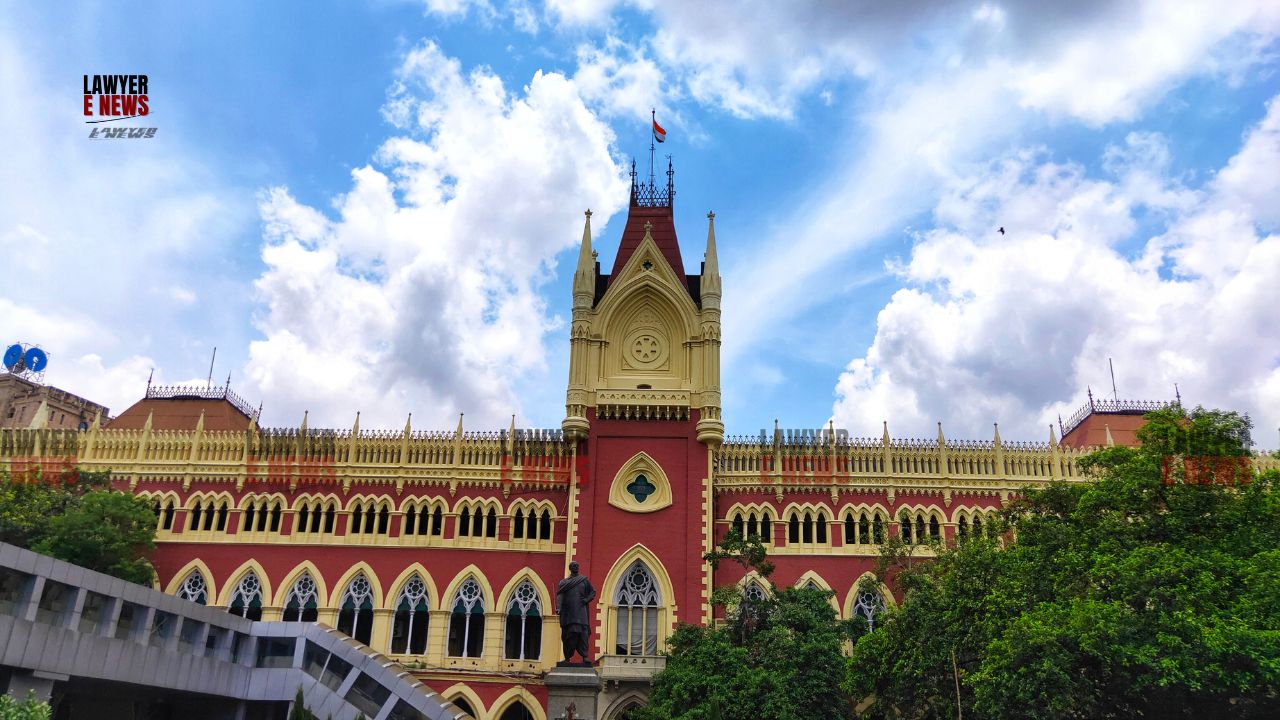
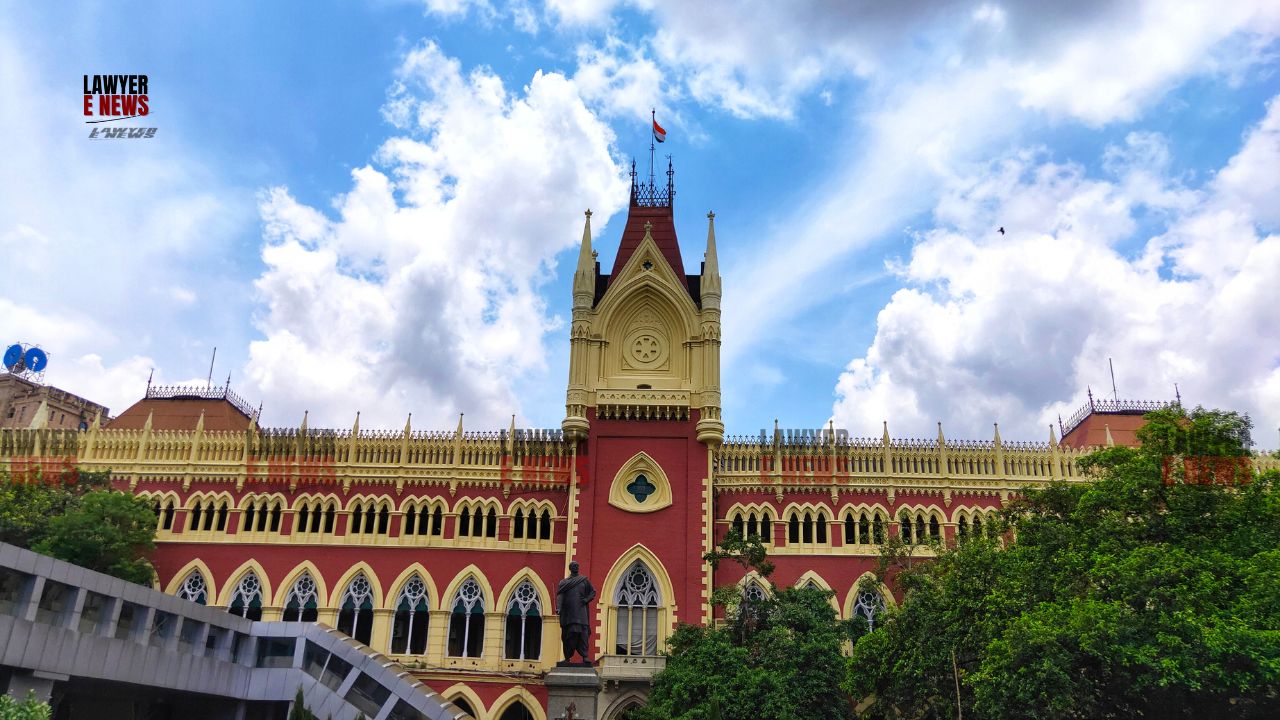
Hearing Under Section 7A of EPF Act Includes Interest Under Section 7Q; No Separate Hearing Required – In a significant ruling Calcutta High Court dismissed a writ petition filed by M/s. Vijai Shree Ltd., upholding the Provident Fund authorities’ power to recover dues along with interest under Section 7Q of the Employees’ Provident Fund & Miscellaneous Provisions Act, 1952, without conducting a separate hearing for interest calculation. The Court ruled that a hearing under Section 7A for determining defaulted contributions inherently includes a determination under Section 7Q for interest, making a separate proceeding unnecessary.
"When an employer is given a fair opportunity to be heard under Section 7A, the consequential determination of interest under Section 7Q is automatic. The law does not require a separate hearing for something that is an inseparable part of the employer’s liability," the High Court held while rejecting the company’s challenge against recovery proceedings initiated by the Regional Provident Fund Commissioner.
This ruling reinforces the financial accountability of employers under the EPF Act and ensures that interest dues cannot be avoided by raising procedural objections.
"Can Provident Fund Authorities Attach Property Without a Separate Interest Hearing? High Court Says Yes"
The case arose when M/s. Vijai Shree Ltd., a jute manufacturing company, was subjected to recovery proceedings initiated by the Employees' Provident Fund Organisation (EPFO) for defaulting on provident fund contributions for the period April to May 2005. The company had been previously declared a sick industrial unit under the Sick Industrial Companies (Special Provisions) Act, 1985, and had its EPF exemption revoked in 2002.
Despite being granted opportunities to appear, the company failed to attend a Section 7A hearing scheduled for August 26, 2005, citing medical reasons related to the absence of its dealing officer. On the same day, the Provident Fund Commissioner proceeded with the hearing ex parte and passed an order under Section 7A, determining the amount due from the company.
Subsequently, on September 12 and 16, 2005, the authorities issued orders directing the company to pay ₹7,90,976 as interest under Section 7Q and warned of further recovery proceedings if the amount was not paid.
Challenging the order, the company argued that no separate hearing was conducted before imposing interest, violating the principles of natural justice.
"Interest under Section 7Q is a financial penalty, and the employer should be given a separate opportunity to challenge the calculation before it is imposed. The absence of a distinct hearing makes the order bad in law," the company’s counsel argued.
"A Section 7A Hearing Automatically Covers Interest Under Section 7Q": High Court Rejects Employer’s Objection
The High Court examined whether the Provident Fund authorities were required to conduct a separate hearing before imposing interest under Section 7Q and concluded that no such requirement exists in law.
"A proceeding under Section 7A determines the total liability of an employer, including unpaid contributions and the statutory interest on delayed payments. Section 7Q is merely a consequential provision that follows automatically once the liability is ascertained," the Court held.
Citing Arcot Textile Mills Ltd. v. Regional Provident Fund Commissioner (2014), the High Court noted that interest under Section 7Q is an “inseparable part” of the total amount due from an employer and does not require a separate adjudication process.
"An employer cannot escape paying interest by arguing that a separate hearing was not conducted. Once default is established under Section 7A, the liability for interest is automatic, and its computation does not require further inquiry," the Court ruled.
"Natural Justice is Not Violated When Interest is a Direct Consequence of Default": High Court Affirms Recovery Proceedings
The company contended that denying a separate hearing for interest violated the principles of natural justice, but the High Court rejected this claim, emphasizing that natural justice applies only when substantive rights are affected—not when liabilities arise by operation of law.
"When the law itself mandates interest for delayed payments, it is not a discretionary imposition but a statutory consequence. The employer’s right to be heard is sufficiently safeguarded in the main proceedings under Section 7A," the Court explained.
The High Court also dismissed the company’s reliance on Allied Electricals & Switch Fuses v. Assistant PF Commissioner (2003), clarifying that each case must be assessed based on its own facts, and interest liability is distinct from penalties like damages under Section 14B.
"Interest under Section 7Q is neither a penalty nor a discretionary levy. It is a compensatory charge imposed to protect the interests of employees whose provident fund contributions were withheld," the judgment stated.
"Provident Fund Authorities Can Proceed with Attachment for Recovery of Interest": High Court Upholds Orders Against Employer
Dismissing the writ petition, the High Court upheld the legality of the attachment orders issued by the EPF authorities and ruled that the employer must comply with the recovery notice. The Court refused to interfere with the orders, holding that they were passed in accordance with law.
"The orders under challenge were issued in full compliance with the EPF Act. The employer had ample opportunity to contest the claims but failed to appear before the authorities. The writ petition is devoid of merit and is accordingly dismissed," the Court ruled.
With this judgment, the Calcutta High Court has reinforced that employers cannot evade their statutory obligations under the EPF Act by raising procedural objections, ensuring that workers' provident fund contributions and interest dues are effectively recovered.
Date of Decision: 13/02/2025