-
by sayum
25 August 2026 12:32 PM







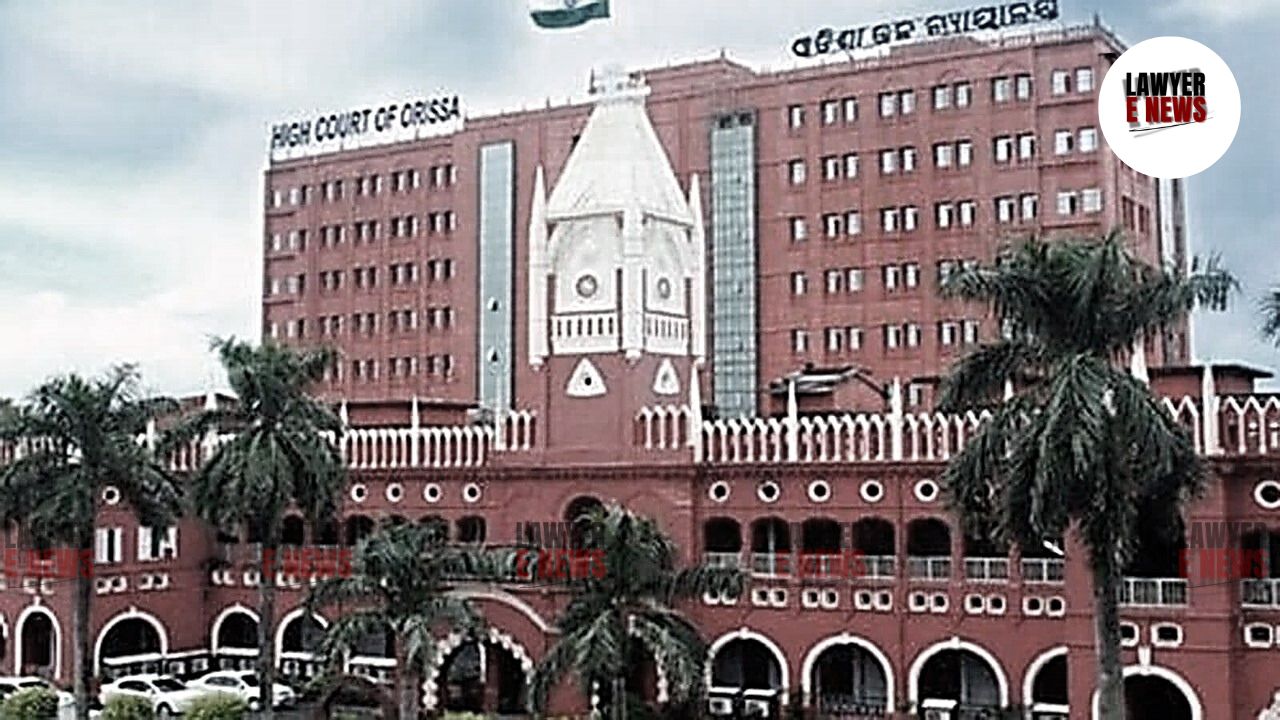
Legal Heirs Cannot Be Excluded Based on Marital Status – Orissa High Court has ruled that a married daughter is a legal representative under the Motor Vehicles Act, 1988, and is entitled to claim compensation for the death of her father in a motor accident. Justice Sanjay Kumar Mishra, in his judgment delivered on December 24, 2024, overturned the Motor Accident Claims Tribunal (MACT)’s order, which had refused to substitute the petitioner in place of her deceased father.
“The Motor Vehicles Act is a benevolent legislation meant to provide monetary relief to victims and their families. The term ‘legal representative’ cannot be narrowly construed to exclude a married daughter. To do so would be discriminatory and contrary to settled legal principles.”
The ruling reinforces the principle that legal heirs cannot be denied compensation solely based on their marital status, setting a strong precedent for similar cases across the country.
“An Award in Favor of a Dead Person is a Nullity, But Compensation Cannot Be Denied” – High Court Rejects Technical Objections
The case arose from a road accident involving Late Nilamani Nath and his wife, who sustained serious injuries while traveling in a passenger bus. Nilamani Nath, left permanently disabled, filed a compensation claim under Section 166 of the Motor Vehicles Act, 1988. The tribunal awarded him ₹3,60,400 with 7% interest per annum. However, before the award could be pronounced, he passed away, followed by his wife’s death shortly thereafter.
The petitioner, Kabita Nath, the younger married daughter of the deceased, sought substitution as a legal representative, along with her deceased sister’s minor daughter, Subhalaxmi Nath, to claim the compensation. The tribunal, however, rejected the request, reasoning that married daughters were not dependents and that a minor must be represented by her natural father rather than her paternal aunt.
The High Court strongly disagreed with this approach, declaring: “An award in favor of a dead person is technically non-existent in the eyes of law. However, since the Motor Vehicles Act is beneficial in nature, this Court does not intend to nullify the award on this account. The legal representatives of the deceased claimant are entitled to receive the awarded compensation.”
The judgment ensures that procedural technicalities do not defeat the substantive justice intended by the Motor Vehicles Act, particularly in cases involving the rightful heirs of a deceased claimant.
“A Minor’s Next Friend Need Not Be a Natural Guardian” – Court Upholds Aunt’s Right to Represent Niece
The tribunal had further denied substitution on the ground that the minor Subhalaxmi Nath should be represented by her biological father rather than her paternal aunt, Kabita Nath. The High Court found this reasoning flawed and legally unsustainable, stating:
“Order 32 of the CPC does not require the next friend to be a natural guardian. A ‘next friend’ is a person who represents a minor’s interests in legal proceedings and need not necessarily be the minor’s father or mother.”
Referring to Nagaiah v. Chowdamma [(2018) 2 SCC 504], the court emphasized that a minor’s next friend must simply be above 18 years of age, of sound mind, and without any adverse interest. Since Kabita Nath met all these criteria, the tribunal had erred in denying her the right to represent her niece.
“Married Daughters Have Equal Rights in Compensation Claims” – High Court Affirms Progressive Legal Stand
Relying on N. Jayashree & Ors. v. Cholamandalam M/S General Insurance Co. Ltd. [(2022) 14 SCC 712], the High Court reiterated that marital status has no bearing on a person’s right to claim compensation as a legal representative.
“The Supreme Court has consistently held that daughters, whether married or unmarried, are entitled to compensation for the death of their parents. The rejection of the petitioner’s claim by the tribunal reflects an outdated and restrictive interpretation of the law.”
The Court also cited Smt. Manjuri Bera v. Oriental Insurance Co. Ltd. [(2007) 10 SCC 643], which held that even a married daughter qualifies as a legal representative and is entitled to claim compensation for the death of her parent.
Orissa High Court Directs Tribunal to Allow Compensation Claim
The Orissa High Court allowed the writ petition, setting aside the MACT’s orders dated November 15, 2022, and January 2, 2023. It directed the Claims Tribunal to permit Kabita Nath to represent her minor niece as a next friend and to proceed with disbursing the compensation.
By expanding the scope of who qualifies as a legal representative under the Motor Vehicles Act, the court has ensured that widowed or married daughters are not unfairly excluded from compensation claims, marking a significant victory for women’s rights in India.
“Marriage Does Not Break the Parent-Child Bond” – High Court’s Ruling a Step Towards Gender Equality
With this ruling, the Orissa High Court has taken a progressive stance on women’s inheritance and legal rights, ensuring that marriage does not sever a daughter’s legal relationship with her parents for compensation purposes.
By affirming that a married daughter is as much a legal heir as a son, the judgment has not only corrected a grave injustice but has also reinforced women’s rights in legal succession and compensation cases.
Date of decision: 24/12/2024