-
by sayum
25 August 2026 12:32 PM







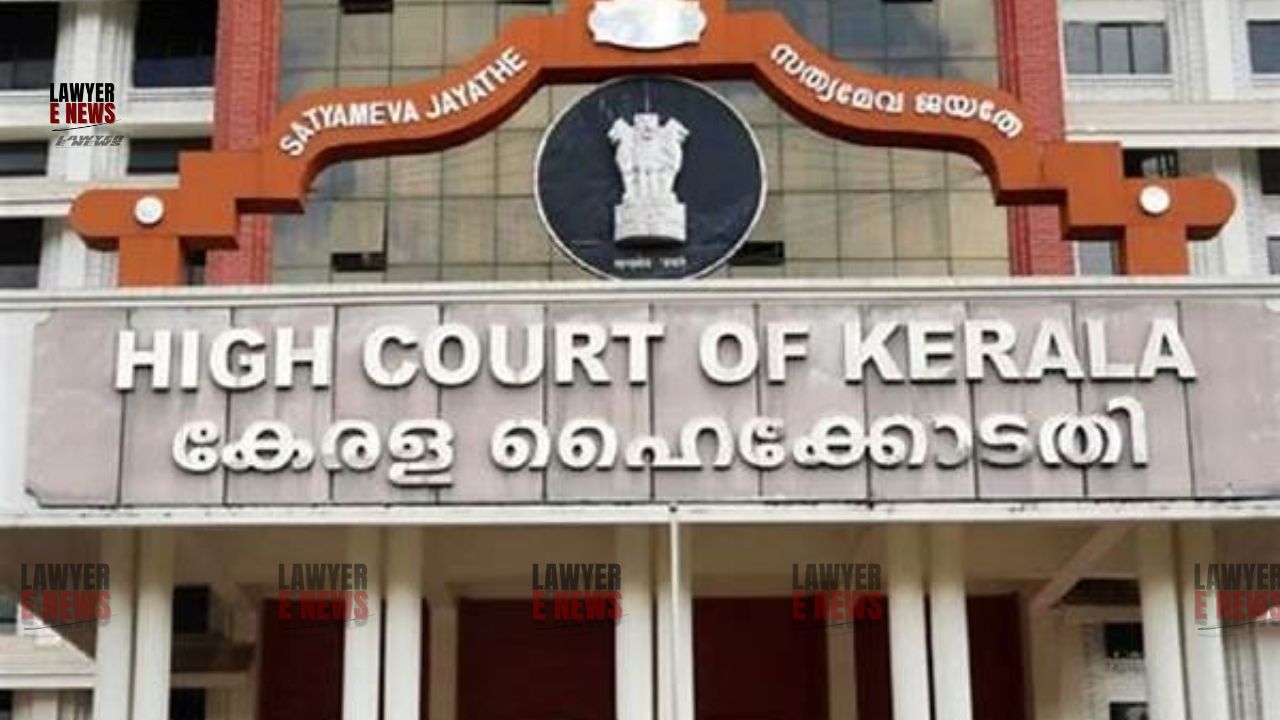
High Court emphasizes both conditions must be met for joinder of defendants in property dispute case The High Court of Kerala, presided by Dr. Justice Kauser Edappagath, has dismissed the Travancore Devaswom Board's (TDB) application for impleadment as a supplemental defendant in a property dispute case. The court's ruling, delivered on May 20, 2024, emphasized the necessity of satisfying both cumulative conditions under Order 1 Rule 3 of the Civil Procedure Code (CPC) for joining additional defendants in a suit. The court upheld the plaintiff's prerogative to determine the parties against whom relief is sought.
The State of Kerala filed a suit for declaration of title, recovery of possession, and a permanent prohibitory injunction against Ayana Charitable Trust (formerly Gospel for Asia), Harrison's Malayalam Limited, and Mar. Athanasius Yohan. The State claimed ownership of the disputed properties, alleging illegal possession by the defendants. During the suit's pendency, the Travancore Devaswom Board sought to be impleaded, asserting a claim over a portion of the properties in question. The Sub Court, Pala, denied this application, prompting the TDB to file a revision petition before the High Court.
The court clarified the principles governing the joinder of defendants under Order 1 Rule 3 of CPC. The rule stipulates that multiple persons may be joined as defendants if (a) the right to relief arises from the same act or transaction, and (b) there is a common question of law or fact. Both conditions must be satisfied cumulatively, not alternatively.
"The requirements in clause (a) and (b) are cumulative and not alternative. Two conditions must exist together. It is not necessary that all the defendants should be interested in all the reliefs, or that liability should be the same," the court noted.
The court upheld the plaintiff's right to determine the parties against whom relief is sought, stating that the plaintiff is "dominus litis" and has dominion over his suit. This right allows the plaintiff to choose the defendants, and any decree passed would not affect those not party to the suit.
"The plaintiff is dominus litis having dominion over his suit. He has the right and prerogative to choose and implead in his suit as defendant the person against whom he seeks relief," the judgment read.
The High Court found that the TDB failed to demonstrate that its claim to relief arose from the same transaction involving the original defendants or that common questions of law or fact existed. The TDB's claim to a portion of the properties did not align with the State's claim against the other defendants.
"The case of the petitioner is that it has title over a portion of the plaint schedule properties. The petitioner has absolutely no case that any right to relief in respect of or arising out of the same transaction is existing against it," the court emphasized.
The court also pointed out that the TDB could pursue its claim through a separate suit without affecting the ongoing litigation.
The High Court's decision reinforces the legal standards for the impleadment of additional defendants under Order 1 Rule 3 of CPC. By affirming the trial court's dismissal of the TDB's application, the judgment highlights the plaintiff's control over the choice of defendants and underscores the necessity for potential defendants to meet stringent criteria for joinder in existing suits. This ruling serves as a significant precedent for future cases involving complex property disputes and impleadment requests.
Date of Decision: May 20, 2024