-
by sayum
28 August 2026 12:24 PM







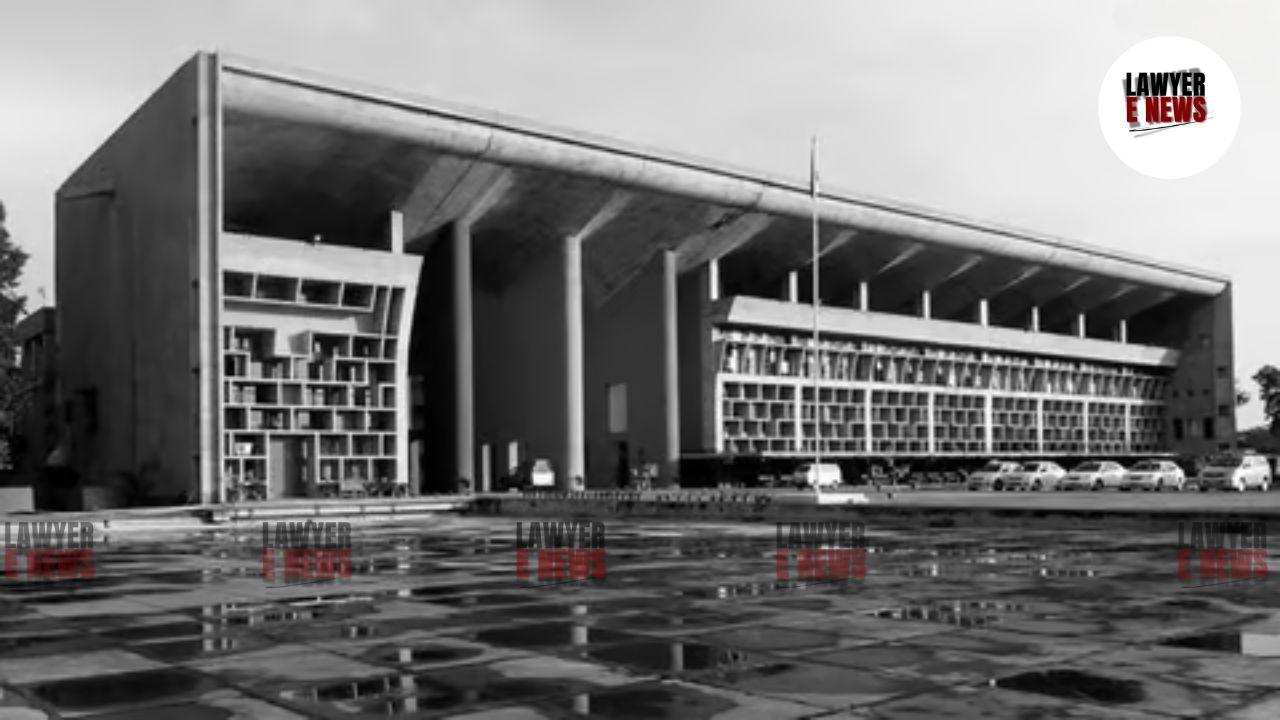
“Disciplinary Proceedings Must End in Months, Not Years—Undue Delay Breeds Prejudice, Demoralization, and Distrust”: Punjab and Haryana High Court, in a decisive reaffirmation of procedural fairness under service law, set aside the punitive treatment of suspension period as 'leave of the kind due', holding that the prolonged departmental inquiry and unjustified delay in concluding disciplinary proceedings had irreparably prejudiced the employee.
Delivering judgment , Justice Harpreet Singh Brar allowed the petitions filed by Ashok Kumar, a retired employee of the Punjab State Civil Supplies Corporation, and directed that his entire suspension period of over 3½ years be treated as duty period. The Court also directed the release of all retiral dues including gratuity and leave encashment with 6% annual interest on delayed payments.
The judgment draws strength from binding precedent, placing a sharp spotlight on administrative apathy, procedural delays, and unfair treatment in disciplinary proceedings, which the Court described as “tantamount to punishment before proof.”
Suspension for Over 3½ Years Without Justification Violates Principles of Fairness and Natural Justice
The petitioner was placed under suspension on 16.05.2011, but the charge sheet was issued only after six months. The inquiry officer, appointed thereafter, submitted his report exonerating the petitioner on 18.10.2012. Yet, the employer, through the Managing Director, issued a dissenting note more than two years later, on 15.01.2014, ultimately reinstating the petitioner only on 27.02.2015, one day before his retirement.
Shockingly, the punishment order was passed on 10.11.2015, nearly 4½ years after the initial suspension, treating the entire suspension period as leave, and thereby denying him full salary and benefits.
The Court categorically rejected this approach, observing: “Unexplained delay reflects administrative apathy and undermines fairness. The prolonged suspension amounted to punishment in itself, and such a suspension cannot be converted into leave of the kind due.”
"Delay in Disciplinary Proceedings Vitiates Entire Process": High Court Applies Supreme Court's Mandate
Justice Brar relied on the Supreme Court’s seminal decisions in:
In Chaman Lal Goyal, the Apex Court held: “Such disciplinary proceeding must be conducted soon after the irregularities are committed or soon after discovering the irregularities. They cannot be initiated after lapse of considerable time... Delayed initiation of proceedings is bound to give room for allegations of bias, mala fides and misuse of power.”
In Prem Nath Bali, the Court issued a clear procedural directive: “Every employer (whether State or private) must make sincere endeavor to conclude the departmental inquiry... as far as possible within six months as an outer limit, and in no case more than a year save in exceptional cases.”
Citing these precedents, the High Court emphasized that delay of over four years without any valid explanation could not be condoned, and prejudice to the delinquent officer must be presumed.
Treating Suspension as 'Leave' After Minor Punishment is Illegitimate
The Court took particular note that the disciplinary proceedings culminated merely in a minor penalty of censure, yet the respondents refused to compensate the petitioner for the suspension period, which had effectively become a prolonged pre-verdict punishment.
The Court held:
“Pending inquiry cannot be converted into a punishment by stealth. The petitioner was exonerated by the inquiry officer and ultimately received only a censure. Denying full pay for 3½ years of suspension is wholly unjustified.”
Retiral Benefits Withheld Without Just Cause — Interest on Delayed Gratuity and Leave Encashment Ordered
The Court further found that the gratuity was only released on 27.10.2017, after the writ petition was filed, and leave encashment remained unpaid, without any statutory basis for such withholding.
Holding that “leave encashment is part of salary” and cannot be arbitrarily denied, the Court ordered:
“Respondents shall release all retiral dues including gratuity and leave encashment, with interest @ 6% per annum on the delayed payment, calculated after two months from the date of petitioner’s retirement.”
Delay Is Not Just Administrative Laxity—It Is a Constitutional Injury to Fairness
The judgment underscores that disciplinary proceedings are not administrative rituals but quasi-judicial functions, carrying grave consequences for an employee’s dignity, livelihood, and post-retirement entitlements.
Justice Brar aptly observed: “Every delinquent employee has a legitimate right to have disciplinary proceedings concluded expeditiously. Undue prolongation causes mental agony, financial hardship, and social stigma, even before charges are proven. This is considered a punishment in itself.”
By reminding authorities of their constitutional and administrative duties, the Court reiterated that state action must be tempered with fairness, timeliness, and respect for individual rights.
Date of Decision: 25.09.2025