
-
by sayum
28 August 2026 2:11 PM







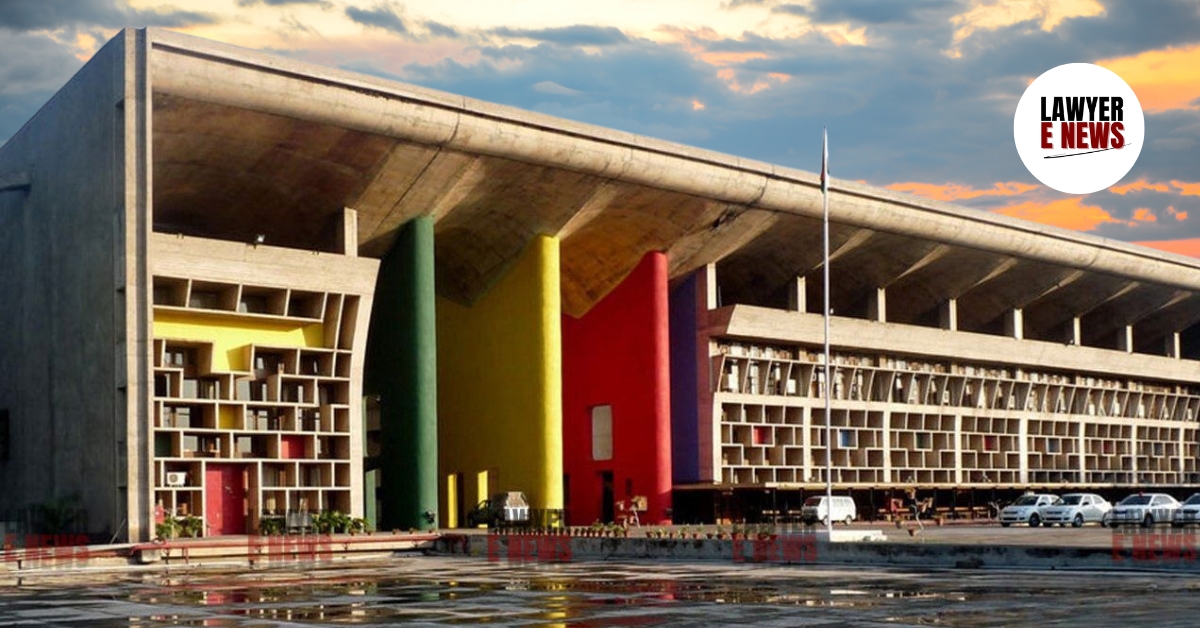
“Conditional liberty must override the statutory embargo under Section 37 of the NDPS Act” – In a landmark bail order the Punjab and Haryana High Court at Chandigarh granted regular bail to Imam Hussain, accused under Section 21(c) and 29 of the Narcotic Drugs and Psychotropic Substances Act, 1985, for possession of 500 grams of heroin, despite the statutory embargo under Section 37(1)(b)(ii) of the Act.
The court ruled that continued pre-trial incarceration beyond 1.5 years, particularly in the absence of prior criminal antecedents, violates the fundamental right to life and liberty under Article 21 of the Constitution, and justifies bail despite the “commercial quantity” bar under NDPS law.
"Commercial Quantity Does Not Bar Bail Where Liberty Is Crushed By Delay": Bail Granted Despite Section 37 NDPS
The petitioner was arrested on 8th March 2024, after police allegedly recovered 500 grams of heroin in a chance recovery, while his co-accused managed to escape. The recovered quantity is twice the threshold for commercial quantity as defined under the NDPS Act (>250g for heroin).
Despite the seriousness of the offence, the High Court noted that the petitioner had no prior criminal record, and had already undergone 1 year, 5 months, and 28 days of incarceration as of the custody certificate dated 08.09.2025.
Referring to the Supreme Court’s ruling in Rabi Prakash v. State of Odisha (SLP (Crl) 4169/2023, decided 13 July 2023), the Court observed:
“The prolonged incarceration, generally militates against the most precious fundamental right guaranteed under Article 21 of the Constitution and in such a situation, the conditional liberty must override the statutory embargo created under Section 37(1)(b)(ii) of the NDPS Act.”
“Judicial Parity Requires Bail in Similar Cases”: SC Precedents Cited
The Court relied heavily on judicial parity and consistency, citing two recent Supreme Court decisions:
In Sabat Mehtab Khan v. State of Maharashtra (SLP (Crl) 8557/2024, decided 03 Sep 2024), bail was granted after 1.5 years of custody for recovery of 275g and 50.01g heroin.
In Ramlal v. State of Rajasthan (SLP (Crl) 9510/2024, decided 17 Sep 2024), bail was granted for 450 grams of smack after similar duration of custody, emphasizing:
“Considering the period of incarceration of the petitioner and the fact that the petitioner has no criminal antecedents, we are of the opinion that a case of bail is made out…”
The Punjab & Haryana High Court, following these precedents, concluded that further custody would be unjustified:
“Given the petitioner’s pre-trial custody, the weight of the drugs, absence of criminal antecedents relating to drugs, coupled with the other factors peculiar to this case, further pre-trial incarceration is not justified at this stage.”
Court Imposes Reform-Oriented and Stringent Bail Conditions
While granting bail, the Court imposed a range of progressive and reformative conditions, including:
Execution of bond/surety not exceeding ₹25,000.
Option of furnishing fixed deposit of ₹25,000 in lieu of surety, not to be redeemed without court permission.
Disclosure of Aadhaar, passport, mobile number, and email.
No tampering with evidence or intimidation of witnesses.
Surrender of all firearms and ammunition within 15 days, including arms licence, with re-acquisition allowed only upon acquittal.
The Court clarified:
“Restricting firearms would instill confidence in society; it would also restrain the accused from influencing the witnesses and repeating the offense.”
The conditions, the Court said, must not be punitive but serve the purpose of rehabilitation and community reintegration, aligning with the Supreme Court's guidance in Mohammed Zubair v. State of NCT of Delhi (2022:INSC:735):
“The bail conditions must not only have a nexus to the purpose they seek to serve but must also be proportional… conditions that would result in the deprivation of rights and liberties must be eschewed.”
“Bail Subject to Future Conduct”: Liberty Not Absolute
Justice Anoop Chitkara was clear in stating that any repetition of a serious or NDPS offence would result in automatic bail revocation, empowering the State to seek cancellation before the Special Judge.
The bail was expressly made conditional: “If the petitioner repeats the offense where the quantity involved is more than half of the intermediate, or commercial, or violates S. 19, 24, or 27-A of the NDPS Act, the State shall file an application to revoke this bail.”
This approach blends liberty with accountability, making bail a chance for reform rather than an escape from responsibility.
Bail Is Not a License, But an Opportunity
In granting bail to Imam Hussain, the Punjab & Haryana High Court has reiterated a key constitutional position – that liberty must not be eclipsed by procedural delay, especially when guilt is yet to be proven, and incarceration becomes punitive.
The Court balanced the seriousness of drug offences with the real-world hardship of prolonged trial delays, making it clear that statutory restrictions like Section 37 NDPS cannot become eternal shackles in all cases.
Date of Decision: 22nd September 2025





