
-
by sayum
28 August 2026 2:11 PM







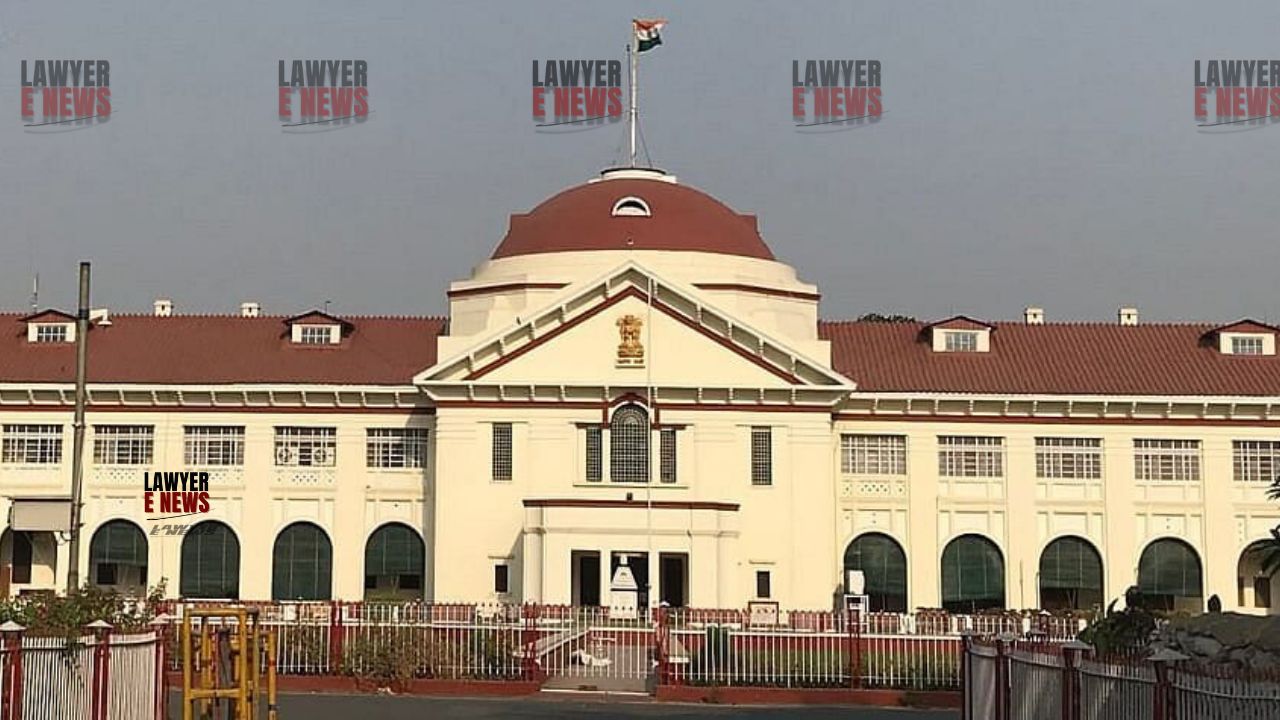
"When the prosecutrix’s testimony is shaky, inconsistent and uncorroborated, and the delay in FIR remains unexplained, conviction cannot be sustained" – In a significant ruling delivered on 26 September 2025, the Patna High Court set aside the conviction of Suraj Kumar, who had been sentenced to 20 years' rigorous imprisonment under Section 376(D) of the Indian Penal Code and Section 6 of the POCSO Act. The Court, speaking through Justice Sourendra Pandey and Justice Rajeev Ranjan Prasad, held that the prosecution’s evidence was riddled with contradictions, lacked corroboration from independent or medical sources, and failed to inspire the confidence necessary to uphold such a serious conviction.
Addressing the sensitive issue of delay in filing the FIR and the admissibility of electronic evidence, the Bench noted that the viral video, allegedly central to the prosecution's case, was neither proved nor certified under the Indian Evidence Act. More crucially, the prosecutrix, who was just 32 days short of attaining majority, was found to have changed versions of her story across statements – leading the Court to hold that her testimony was not of "sterling quality" as required under law for a conviction based solely on her statement.
"When the Video Goes Viral, the FIR Follows – FIR Delay and Unproven Video Fatal to Prosecution's Case"
The genesis of the case lies in an incident alleged to have taken place on 7 April 2021. The prosecutrix, then aged about 17 years and 11 months, claimed in her written complaint that she was abducted late at night by Suraj Kumar and co-accused Jyoti Kumar, taken to an isolated place near Taraura Dam, and raped by both accused in succession. According to her, the act was video-recorded and later made viral by the co-accused.
However, the First Information Report was lodged only on 23 April 2021 — a delay of 16 days. The victim and her family claimed that fear of threats prevented immediate reporting. The Court, however, found these explanations unconvincing. The Bench observed:
"The FIR was not lodged on account of threats; it was lodged only when the alleged video went viral. This clearly demolishes the explanation offered for the delay."
The prosecution failed to produce or prove the alleged video. No certificate under Section 65B of the Indian Evidence Act was furnished, nor was the chain of custody established. Even the person who forwarded the video to the family, a boy named Bittu, was never examined during trial.
"In absence of the certificate under Section 65B and without the production of the original device or any corroborative technical evidence, the video is inadmissible and cannot be used to corroborate the testimony of the prosecutrix," the Court held.
"She Was Just a Month Short of 18 – But Can Statutory Rape Be Presumed on Shaky Evidence?"
A key legal question that arose was whether the presumption of statutory rape under the POCSO Act could be applied when the age of the prosecutrix was near the threshold of majority and the evidence lacked reliability.
The prosecution relied on a school mark-sheet indicating the date of birth of the prosecutrix as 9 May 2003, making her 17 years, 11 months, and 28 days old on the date of the incident. However, her father deposed that her actual date of birth was 24 October 2002, which would make her major.
In the Court’s words: "In such borderline cases, where the prosecutrix is only a few days away from attaining majority, and where the reliability of the incident is itself in question, the presumption under the POCSO Act cannot automatically apply."
Thus, the Court held that the invocation of POCSO was misplaced in the absence of clear and consistent evidence about the prosecutrix’s age and the nature of the act itself.
"Testimonies Contradict, Place of Occurrence Unclear, Medical Evidence Missing – Conviction Unsustainable"
The High Court meticulously examined the depositions of the prosecutrix, her parents, and other relatives, and found serious contradictions.
In her written report, Section 164 statement, and deposition during trial, the prosecutrix gave different versions of the incident — including different descriptions of the place of occurrence, and inconsistent details about the assailants and the sequence of events.
The Court noted: "We find that the testimony of the victim is not consistent. The place of occurrence, the manner of occurrence, and the sequence of disclosure are riddled with inconsistencies and contradictions."
Further, the medical evidence failed to support the charge of gang rape. The doctor who examined the prosecutrix found no injuries, no signs of violence, and no spermatozoa on her clothes or in her swab samples. The forensic report of her leggings also did not detect any blood or semen.
The Court remarked: "Even the doctor has deposed that there was no sign of injury, pain, or physical struggle. This medical evidence contradicts the allegation of violent sexual assault by two adult men."
The prosecution’s case, the Court held, rested entirely on the victim’s testimony — but the Bench found that her deposition, while sincere, lacked the consistency and credibility required to convict.
"Possibility of Consent Cannot Be Ruled Out – False Implication Cannot Be Ignored"
In a particularly striking observation, the Bench stated: "The possibility of consented sexual activity between the victim and the appellant cannot be ruled out. The prosecutrix kept silent for 16 days and spoke only when the alleged video went viral. Her conduct and omissions are inconsistent with the version of a violent gang rape."
Drawing from Raju v. State of M.P. and Santosh Prasad v. State of Bihar, the Court emphasized the principle that:
"A false allegation of rape can cause equal distress, humiliation and damage to the accused as well. The accused must be protected against the possibility of false implication."
The judgment stressed that while courts must be sensitive to sexual violence victims, they must not lower the standards of criminal proof in doing so.
“Benefit of Doubt Must Go to the Accused – Conviction Set Aside”
In summation, the Court held: "Where the sole testimony of the prosecutrix is marred by inconsistencies, medical evidence contradicts the occurrence, and key electronic evidence is unproven, the conviction cannot be upheld."
Accordingly, the Court allowed the appeal, acquitted Suraj Kumar, and directed that he be released forthwith if not wanted in any other case.
Before parting, the Court appreciated the assistance rendered by the Amicus Curiae, Mr. Manoj Kumar No. 1, awarding him ₹15,000 as honorarium.
This judgment reasserts the criminal law's foundational tenet: no person shall be convicted unless the charge is proved beyond reasonable doubt.
Date of Decision: 26 September 2025





