-
by sayum
15 August 2026 2:23 PM







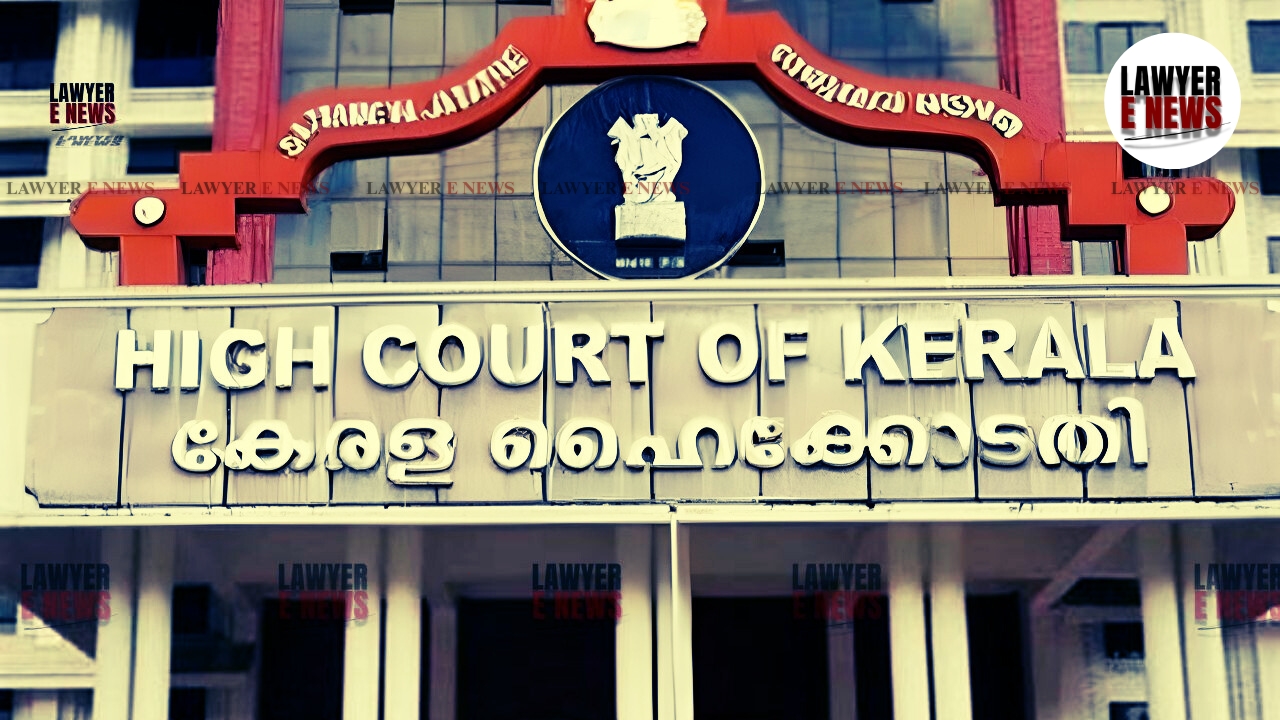
"Changed status of women in modern society, the extent of their emancipation and empowerment, the feminine perspective that they bring to an understanding of social customs and practices have all to be taken into account by an adjudicating court, inter alia by insisting on evidence being led in on these aspects." Kerala High Court, in a significant ruling, held that courts can no longer rely on dated assumptions that a bride automatically hands over her gold ornaments to her husband or in-laws for safekeeping upon entering a matrimonial home.
A bench of Dr. Justice A.K. Jayasankaran Nambiar and Mrs. Justice Preeta A.K. observed that in an era where many brides are well-educated and financially independent, they often retain control over their material possessions. The Court further ruled that marriage expenses are a matter of choice and "extravaganza" for both parties, and one spouse cannot be saddled with the wedding costs incurred by the other’s family unless the marriage is void.
The case arose from a matrimonial appeal filed by a husband and father-in-law challenging a Family Court order that directed them to return 80 sovereigns of gold, Rs. 5 Lakhs in cash, and over Rs. 6 Lakhs towards marriage expenses to the wife. The parties were married in 2019, but the relationship soured within months, leading to claims of harassment and misappropriation of the wife's 'Stridhan'.
The primary question before the court was whether there exists a legal presumption of 'entrustment' of gold ornaments to the husband at the time of marriage. The court was also called upon to determine if a husband is liable to reimburse the marriage expenses incurred by the wife's family upon the dissolution of a valid marriage.
Court On Preponderance Of Probabilities In Matrimonial Cases
The Court began by emphasizing that in matrimonial disputes, facts must be tested on the "touchstone of preponderance of probabilities" rather than the stricter "beyond reasonable doubt" standard. Citing Dr. N.G. Dastane v. Mrs. S. Dastane (1975) and State of U.P v. Krishna Gopal (1988), the bench noted that the court must act as a prudent person weighing conflicting probabilities to determine if a fact exists.
The bench observed that while the first step is to fix probabilities, the second is to weigh them, weeding out the impossible and the improbable. The judges highlighted that any inference regarding the existence of a fact must be drawn from material evidence on record, rather than mere conjectures or speculation, as underscored in the recent Supreme Court decision in Maya Gopinathan v. Anoop S.B. (2024).
No Automatic Presumption Of Entrustment Of Gold To Husband
Addressing the claim for return of gold, the Court noted that while older precedents often assumed a general practice of women handing over ornaments for safekeeping, such assumptions must be sensitive to changing social realities. The bench pointed out that under the Bharatiya Sakshya Adhiniyam, 2023, 'custom' is treated as a question of fact unless it is so recognized that the court can take judicial notice of it.
The Court cautioned against relying on "trained intuitions" of judges that qualify merely as speculations regarding general customs. It referred to Bexy Michael v. A.J. Michael (2010), noting that while courts should not insist on documentary evidence for ornaments changing hands at the time of marriage, they must not virtually abandon the search for actual evidence on record in favor of a singular perception of custom.
Judicial Notice Of Changing Status Of Modern Women
The bench made a poignant observation regarding the autonomy of modern women, stating that past precedents assuming a woman would automatically hand over her 'Stridhan' for safekeeping might not reflect present-day reality. The Court emphasized that many well-educated and independent brides retain control over their possessions even after entering the matrimonial home.
"The changed status of women in modern society... the feminine perspective that they bring to an understanding of social customs and practices have all to be taken into account by an adjudicating court."
Entrustment Proved Only For Pledged Ornaments
Applying these principles, the Court found that while the wife claimed 80 sovereigns were taken, there was no concrete evidence of entrustment for the entire quantity. However, evidence from a bank manager showed that the husband had pledged 242.9 grams of gold (approximately 30 sovereigns) just two weeks after the wedding. The husband’s claim that this gold belonged to his sister was dismissed as unbelievable.
The Court held that since the husband pledged these ornaments shortly after the marriage and the loan proceeds were transferred to his account, entrustment and misappropriation were established only for those 242.9 grams. Consequently, the Court reduced the Family Court's award of 80 sovereigns to 30 sovereigns, finding the original order lacked a factual basis.
Husband Not Liable For Wife's Marriage Expenses
On the issue of marriage expenses, the High Court set aside the Family Court's direction for the husband to pay Rs. 6,89,350/- to the wife’s family. The bench observed that marriage expenses are common to both sides and are a result of choices made by each family regarding the level of celebration they wish to host.
The Court held that unless a marriage is declared null or void, there is no legal justification to require one party to refund the wedding costs incurred by the other. The bench noted that since the option to decide the "extravaganza" of the ceremony lies with the respective parties, saddling the husband with the wife’s family's expenses is unjustified.
"Saddling the appellants with the liability to refund the marriage expenses incurred by the respondent's family is therefore unjustified."
In conclusion, the High Court partly allowed the appeal, upholding the return of Rs. 5 Lakhs cash given at the time of engagement but reducing the gold ornaments to 30 sovereigns. The Court set aside the award for marriage expenses entirely, clarifying that such costs are not recoverable in a valid marriage that later ends in divorce.
Date of Decision: 13 July 2026