-
by sayum
06 August 2026 1:57 PM







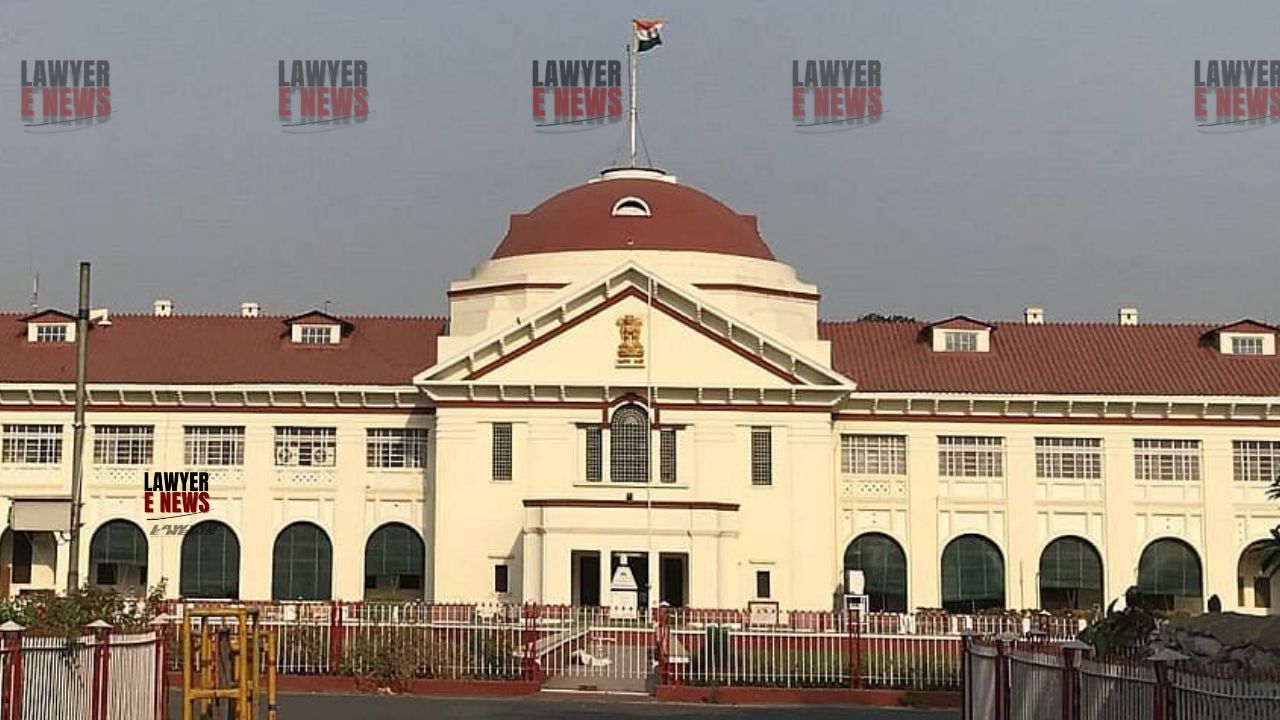
In a significant ruling affirming the evidentiary value of direct eyewitness testimony and rejecting the overreliance on forensic opinion in a mob murder case, the Patna High Court dismissed three criminal appeals filed by Manoj Manzil, a sitting MLA from Agiaon constituency, and 22 others, upholding their conviction and life sentence for the brutal murder and abduction of Jai Prakash Singh in 2015. The judgment delivered by a Division Bench of Justice Rajeev Ranjan Prasad and Justice Ajit Kumar in Manoj Manzil & Ors v. State of Bihar, held that the absence of DNA evidence and presence of a decomposed body do not negate trustworthy eyewitness accounts.
The Court categorically ruled:
“One credible witness outweighs the testimony of number of other witnesses of indifferent character. There is no legal impediment in convicting a person on the sole testimony of a single witness.” [Para 42]
Rejecting the core defence that the recovered body could not be conclusively identified as the deceased’s due to advanced decomposition and the non-production of DNA reports, the Court reiterated:
“Absence of DNA evidence would not lead to draw an adverse inference against the prosecution in the presence of other cogent and reliable evidence on the record.” [Para 52]
“In Decomposed Bodies, Postmortem Artefacts Do Not Nullify Eyewitness Accounts” – Court Cites Modi’s Medical Textbook to Explain Putrefaction
The Court dealt extensively with the medical and forensic arguments raised by the defence regarding postmortem inconsistencies. It held that the identification of the deceased Jai Prakash Singh was satisfactorily established by his son (PW-8) and family members through visible scar and hair dye—details confirmed despite decomposition.
Addressing the forensic objections, the Bench referred to Modi’s Textbook of Medical Jurisprudence and Toxicology, observing:
“In a decomposed body, fissures or splits formed in the skin due to decomposition may simulate lacerated or incised wounds… swelling, skin slippage, and discolouration are normal artefacts and cannot be misread as inconsistencies.” [Para 53]
The Court also noted that neck bruising and muscle contusions were evident, matching the cause of death—strangulation, as per the postmortem report.
“Delay in FIR Not Fatal When Police Reach Within 25 Minutes” – Court Applies Chotkau, Hariprasad, and Animireddy Principles
The appellants challenged the legitimacy of the FIR, alleging a delay of two days. However, the Court rejected this argument outright, holding that police reached the scene within 20–25 minutes and the search for the deceased continued overnight.
Citing Chotkau v. State of U.P. (2023) and Hariprasad v. State of Chhattisgarh (2024), the Court reiterated that mere delay in lodging the FIR does not make the prosecution case doubtful unless prejudice is shown.
“The criminal investigation was set in motion within half an hour of the occurrence… There being no defence case that there was any effort to concoct a version, the delay in registration of FIR does not affect credibility.” [Para 34]
“Manoj Manzil Slammed the Victim to the Ground – Presence and Role Specifically Proved” – Court Rejects Plea of Vague Allegation
The Court firmly dismissed the argument that the accusations against Manoj Manzil were vague or politically motivated. The Bench noted that multiple eyewitnesses (PWs 1–4) consistently and specifically stated that Manzil caught the deceased and slammed him onto the road, leading others to assault him with bricks, stones, and sticks.
The Court observed:
“In his cross-examination, there is no suggestion that Manoj Manzil was not present among the persons who had come running to the father of the informant and had assaulted him.” [Para 43]
This testimony was corroborated by PWs 1 to 4, who attributed specific roles to each of the accused, with no contradictions significant enough to weaken the prosecution’s narrative.
“One Trustworthy Witness Is Sufficient for Conviction” – Court Reiterates Section 134 of Evidence Act
Dismissing the defence argument that the prosecution’s case is based on related witnesses, the Court underscored that a criminal case can be proved on the basis of a single reliable witness.
Quoting Vadivelu Thevar v. State of Madras, the Court held:
“Unless corroboration is required by statute, courts should not insist on it… One credible witness outweighs the testimony of a number of witnesses of indifferent character.” [Para 42]
The Bench further clarified that fear and political influence, given the accused was a sitting MLA, sufficiently explained the absence of independent witnesses.
“Dead Body Was Not Unidentified – It Was Recognized, Received and Cremated by the Family” – Court Rejects Defence Theory of ‘Random Corpse’
Rejecting the defence narrative that the recovered body was a random corpse, the Court held that PW-8, the deceased’s son, clearly identified the body by scar and dyed hair, and no ossification or medical counter-evidence was produced.
The Court found no weight in the discrepancy between the postmortem age estimate (40–45 years) and the family’s claim (55 years):
“The doctor admitted the age was based on estimation and no ossification test was conducted… This difference of 10 years cannot invalidate positive identification by family members.” [Para 56]
The family performed the last rites after receiving the body. There was no evidence of insurance fraud, as alleged by the defence.
“DNA Evidence Is Opinion Evidence, Not Conclusive Proof” – Court Relies on Pattu Rajan and S. Kaleeswaran
On the key issue of non-production of DNA report, the Court cited the Supreme Court’s ruling in Pattu Rajan v. State of Tamil Nadu and S. Kaleeswaran v. State to assert that DNA is a form of expert opinion, not conclusive proof, and its absence does not vitiate otherwise cogent prosecution evidence.
Quoting from Pattu Rajan:“Opinion evidence is advisory in nature, and the Court is not bound by the evidence of experts… The absence of DNA evidence would not lead to an adverse inference against the prosecution in the presence of other cogent and reliable evidence.” [Para 52]
“Evidence of Star Witness PW-8 Wholly Reliable; Conviction Requires No Interference” – Appeals Dismissed, Bail Cancelled
Concluding the 167-page verdict, the Patna High Court upheld the conviction of all 23 appellants under Sections 302, 364, and 201 read with Section 149 IPC, sentencing them to life imprisonment, with fines.
The Bench observed:
“There is no plausible reason to interfere with the judgments of the learned trial court… The star witness has withstood cross-examination and is fully reliable.” [Para 57]
All appellants who were on bail were directed to surrender within one week, failing which coercive measures would be taken to secure their custody.
Date of Decision: 07 October 2025