-
by sayum
15 August 2026 10:03 AM







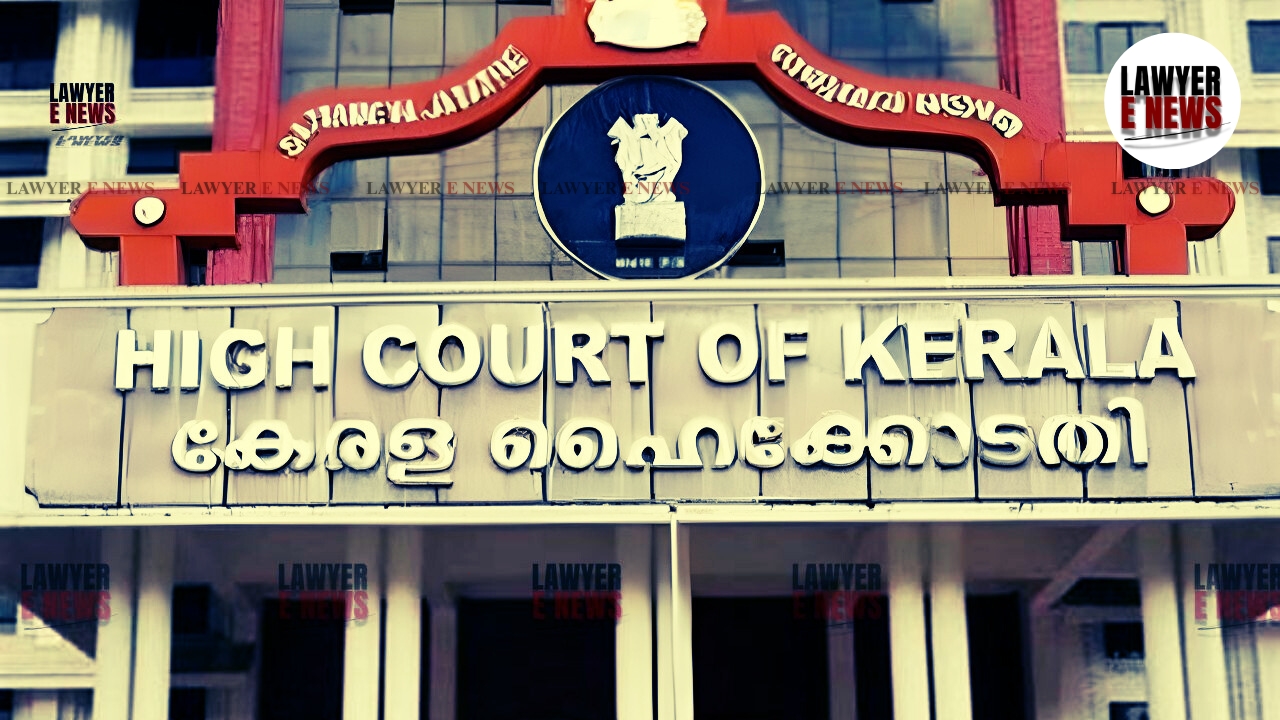
"In the said photographs, she is seen wearing gold ornaments. This would indicate that the allegations of misappropriation is not true and that the gold ornaments were with her." Kerala High Court, in a recent decision, held that a wife's claim seeking the return of gold ornaments from her estranged husband cannot be sustained when photographic evidence shows her wearing the jewellery long after the alleged date of misappropriation.
A division bench of Justice Sathish Ninan and Justice P. Krishna Kumar observed that such evidence fundamentally destroys the allegations of breach of trust and establishes that the ornaments remained in the wife's possession.
The parties were married in 1998 and had been living separately since July 2017. The wife approached the Family Court seeking the return of 35 sovereigns of gold and a total of Rs 4.25 lakhs in cash, alongside a separate petition claiming past maintenance for herself and her two children. After the Family Court dismissed both her original petitions, she preferred two separate matrimonial appeals before the High Court.
The primary question before the court was whether the wife successfully established that her husband had appropriated her gold ornaments and cash. The court was also called upon to determine if the wife and children were entitled to the arrears of maintenance claimed for the period between July 2017 and January 2019.
Photographic Evidence Contradicts Misappropriation Claims
While the court acknowledged that the wife possessed gold at the time of her marriage, it strongly rejected her assertion that the husband took the entirety of it on three separate occasions. The bench noted that the husband had produced a series of photographs taken long after the birth of their children. Assessing this evidence, the court observed that the wife was clearly visible wearing the gold ornaments in these pictures.
"As noted by the Family Court, Ext.B5 series of photographs would cut the root of the claim."
Goldsmith's Receipt Deemed Unreliable
To prove the exact quantity of the gold, the wife had relied upon a receipt allegedly issued by a goldsmith who claimed to have received old gold to make new ornaments. However, the bench concurred with the Family Court's finding that the document was inherently suspicious. The court noted that from its very appearance, it was an unreliable document, rendering the claim regarding the exact quantity of misappropriated gold unproved and unsustainable.
Lack Of Evidence For Cash Payments
Addressing the claim for the return of monetary sums allegedly handed over to the husband, the bench found a complete absence of corroborating proof. The wife had alleged that Rs 50,000 was given immediately after the marriage and another Rs 3.75 lakhs was paid during 2009-2010. The High Court affirmed that there was a total lack of evidence to substantiate these substantial financial transactions.
Employed Wife Denied Maintenance
On the issue of past maintenance, the bench highlighted the wife's admission during cross-examination that she had been working as a Village Extension Officer since 2016. Despite being a government employee, she failed to produce her salary slips to establish her financial standing. The court observed that she could have very well produced the salary slip to prove her income, but such a course was actively avoided.
Husband Already Providing For Children
The bench further noted that the wife had suppressed crucial facts regarding the husband's financial contributions in her original petition. It was revealed through evidence that the husband had been paying the children's school fees and was remitting Rs 1,500 per month towards maintenance. Furthermore, the court noted that the children had already been awarded a monthly maintenance of Rs 3,000 in a separate connected proceeding.
Finding no error in the lower court's appreciation of evidence, the High Court refused to interfere with the impugned judgments. Consequently, both matrimonial appeals filed by the wife and children were dismissed without any order as to costs.
Date of Decision: 20 July 2026