-
by sayum
04 August 2026 1:39 PM







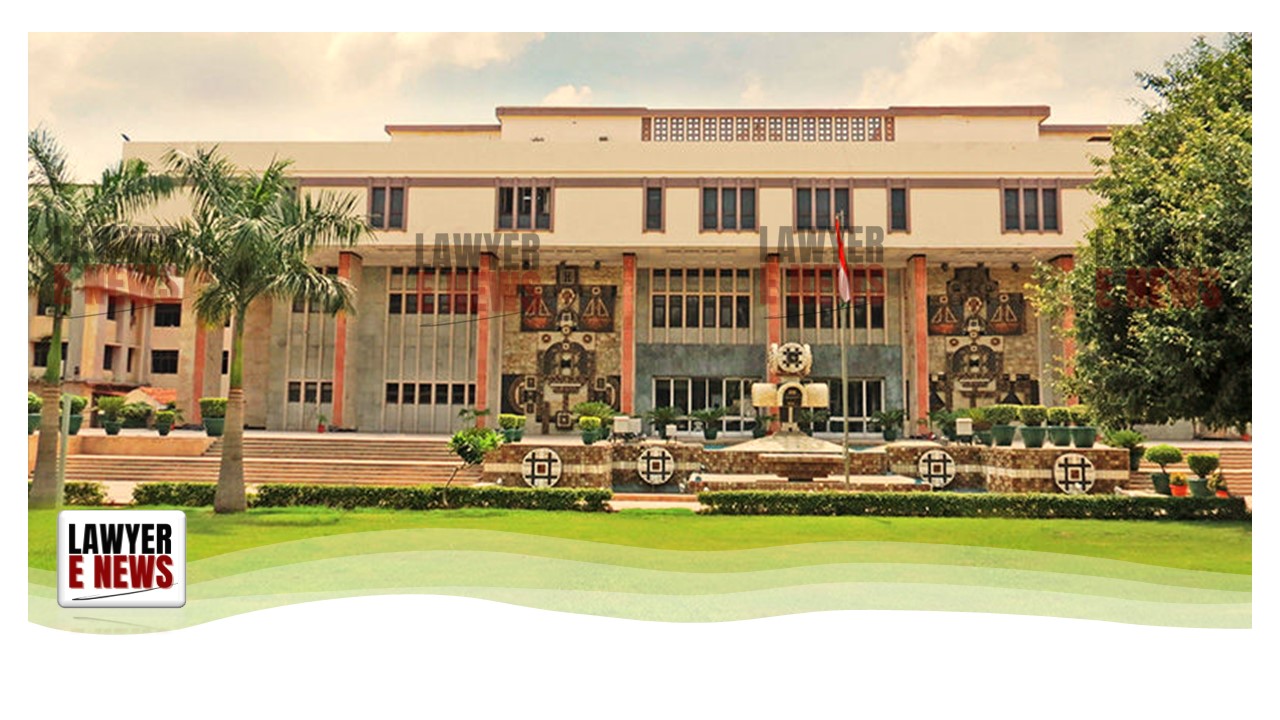
“No Evidence of Forgery, No Criminal Intent Proven — Charges Cannot Be Framed Without Prima Facie Material”, - Delhi High Court quashed charges of forgery, cheating, and conspiracy framed against three office bearers of a cooperative housing society. The Court held that no prima facie case of criminal conspiracy, forgery, or cheating was made out, and mere participation in an AGM where a resolution was passed for a voluntary donation does not amount to criminal intent or conspiracy. The judgment was delivered by Justice Neena Bansal Krishna in CRL.REV.P. No. 240 of 2012, setting aside the framing of charges under Sections 120-B, 420, 468, 471 IPC, and allowing the criminal revision petition.
The petitioners—Meenu Thukral (Vice President), Rajiv Gupta (Secretary), and Gagan Marwah (Joint Secretary)—were office bearers of the Riviera Apartments Owners’ Cooperative Housing Society for the year 2007–2008. The dispute arose from a complaint filed by Sanjay Chiripal, who had purchased a flat in the Society and alleged that he was coerced into paying ₹31,000 (₹10,000 as transfer charges and ₹21,000 as donation), and that the receipts acknowledging payment bore forged signatures.
The share certificate had been transferred to the complainant’s name on 05.12.2004, a day before the donation cheques were submitted. The complainant filed a consumer complaint in 2006, leading to an order directing a refund. Upon appeal, the State Commission partly allowed the Society’s challenge, holding that only ₹21,000 towards donation should be refunded.
However, the complainant subsequently filed criminal complaints alleging forgery of donation receipts, leading to the registration of FIR No. 53/2008 under various IPC provisions. The Metropolitan Magistrate ordered framing of charges on 08.11.2011, which the petitioners challenged in this revision.
No Specific Allegation or Criminal Intent Against Petitioners
The High Court found that the charges were based on conjecture, with no material showing dishonest intent or specific criminal conduct.
“The Charge-Sheet does not specify how and in what manner the Petitioners could have benefitted from the alleged forgery... Participation in a resolution at AGM does not establish conspiracy.” (Para 18)
The Court clarified that merely being office bearers at the relevant time does not render one criminally liable.
Forgery Not Attributed to Petitioners – No Mens Rea Established
The central allegation was that donation receipts filed before the State Commission were forged to defeat the complainant’s consumer claim. However, the CFSL report failed to attribute the forgery to the petitioners.
“The CFSL Report does not inculpate any of the Petitioners. There was no reason for them to forge any receipt when payment was already documented through cheques.” (Paras 22, 50)
“No offence under Section 468 IPC or 471 IPC is made out as there was no intent to use a forged document as genuine.” (Para 52)
The Court also emphasized that no unlawful gain was evident.
“There was absolutely no harm caused to the Complainant, nor any unlawful gain to the Petitioners.” (Para 53)
Resolution at AGM Was Legitimate and Collective
The donation of ₹21,000 was pursuant to an AGM resolution held on 21.11.2004, attended by the complainant’s father, who had in fact proposed the donation.
“It was a decision taken by the members and the Office bearers on 21.11.2004, of which Mr. R.K. Chiripal, father of the Complainant, was also a party.” (Para 43)
This rendered the claim of coercion and conspiracy untenable.
Statement of Co-accused P.N. Singh Held Inadmissible
The prosecution relied heavily on the supplementary statement of co-accused P.N. Singh, who claimed to have overheard a plot to forge receipts.
The Court decisively held:
“The supplementary statement of co-accused is inadmissible and cannot be the sole basis for framing charges. He has merely attempted to exculpate himself by putting the blame on others.” (Para 49)
Relying on Precedents: Forgery Requires Proof of Document Maker
The Court cited the Supreme Court decision in Sheila Sebastian v. R. Jawaharaj (2018), which held:
“A charge of forgery cannot be imposed on a person who is not the maker of the false document.”
Similarly, it referred to Dilawar Balu Kurane v. State of Maharashtra and Prafulla Kumar Samal, reiterating:
“If two views are possible and the allegations do not give rise to grave suspicion, the accused is entitled to be discharged.” (Para 27)
In a comprehensive and well-reasoned ruling, the Delhi High Court held that no offence of cheating, forgery, or conspiracy was made out against the petitioners, and that the trial court had erred in framing charges without sufficient material. The Court emphasized that criminal liability cannot be imposed on society office bearers based merely on their designation, without proof of intentional wrongdoing or fraudulent conduct.
“The learned Metropolitan Magistrate fell in error in holding that prima facie Charges under Sections 120-B, 468, 471, 420 IPC were made out.” (Para 55)
Accordingly, the Court quashed the charges and set aside the order of framing charges, thereby terminating criminal proceedings against the petitioners.
Date of Decision: 27 May 2025