-
by sayum
04 August 2026 1:39 PM








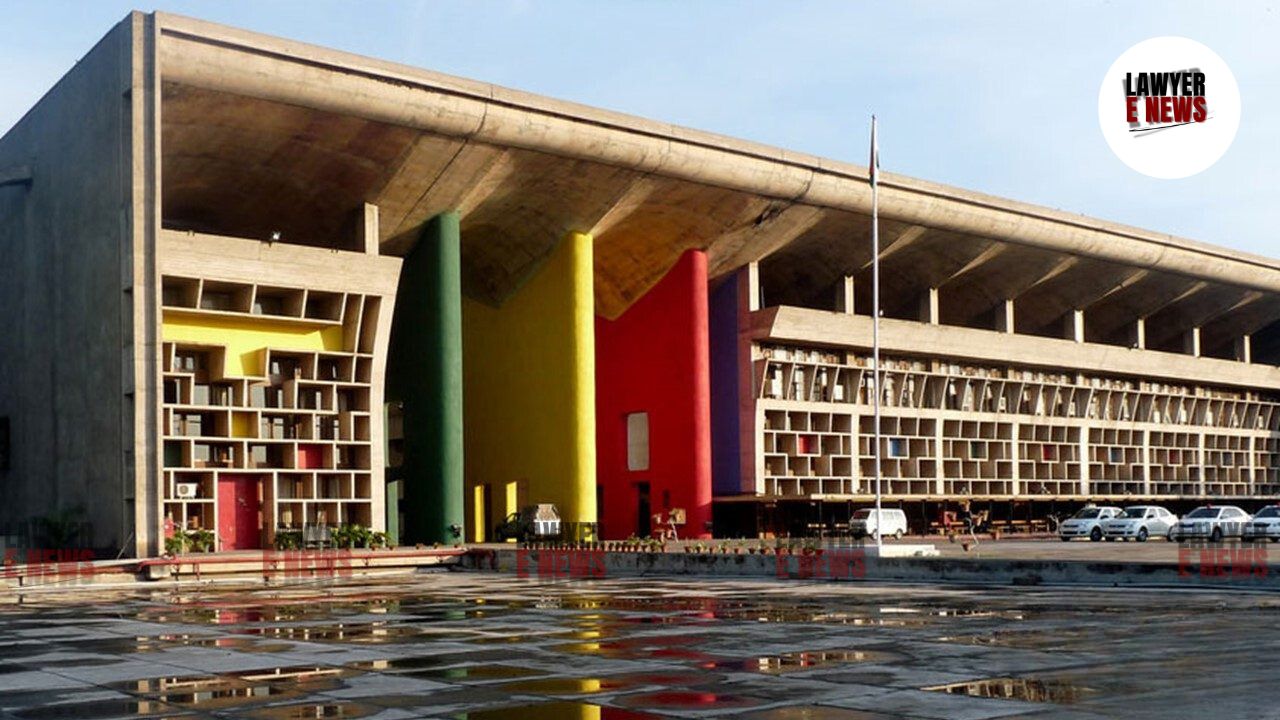
“Punishment Must Be Proportionate to Misconduct”— In a strongly worded judgment Punjab & Haryana High Court struck down a departmental penalty imposed on a police constable as grossly disproportionate, holding that disciplinary action must conform to the principle of proportionality under Article 14 of the Constitution.
Justice Jagmohan Bansal held that a minor misconduct of 24-hour absence could not warrant forfeiture of ten increments with permanent effect, and instead directed reduction of the penalty to forfeiture of one increment with cumulative effect.
“By no means or reasons, awarded punishment can be called proportionate to the alleged misconduct,” observed the Court, emphasizing that the absence was neither prolonged nor in a hostile or sensitive duty environment.
The petitioner, Satyaveer Singh, joined the Haryana Police as a constable on November 11, 2008. He was alleged to have remained absent from duty for 24 hours and 20 minutes, from August 20 to 21, 2014.
Initially, a departmental inquiry was conducted, which resulted in his dismissal from service by the Superintendent of Police, Rewari, on January 23, 2015.
On appeal, the Inspector General of Police, South Range, Rewari, vide order dated March 20, 2015, converted the dismissal into forfeiture of ten annual increments with permanent effect. A revision petition was filed before the Director General of Police, who dismissed it on July 4, 2015, solely on grounds of delay, despite a gap of less than four months between the appellate and revisional orders.
Aggrieved, the petitioner approached the High Court under Articles 226 and 227 seeking judicial intervention.
The central issues were:
Whether the punishment awarded was disproportionate to the misconduct.
Whether the Revisional Authority acted arbitrarily by dismissing the revision on mere technical grounds without applying its mind.
The Court began its analysis by referring to Rule 16.2 of the Punjab Police Rules, 1934, which permits dismissal only for the gravest acts of misconduct or the cumulative effect of continued incorrigibility.
“Rule 16.2 mandates that dismissal shall be awarded only for gravest acts of misconduct or incorrigibility proving unfitness for police service.”
The Court found no such aggravating circumstance in this case. The absence was only for one day, and there was no claim of serious dereliction, breach of trust, or sensitive deployment.
On Disproportionate Punishment and Article 14
Citing the landmark decision in Om Kumar v. Union of India (2001) 2 SCC 386, the Court reiterated:
“Punishment must be commensurate with the misconduct. A penalty that is disproportionate to the gravity of misconduct would violate Article 14 of the Constitution.”
The judgment further invoked Bhagat Ram v. State of Himachal Pradesh (1983) 2 SCC 442, where the Supreme Court held:
“The penalty imposed must be commensurate with the gravity of the misconduct, and any penalty disproportionate to the misconduct would be violative of Article 14.”
In this context, the Court found that a punishment involving forfeiture of ten increments was manifestly excessive and held that:
“In the absence of peculiar circumstances, the respondent was bound to award punishment proportionate to the alleged offence.”
Mechanical Dismissal of Revision
The Court also took serious exception to the mechanical dismissal of the revision petition by the DGP, Haryana, on the ground of delay.
“The Revisional Authority has dismissed the revision mechanically, without recording any reasons, despite the delay being of less than four months. Such administrative apathy cannot be sustained.”
Ordinarily, the Court noted, the matter would be remanded for reconsideration by the disciplinary authority. However, considering that 10 years had already passed, the Court observed:
“Remand would multiply the litigation. This Court, to cut short the agony of the petitioner and avoid further administrative arbitrariness, deems it appropriate to exercise its jurisdiction and directly reduce the penalty.”
Accordingly, the Court modified the punishment to forfeiture of one increment with cumulative effect and disposed of the petition.
This judgment reinforces the importance of fairness, proportionality, and constitutional scrutiny in disciplinary matters involving government servants. The High Court not only safeguarded the rights under Article 14 and 21, but also sent a strong message to administrative authorities to eschew arbitrary and mechanical decision-making.
“A one-day absence in an otherwise clean record cannot become a basis for destroying a person’s career through exaggerated punishment. Such action fails the constitutional test of fairness and proportionality.”
Date of Decision: 23 May 2025